
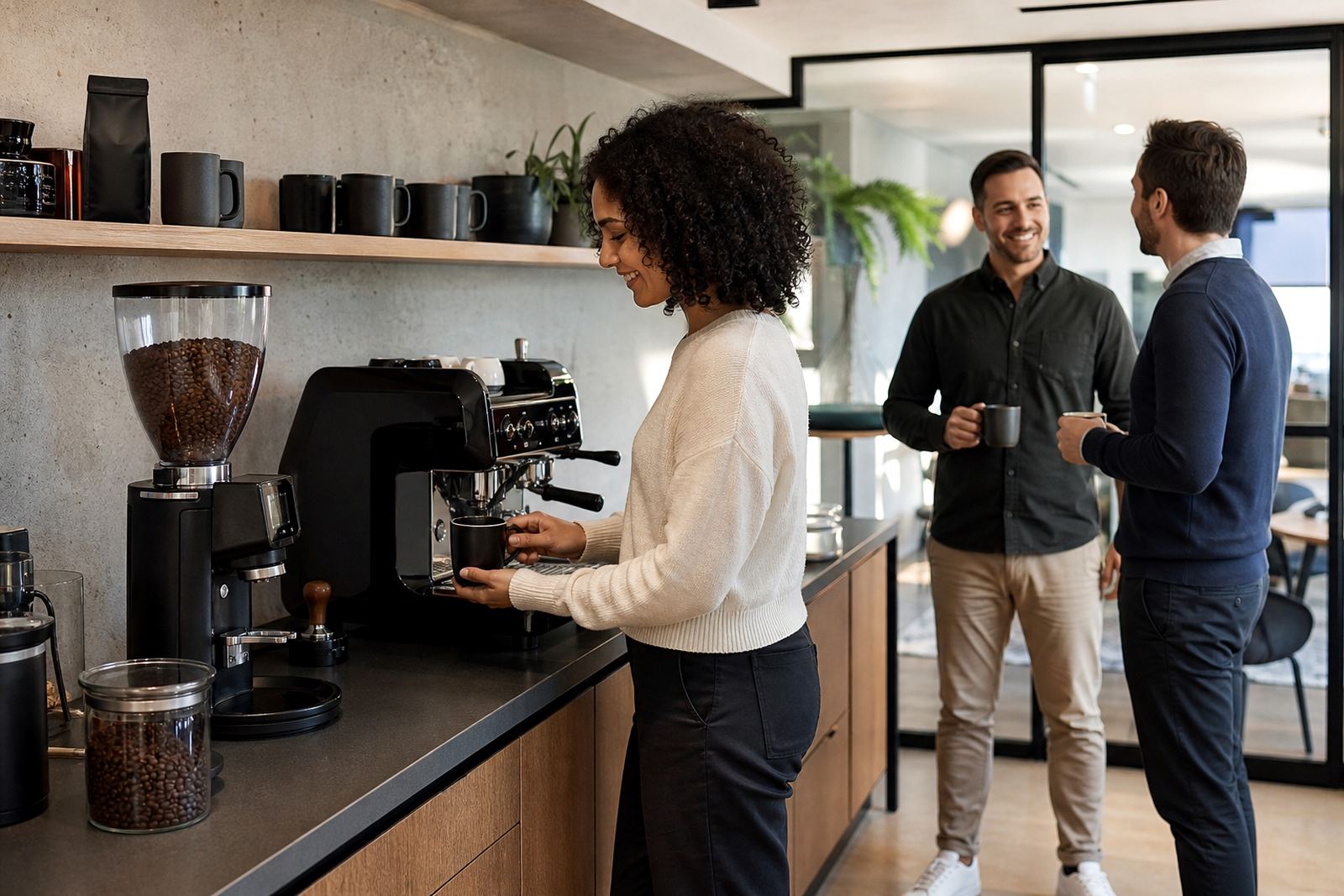
When a large office needs coffee that simply keeps moving
Large offices usually need more than a once-off coffee order. They need a plan that covers daily consumption, staff changes, visitors and the odd week when everyone seems to drink two cups before 10am. That means steady supply, sensible brew stations and clear stock control so coffee does not run out just when the floor gets busy.
We work with offices in Cape Town, Johannesburg, Pretoria, Durban and Gqeberha, including Southern Suburbs and the Atlantic Seaboard. For bigger teams, the main goal is consistency: the same brew quality every day, the same delivery rhythm, and a setup that holds up under pressure. Not every office has the same layout and that matters a lot.
Typical setup for higher daily demand
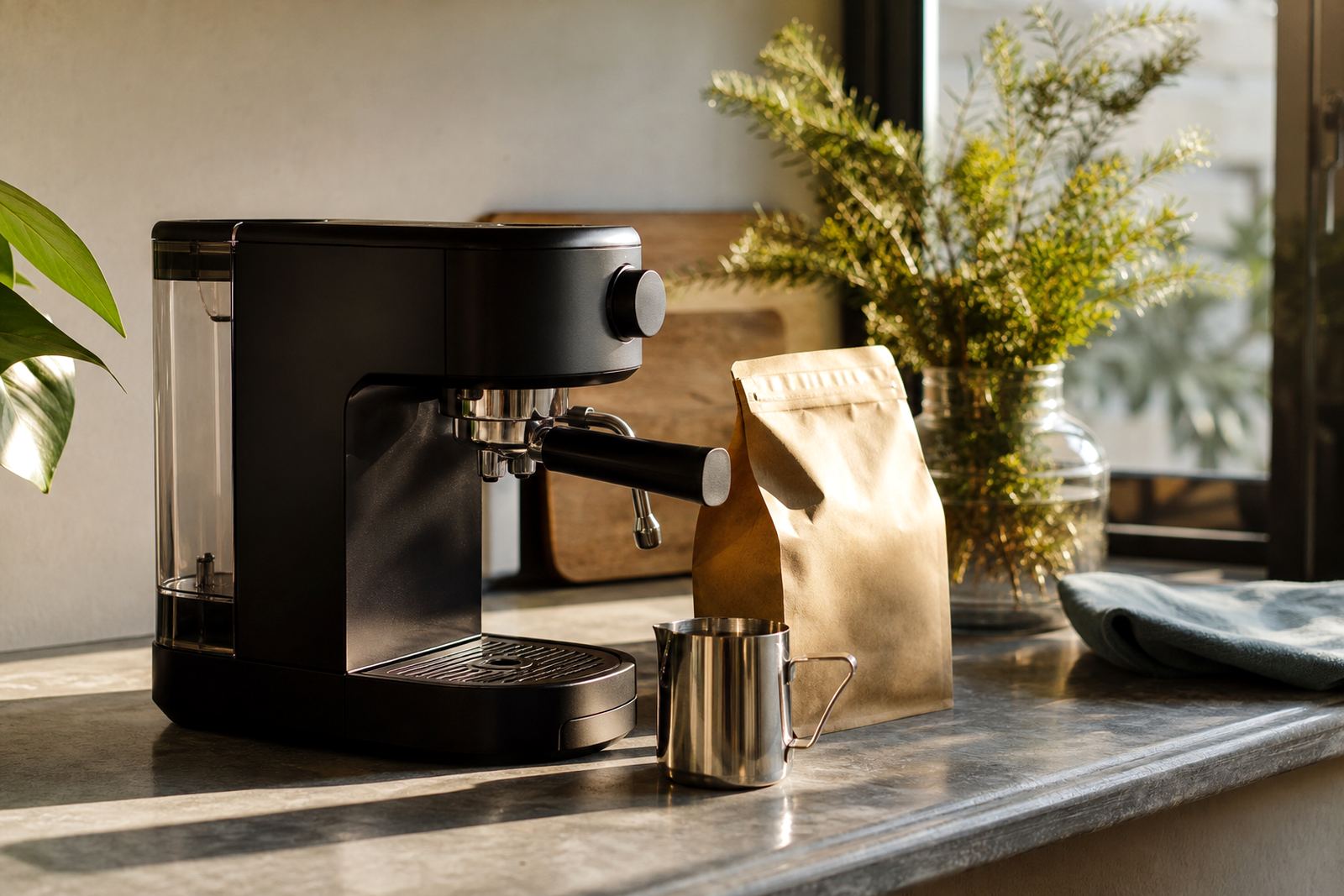
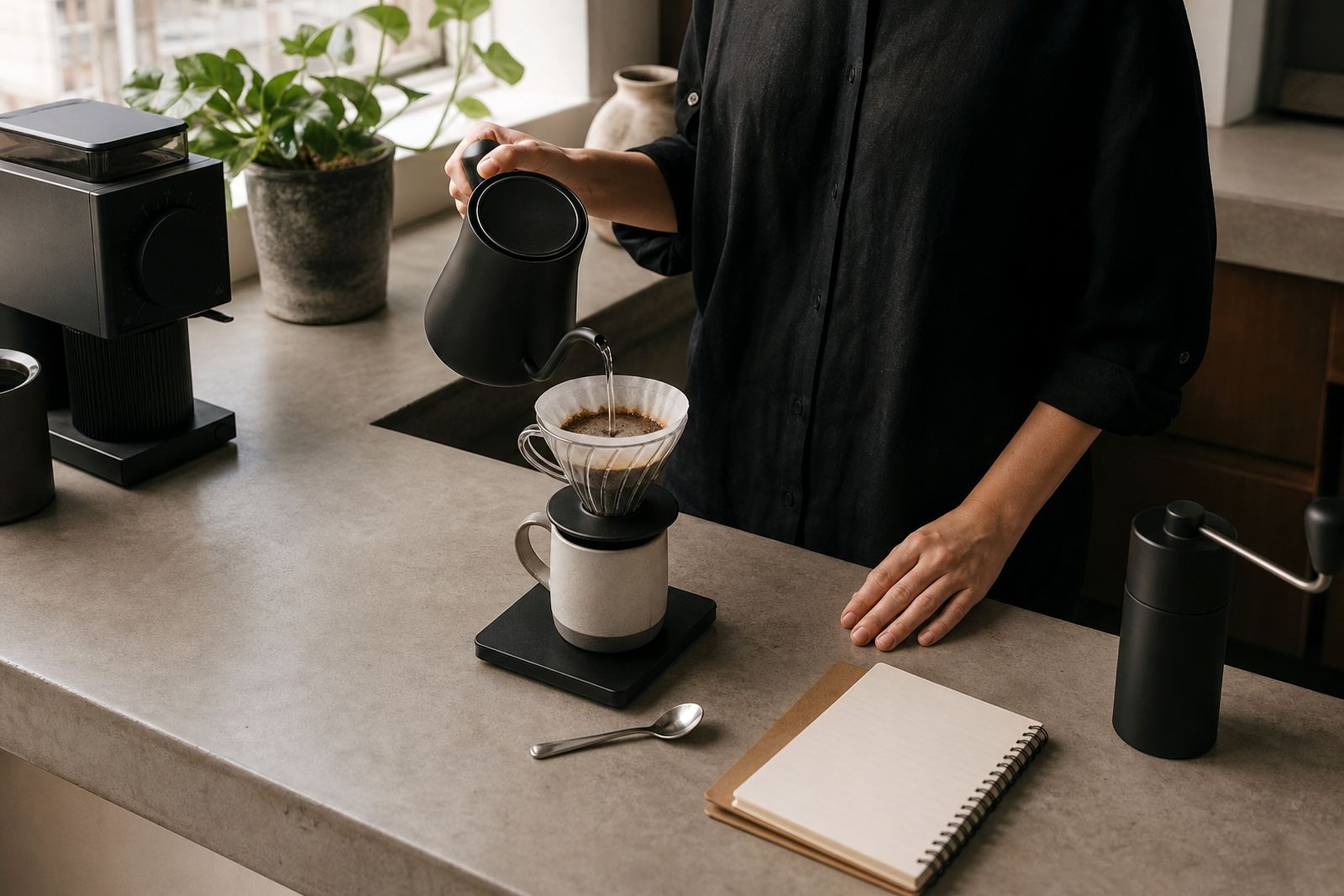
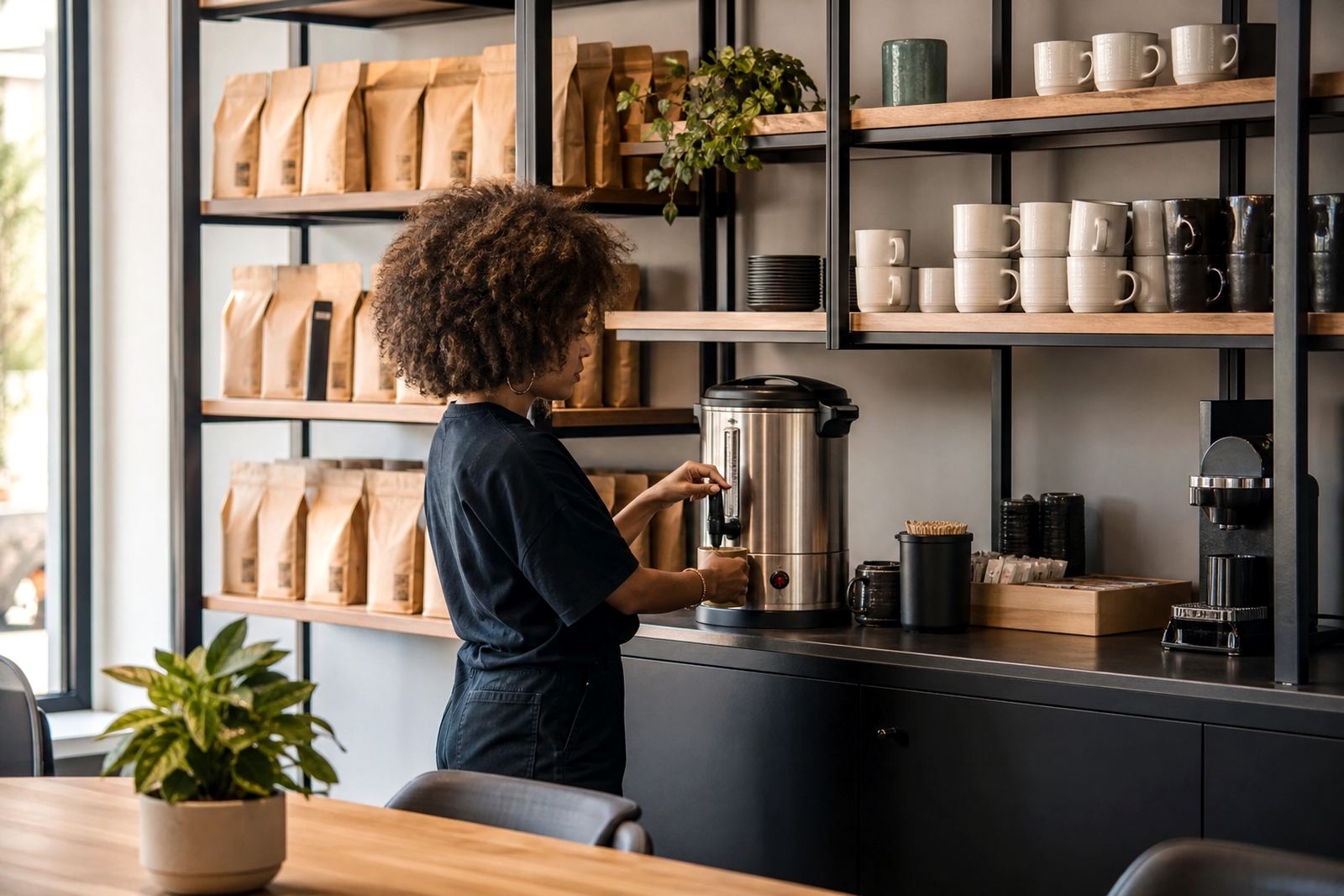
For large offices, the equipment mix usually includes a commercial grinder, one or more brewing units, hot water capacity and enough storage for beans, filters and milk accessories. In some spaces, a single central coffee point works best. In others, two or three smaller stations cut queues and keep people moving.
- Commercial grinder set to the right grind size for the chosen brew method
- Batch brewer or filter brewing station for fast service
- Espresso machine where higher drink variety is needed
- Water filtration and regular descaling plan
- Bean storage that stays cool, dry and away from direct sun
- Cups, lids, stirrers and spill control for busy shared areas
If your office runs on long meetings, reception traffic or a steady stream of guests, the equipment needs to match that pace. One small machine in a 120 person office can cause delays very quickly.
How we plan the layout before the first delivery
Good coffee service starts with the floor plan. We look at where people actually walk, where power points are available and how close the brew station is to water and waste. In older buildings, especially in Woodstock and the city fringe, load-shedding backup and socket placement can affect the whole setup.
The most practical layouts keep the grinder, brewer and storage close together. That cuts steps for staff and makes cleaning easier. If the office has multiple floors, we may recommend separate replenishment points rather than one central store room that is always getting raided by accident. A little planning saves a lot of hassle later, especialy in peak morning rush.
- Place the main station away from printer traffic and foot bottlenecks
- Keep milk or alternative milk cold storage close to the serving point
- Allow space for waste bins and drip trays
- Use labelled storage for beans, cleaning products and spare parts
- Plan for access during delivery times and after-hours cleaning
Stock forecasting for offices that never slow down
Recurring supply works best when the numbers are known. We help track headcount, average cups per person and expected visitor traffic so stock levels are not based on guesswork. That is especially useful for finance teams, HR events, training rooms and offices with hybrid staff who come in on different days.
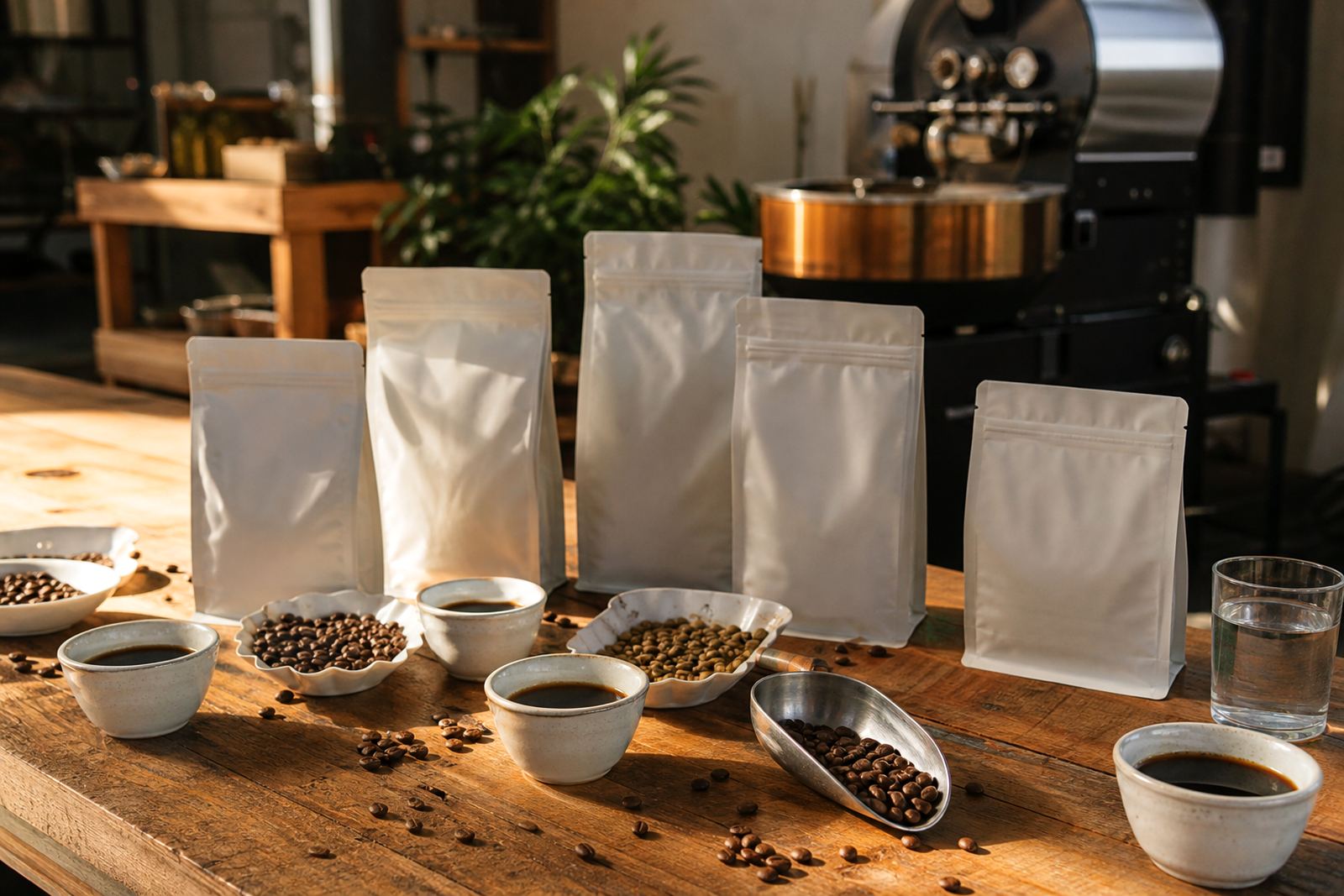
For larger teams, we usually recommend forecasting by month and reviewing it every few weeks. Seasonal changes matter too. Winter demand rises, and so do office visitor numbers in many sectors. If your team likes single-origin rotation, we can build that into the plan so the flavour changes are managed without creating waste.
Common supply items for large offices include:
- Single-origin beans in regular rotation
- Backup stock for month-end and event periods
- Cleaning tablets, brush sets and maintenance consumables
- Paper cups or ceramic cup support where required
- Milk-friendly stock planning for busy meeting days
Training that keeps the quality steady across the team
In a large office, more than one person usually touches the coffee setup. That is where training matters. We show the team how to grind correctly, measure doses, clean equipment and keep the brew tasting the same from one shift to the next. Even small changes in grind or water flow can alter the cup.
Our brew training is useful for reception staff, office managers, pantry teams and hospitality teams who handle guest service. We also cover simple troubleshooting, which helps during load-shedding, water interruptions or when a grinder starts pulling too fine. A well trained team protects the quality and avoids a lot of waste.
Budget ranges for a large office coffee plan
Costs depend on headcount, drink volume, the number of stations and whether you need a fully staffed service or supply only. As a rough guide, a large office recurring supply plan often starts from around R6,500 per month for beans and core consumables, then rises with volume and service levels. Full setup costs can range from R25,000 to R180,000 depending on equipment and layout.
For offices that need regular training, forecasting and seasonal rotation, it helps to budget for both the first install and the ongoing support. That way the coffee point stays dependable after the first week, not just on launch day. We can help shape the plan around the real usage pattern instead of an estimate on a spreadsheet.
Where large office coffee plans go wrong
The biggest mistake is underestimating demand. Another common issue is choosing equipment that looks good but cannot handle the number of cups needed before lunch. We also see offices forget about cleaning access, backup power, or the time it takes to restock a busy pantry.
Other problems include poor grind calibration, no stock buffer and trying to manage coffee service from a room that is too small. If the service point is awkward, staff stop using it properly and the whole setup becomes messy. The answer is usually simple: right size the plan, keep the stock visible, and build in enough support from the start.
At A Cup Of, we help large offices across South Africa set up coffee that keeps up with real demand. From Woodstock to Gauteng and the coast, the aim is the same: good coffee, steady supply and fewer interruptions during the workday.