
Fresh espresso coffee for the way you actually drink it
Home espresso drinkers usually want three things: coffee that is fresh, a delivery schedule that does not run dry, and beans that taste good across more than one brewing method. That is why a regular subscription suits many homes better than buying a bag here and there. It keeps your cupboard stocked, helps you avoid last minute supermarket coffee, and gives you a better chance of repeating a shot that worked well the week before.
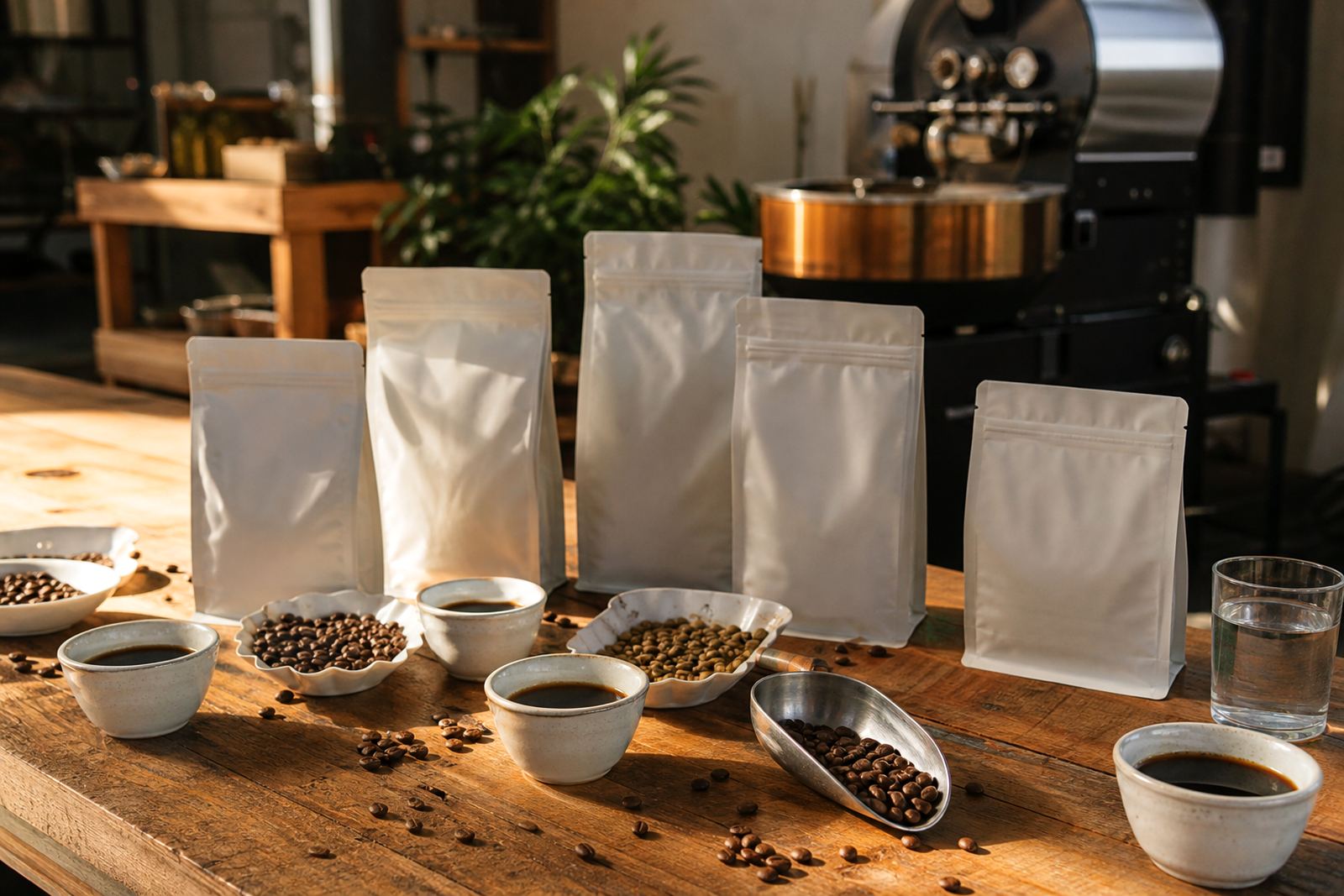
We roast single-origin coffee in Woodstock and send it to homes in Cape Town, Johannesburg, Pretoria, Durban and Gqeberha, with deliveries also reaching the Southern Suburbs and Atlantic Seaboard. For a household with one or two espresso drinkers, a 250 g bag every two to three weeks is often enough. Larger homes or anyone making milk drinks daily may need 500 g or more on a weekly or fortnightly schedule.
The typical home espresso set-up we see in South African kitchens
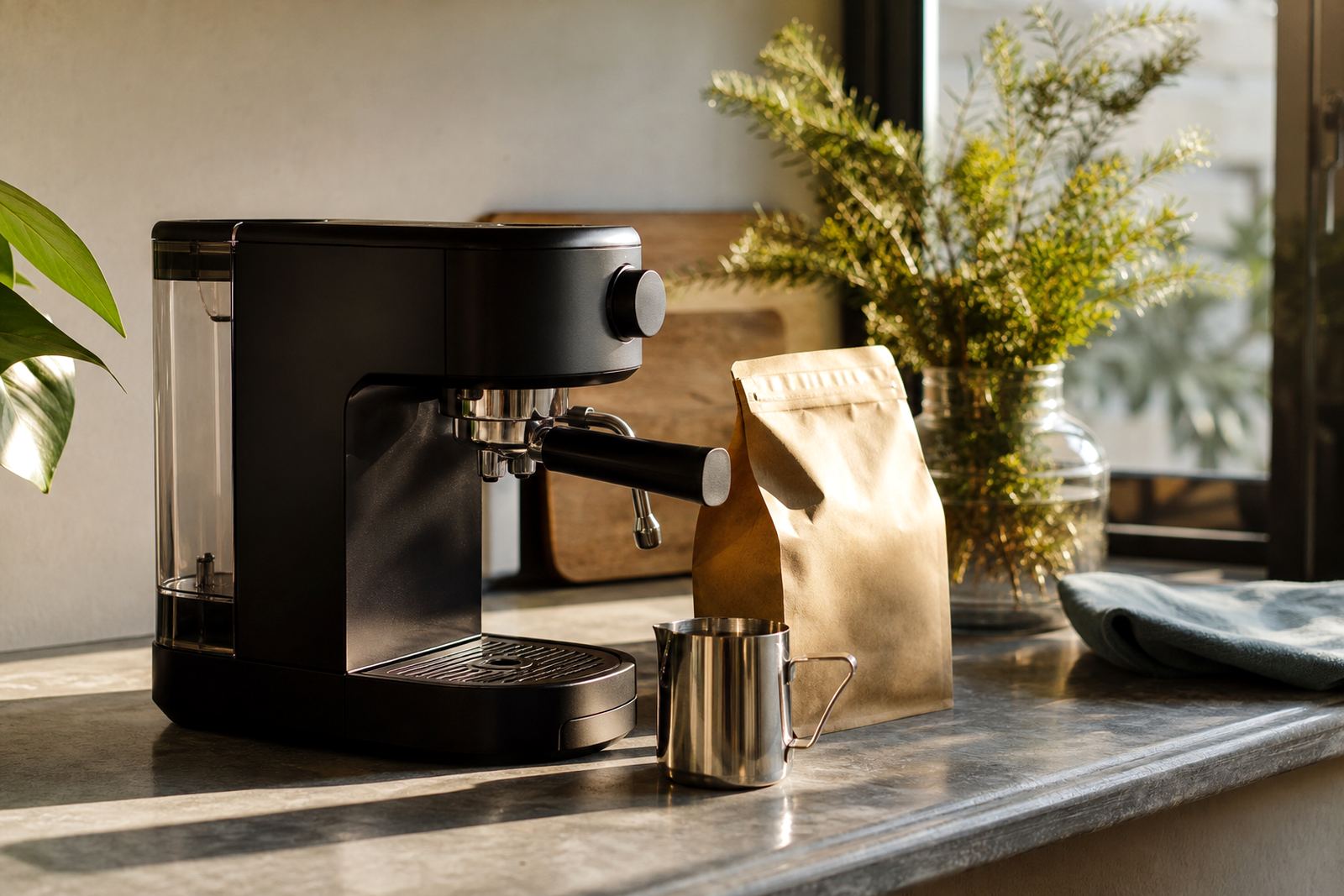
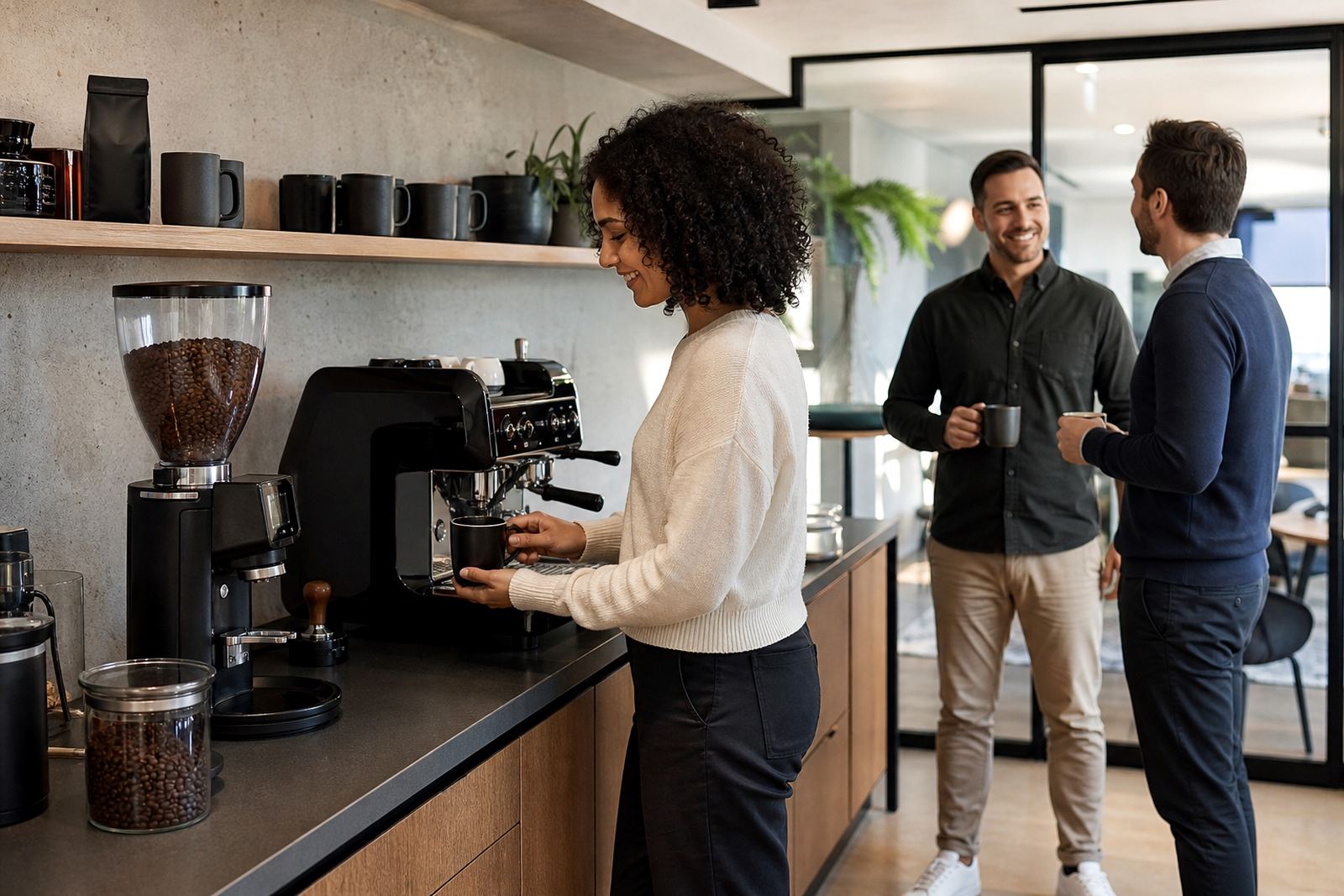
Most home espresso set-ups are practical rather than fancy. A small espresso machine, a grinder with adjustable burrs, a tamper, a milk jug and a kitchen scale are usually the core pieces. Some households use a machine with a built-in frother, while others prefer a separate steam wand and a simple milk jug for better control. If space is tight, the grinder often matters more than the machine because the grind size has a direct effect on flow, crema and flavour.
For small Cape Town kitchens or apartment counters in Pretoria and Durban, the main issue is not style but footprint and access. You need enough room for the grinder, a knock box, a scale and a container for beans that are not being used yet. If your kitchen gets warm or humid, especially near the coast, keep beans sealed and away from the oven or window. That helps preserve flavour and keeps moisture out.
- Espresso machine with stable temperature control
- Grinder with fine adjustment for espresso shots
- Tamper and distribution tool if you use one
- Digital scale for dose and yield
- Milk jug for cappuccinos and flat whites
How to plan delivery, storage and grind changes at home
A home espresso routine works best when the supply matches your rhythm. If you are drinking two cups a day, weekly or fortnightly deliveries keep beans moving without leaving too much coffee lying around. In our experience, many households buy too much at once, then wonder why the shots taste flat halfway through the bag. Freshness matters, but so does using the coffee at the right pace.
Storage is simple. Keep unopened bags in a cool cupboard, then decant only what you need for the next few days into an airtight container. Do not store beans in the fridge, especially in a humid coastal home where condensation can become a problem. If your machine is new or you have changed roast profile, expect to adjust the grinder a few times. Even a small weather change can mean a finer or coarser setting, and a shot that pulled in 28 seconds last week may move faster or slower this week.
- Set a delivery interval that matches your real usage
- Keep one sealed bag as backup, not a whole month of stock
- Adjust grind size after changes in humidity or bean age
- Record your dose, yield and shot time for repeatable results
Common home espresso mistakes that waste good coffee
The biggest problem at home is usually not the coffee, it is the process. A grinder that is too coarse will leave the shot thin and sour. Too fine and the machine may choke, or the shot will drag on with a bitter finish. Another common mistake is using the same setting forever even when the beans are older. Espresso needs small adjustments, not guesswork.
We also see people overfilling the portafilter, rushing the tamp, or using water that is too hard for the machine. If your area has limescale issues, descaling should be part of the routine or the machine will struggle over time. In homes with load-shedding, it helps to let the machine warm fully once power returns, then check the first shot before serving anyone. A rushed first extraction can throw off the rest of the morning.
- Ignoring grind changes as beans age
- Packing too much coffee into the basket
- Using stale beans from a half-open bag
- Skipping machine cleaning and descaling
- Not allowing the machine to heat properly after power cuts
Budget ranges for home espresso in Rand
Budget depends on whether you are starting from scratch or only need coffee and regular supply. A basic home espresso set-up with a compact machine and grinder can start around R6 000 to R12 000. Mid-range home systems, where the grinder and machine hold temperature better, often sit between R12 000 and R25 000. For households that want stronger consistency and are making several drinks a day, the spend can move above R25 000.
On the coffee side, regular single-origin subscriptions are usually far easier to plan for. A 250 g bag may suit lighter use, while a 500 g or 1 kg plan works better for families or shared homes. Delivery frequency affects the monthly total, but most home espresso customers appreciate knowing exactly what they will spend. If you are also buying milk, cleaning tablets and water filters, it is worth setting a monthly coffee budget rather than treating each item separately.
When a subscription makes more sense than ad hoc buying
Subscriptions are useful when espresso is part of the daily routine, not an occasional treat. They work well for couples, busy professionals, families and home workers who do not want to run out midweek. They also suit people who enjoy trying different origins without having to hunt for a new bag every time. One month you may prefer a brighter profile for long black shots, and the next you may want something a little rounder for milk drinks.
If your household has more than one coffee drinker, a planned subscription also reduces waste. You can choose the bag size, delivery pace and coffee rotation to suit the way you brew. That means less stress, fewer emergency shop runs and better coffee on the counter each morning. It is a simple system, but it works. And once the grinder is dialled in, the results are usually much more repeatable.
- Home offices with regular weekday coffee use
- Shared flats and family homes with set morning routines
- Households that want fresh beans without bulk buying
- Drinkers who like trying different single-origin coffees through the year
Getting support for your home espresso routine
If you are setting up a new home espresso corner, or your current shots are inconsistent, we can help with coffee supply, grind calibration, brew training and subscription management. For some households, the issue is simply choosing the right bag size. For others, it is matching a roast to a machine that runs a little hot or a grinder that needs proper adjustment. A short session can save a lot of wasted coffee.
We also assist with seasonal coffee rotation, stock forecasting and coffee menu planning for homes that entertain often. That can be useful if guests visit on weekends or you are making both espresso and milk drinks through the week. A steady supply, a clean machine and a grinder set properly are usually enough to make home espresso feel straightforward instead of fiddly.