
Why grind size changes the cup so quickly
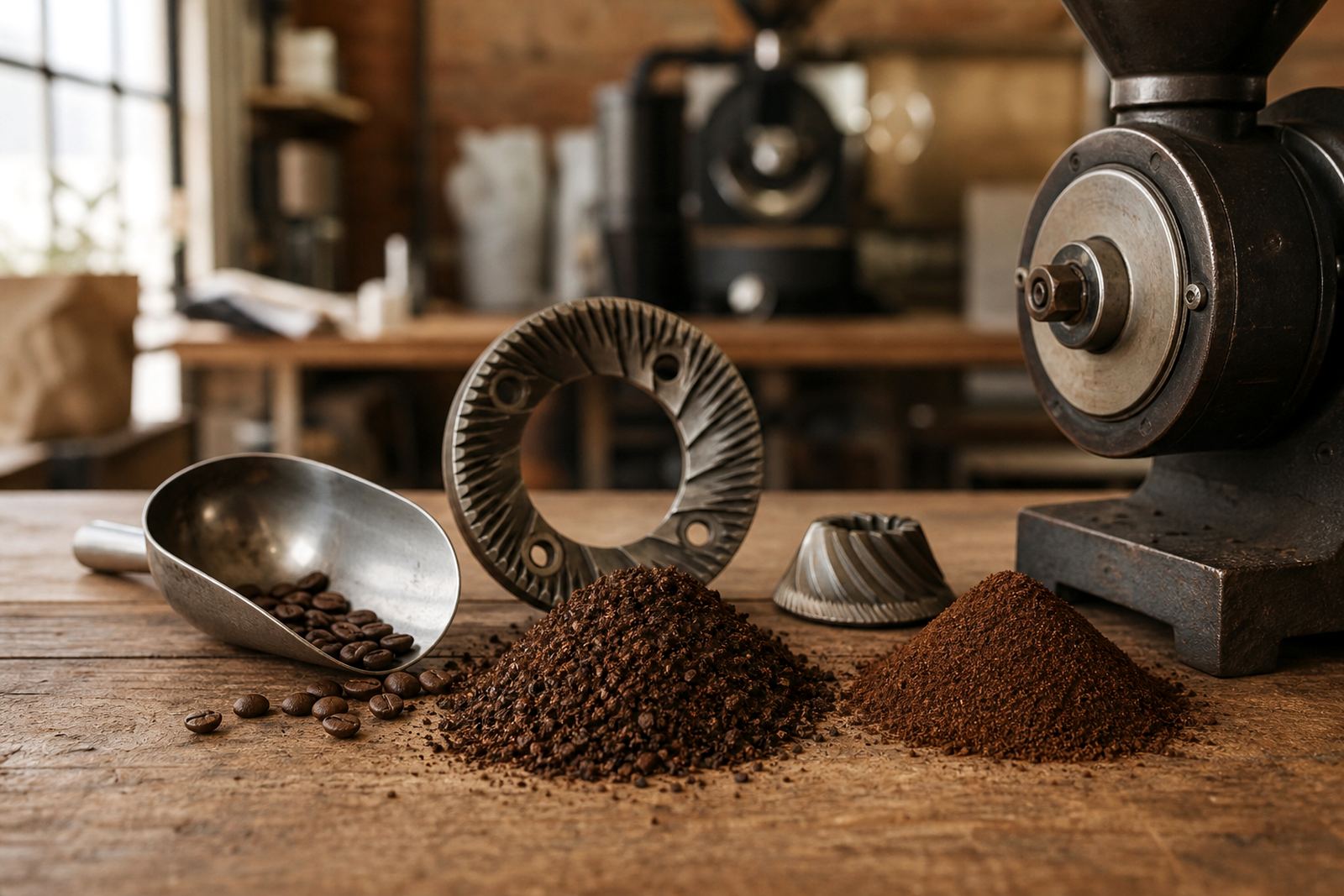
When coffee is brewed, water pulls flavour from the grounds over time. A finer grind has more surface area, so water gets to work faster. A coarser grind gives water less to grab, so extraction slows down. That is why a small adjustment on the grinder can move a cup from bright and lively to flat or bitter in just one shot or one pot.
This matters for single-origin coffee because each lot behaves a little differently. A washed Ethiopian bean, for example, can show floral notes and citrus when the grind is right, but if the grind is too fine the same cup can turn sharp and drying. On the other hand, a Brazilian or Colombian lot may need a slightly different setting to bring out sweetness and body. The bean is only half the story, the grind decides how that story is read.
In offices and hospitality spaces, this is often the first thing that makes the coffee taste better without changing the coffee itself. A grinder that was set once and never touched again will usually drift out of tune as humidity changes, beans age and staff rotate.
Signs your grind is too fine or too coarse
You do not need a refractometer to spot a grind problem. The cup usually tells on itself. If the coffee tastes bitter, woody or dry on the tongue, the grind may be too fine or the shot may be over-extracted. If it tastes sour, thin or weak, the grind may be too coarse or the coffee may be under-extracted. The clue is often in the middle of the sip, not just the first taste.
- Too fine: slow brew times, muddy filters, choked espresso and a dry aftertaste.
- Too coarse: fast brew times, pale colour, weak aroma and a sharp sour finish.
- Inconsistent grind: some sips taste balanced, others taste harsh or watery in the same cup.
If you are making coffee on site in Woodstock, Cape Town, or running a small office in Pretoria, the room itself can affect the grinder too. Coastal humidity in Cape Town can change how beans feed through the burrs, while dry inland conditions can make static worse. That means the setting that worked yesterday may need a small tweak today.
Matching grind size to the brew method
Different brew methods ask for different particle sizes because the water contact time is not the same. Espresso pushes water through coffee under pressure in seconds, so it needs a fine grind. Pour over takes longer and usually needs a medium grind. Plunger coffee needs a coarse grind so the brew does not turn muddy. A cold brew setup uses a very coarse grind and a long steep, which gives a smoother cup with less bite.
For a practical setup, think in ranges rather than fixed numbers. A grinder marked for espresso, filter and French press is useful, but the exact setting depends on the bean, roast date and the water you are using. Municipal water in one area can brew differently from another because of mineral content. Even a small change in water hardness can make you adjust the grind by a notch or two.
- Espresso: fine, but not powdery, with a stable extraction time.
- Filter and pour over: medium, for balanced flow and clarity.
- Plunger: coarse, to reduce sediment and over-extraction.
- Cold brew: extra coarse, to keep the brew smooth over long steeping.
How grind calibration saves stock and keeps service steady
Grind calibration is not only about flavour, it also helps with stock control. When the grind is too fine, extraction can be slow and staff may chase taste by using more coffee than needed. When it is too coarse, people may compensate with extra dose, which pushes up cost per cup. Over a month that adds up, especially in a busy office, meeting room coffee station or hospitality service with steady foot traffic.
A simple calibration routine keeps the brewing standard in place even when different people are on shift. Set a reference brew at the start of the week, then check it again after busy service, after a cleaning cycle, or when a new batch of beans is opened. Keep a note of the setting, brew time and cup profile. If the coffee starts to drift, you can fix it before guests notice.
At A Cup Of, this kind of tuning is part of our daily work with homes, cafés and workplaces across Cape Town, Johannesburg, Durban and Gqeberha. The goal is not to overcomplicate things. It is to keep the cup steady, even when conditions shift.
A Woodstock example: same bean, different grind
Take a single-origin batch roasted in Woodstock for two different sites. The first is a small design office in the Southern Suburbs using a pour over setup, the second is a reception area on the Atlantic Seaboard with an espresso machine and grinder. Same coffee, same roast, different result if the grind is not adjusted for the brew method and the pace of service.
In the office, a slightly too fine grind slowed the pour and brought out a dry edge. Once the grinder was opened up a touch, the cup became cleaner and sweeter. At the reception area, the espresso was racing through too quickly because the beans were still fresh and the room was cool in the morning. A finer setting brought the shot back into range and the crema improved. Small move, big change.
That is the useful lesson. Grind size is not a one-time decision. It is part of day to day brewing, and it responds to the room, the equipment and the coffee itself.
How to make grind adjustments without wasting beans
If you are adjusting grind size by hand, make one change at a time. Move the grinder a little finer or a little coarser, then brew again and compare. Do not change dose, water temperature and grind all at once, or you will not know what fixed the problem. Keep the brew method steady and taste with a clean palate. Even a small shift can be enough, so patience matters.
- Change only one variable at a time.
- Record the grinder setting and brew time.
- Check the cup after the beans settle for a few minutes.
- Recalibrate when humidity, stock or staff changes.
For homes and workplaces, this is usually the quickest route to better coffee without buying new kit. A grinder in the right range, a clear routine and a bit of attention can turn ordinary brewing into something much more consistent. If the coffee is already good, the right grind helps it show up properly.
What good grind control means for daily coffee service
Good grind control means the cup tastes like the bean was meant to taste. It also means less waste, fewer complaints and a smoother routine for the people making coffee every day. For businesses that offer coffee to staff, guests or clients, that can be the difference between a standard drink and a reliable service point that people trust.
Whether you are setting up a new brew station in Cape Town, managing coffee in a Johannesburg office or planning seasonal coffee rotation for a Durban team, the principle stays the same. The grind is the control point that shapes extraction. Get that right, and the rest of the setup becomes much easier to manage.