
Why fresh coffee loses flavour so quickly
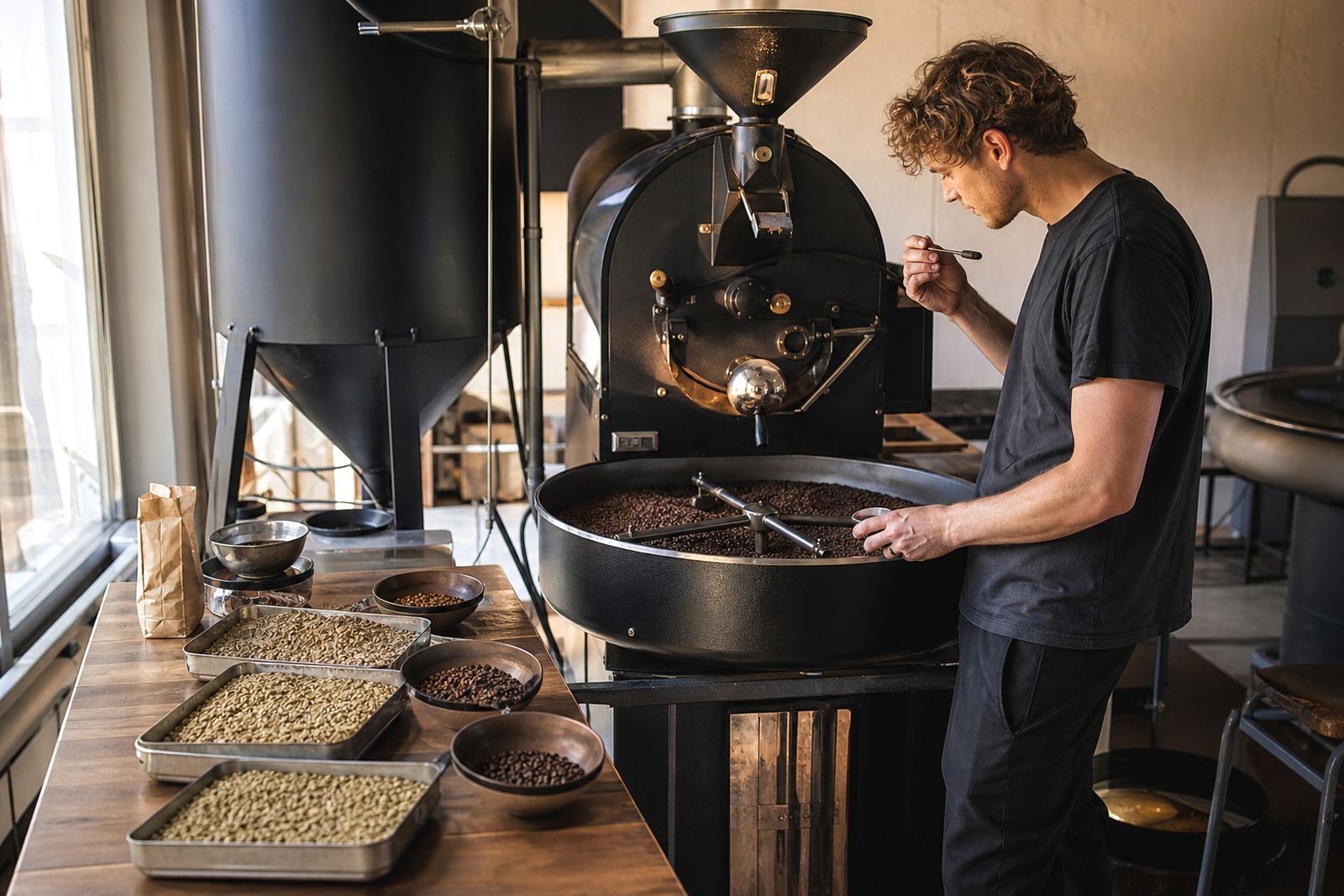
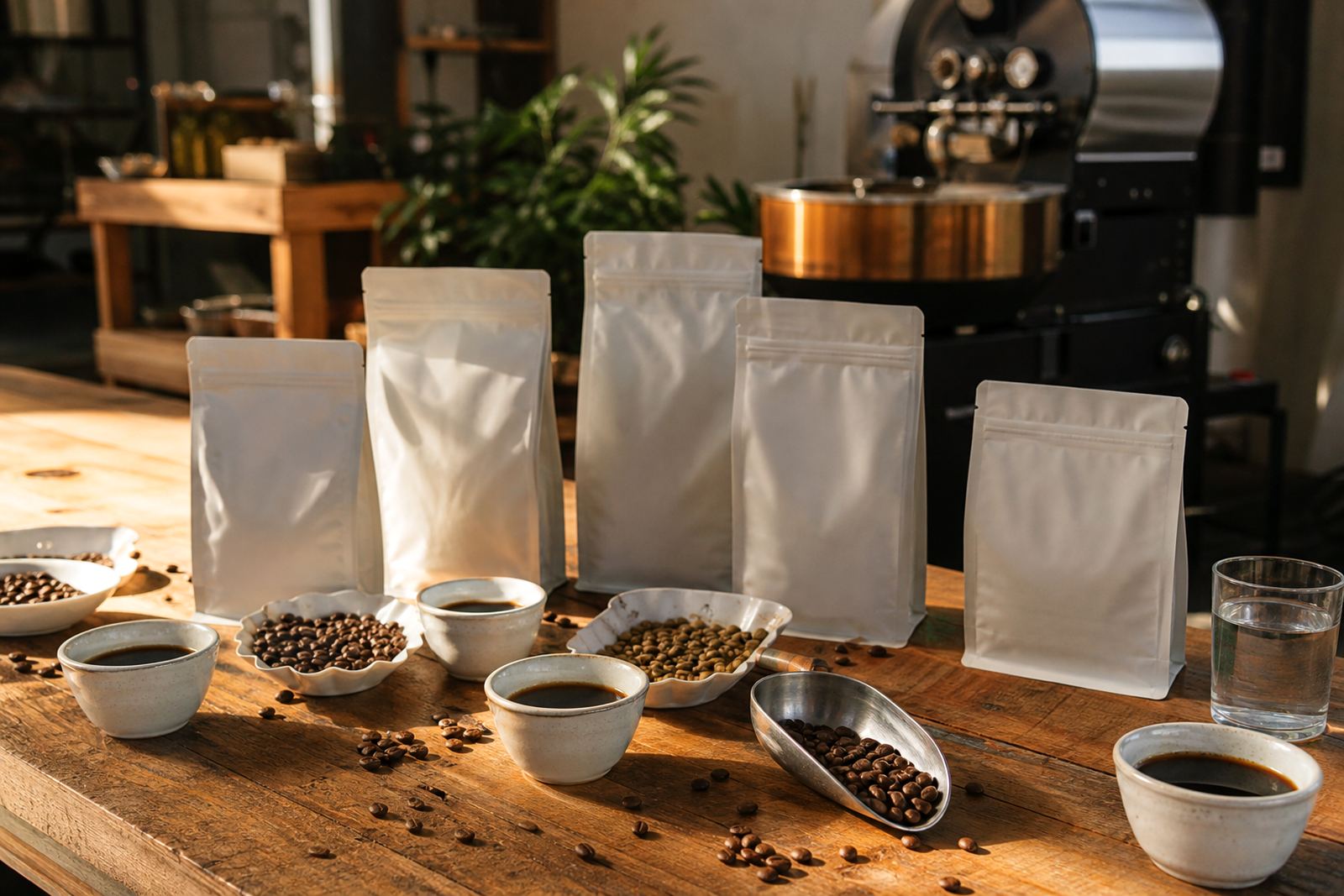
Coffee beans start changing the moment they leave the roaster. Fresh roasted coffee gives off carbon dioxide, and as that fades the bright notes you taste in the cup begin to soften. Oxygen, light, heat and moisture all work against freshness, so the bag you open on Monday will not taste the same by the following weekend if it is left out on the counter.
Most people think coffee goes stale only because time passes, but storage conditions matter more than the calendar. In a warm Durban kitchen, a bag left near the stove will age faster than the same coffee kept in a cool cupboard in Stellenbosch. Even in Cape Town, where mornings can be cool, a sunny windowsill and a kettle nearby is enough to push beans out of shape.
If you buy single-origin coffee because you want specific flavour notes, storage is part of protecting that choice. A washed Ethiopian bean, a bright Kenyan lot or a chocolatey Brazilian roast will all show their best when they are kept dry, cool and sealed properly.
The best place to keep beans in a South African home
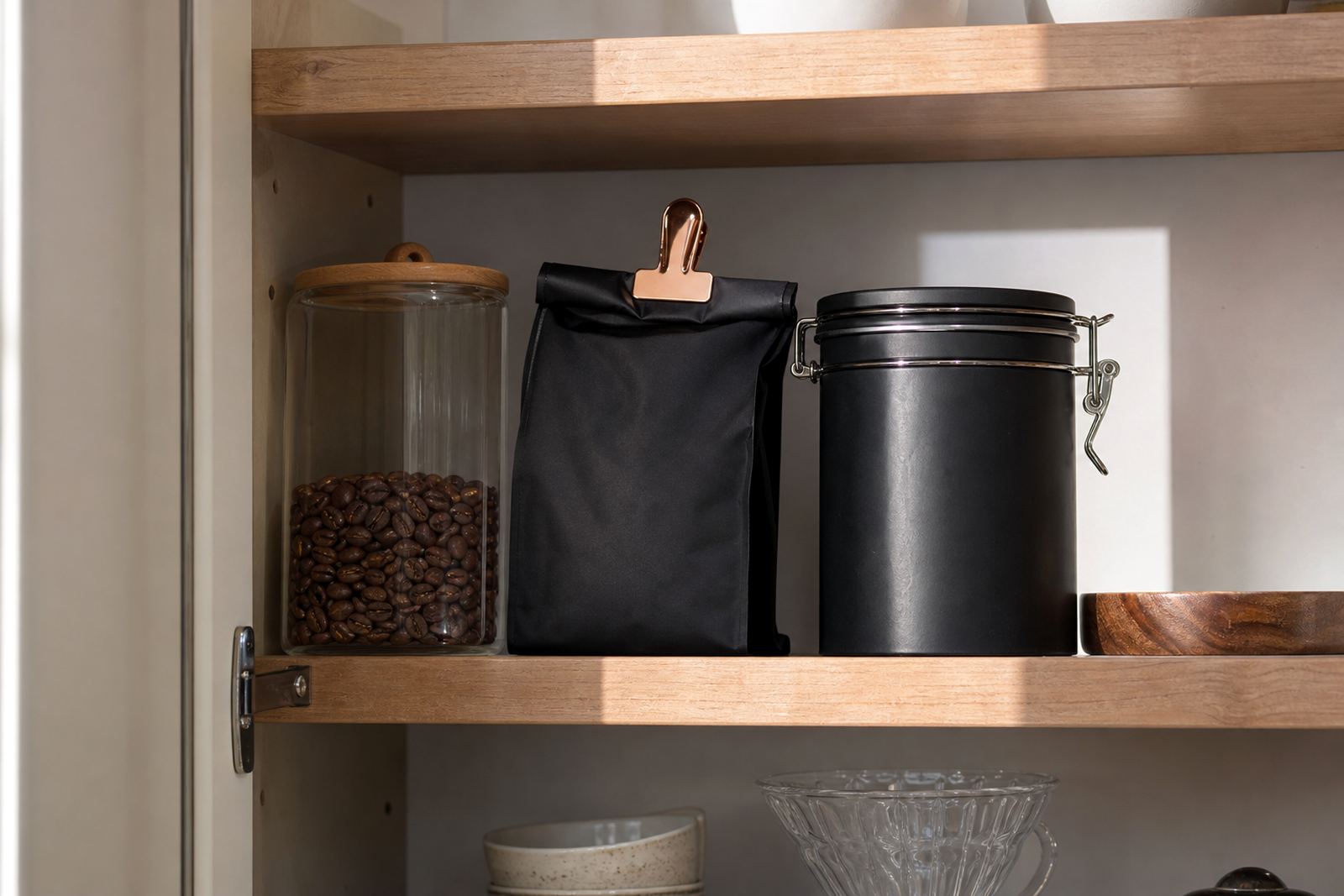
The best storage spot is simple: a cool, dark cupboard away from heat, steam and direct sunlight. A pantry shelf works well. A kitchen cupboard is fine as long as it is not above the oven or right next to the dishwasher, where heat and steam creep in every day.
Homes on the coast need a little more care because humid air can affect coffee faster than many people expect. In places like Gqeberha or Durban, keep beans tightly sealed and avoid storing them near open windows, sinks or laundry areas. Inland homes in Pretoria or Johannesburg still need protection from heat, especially in summer when kitchens can get quite warm by mid-morning.
- Keep coffee away from ovens, microwaves and kettles.
- Store it in a dry cupboard, not on a windowsill.
- Do not keep beans in the fridge, as they can pick up moisture and smells.
- Avoid the freezer unless you have a large, sealed batch you will not open until later.
Think of coffee as a dry food that likes consistency. Any place with changing temperatures will make it age unevenly, and that can show up as flat flavour in the cup.
Canisters, bags and the mistake most people make
Good storage does not need to be complicated. The original bag from the roastery is often perfectly suitable for short term use if it has a one-way valve and a strong seal. If you prefer a canister, choose one with a tight lid that closes properly every time. The point is to keep air out as much as possible and prevent the beans from being exposed to light or smell.
The most common mistake is buying a nice container and then opening it many times a day with no clear routine. Each time the lid comes off, fresh air enters. That does not mean canisters are bad, only that consistency matters. Scoop out what you need, reseal it straight away and keep the container in the same cupboard.
Avoid clear glass jars on the counter. They may look neat, but they let in light and encourage daily temperature changes. Strong smelling foods are also a problem. Coffee can pick up onion, spice or cleaning-product odours quickly, which is never ideal when you are trying to brew a clean cup.
Whole beans last longer than ground coffee
Whenever possible, buy whole beans and grind them just before brewing. Once coffee is ground, the surface area increases dramatically, which means flavour escapes faster. The same bean that might hold up well for a couple of weeks as whole coffee can start to taste tired in just a few days after grinding.
This matters for people with home espresso machines, pour-over setups and plunger coffee alike. If you are making one or two cups a day, grinding fresh gives you better control and a more reliable result. It also helps with repeatability, which is useful when you are dialing in a recipe or trying to match the same taste each morning.
- Buy smaller amounts if you brew slowly.
- Grind only what you need for the next cup or brew session.
- Use a consistent grind size for the method you use most often.
- Store ground coffee only for very short periods, never for weeks.
If you do pre-grind for convenience, keep it in a sealed container and use it quickly. It will still make coffee, but the cup will be less lively and often more bitter. Freshly ground beans are easier to brew well, and the flavour is simply better.
How to manage a subscription without wasting coffee
A subscription is meant to make life easier, not leave you with a cupboard full of beans you cannot finish. The trick is to match delivery size to your real consumption. A household that drinks two cups a day needs a different schedule from a small office in Woodstock that runs a machine all morning.
Start by looking at how much coffee you actually use in a week. A 250 g bag often suits one or two people who brew daily. A 1 kg order may make sense for a busy household, a shared office or a hospitality space, but only if you are getting through it within a sensible time. If coffee sits for months, even good storage will not save the flavour.
For offices in Cape Town, Johannesburg or Pretoria, stock forecasting is useful because usage changes with meetings, staff leave and seasonal dips. At home, it can be as easy as keeping a note on the fridge door. If you see the bag running low on a Monday, you know when to reorder. That small habit helps you avoid running out, and it also keeps you from overbuying.
A simple daily routine that keeps flavour in the cup
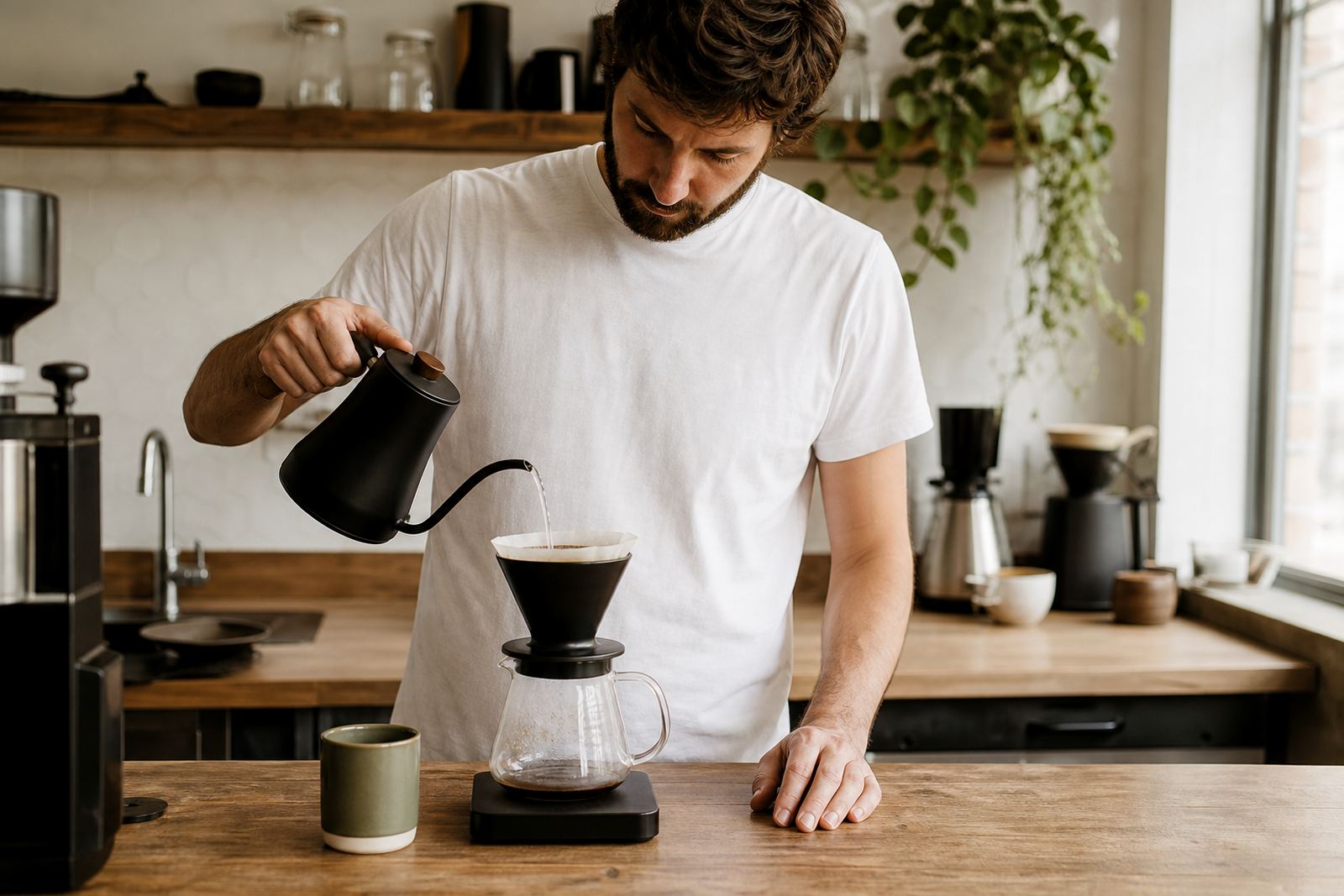
You do not need special equipment to store coffee well. You need a steady routine. Open the bag, measure your dose, reseal it tightly, then return it to the cupboard. That is usually enough to keep your coffee in good shape for home use.
For people who brew before load-shedding ends or before school drop-off, the routine should be easy enough to do half awake. Keep your scoop, scale and grinder together in one spot so you are not leaving coffee open while hunting for tools. Small habits save time and they also protect flavour.
If you drink coffee across the day, it helps to portion beans into smaller amounts. For example, keep one main bag sealed and use a smaller container for the current week. That way the bulk of the coffee is opened less often. It is a simple system and it works well in busy homes where people are making different drinks at different times.
One last point: do not chase perfection and make the process hard. Coffee should fit into your home, not turn into a chore. If you store it properly, keep it dry and use it steadily, you will notice clearer flavour, cleaner aroma and a better cup from start to finish. That is often all it takes, really.