

Start With One Simple Ratio
The easiest way to think about coffee is grams of coffee to grams of water. For most home brews, a good starting point is 1:15 to 1:17, which means 1 gram of coffee for every 15 to 17 grams of water. If you want a fuller cup, move closer to 1:15. If you want a lighter, cleaner cup, head towards 1:17.
That small change makes a big difference. A 20 g dose with 300 g of water gives you a stronger cup than the same 20 g dose with 340 g of water. The method stays the same, but the flavour shifts. That is why a scale is worth having in the kitchen or office coffee area. It saves guesswork and makes repeat brews much easier.
- 1:15 = stronger, fuller body
- 1:16 = balanced, easy starting point
- 1:17 = lighter, more open cup
Match The Ratio To The Brew Method
Different brew methods pull flavour in different ways, so the right ratio is not always the same. A French press usually works well around 1:15 to 1:16 because it gives a fuller mouthfeel. Pour over often sits around 1:16 to 1:17 for a cleaner finish. Aeropress can sit anywhere from 1:12 to 1:17 depending on recipe and brew time.
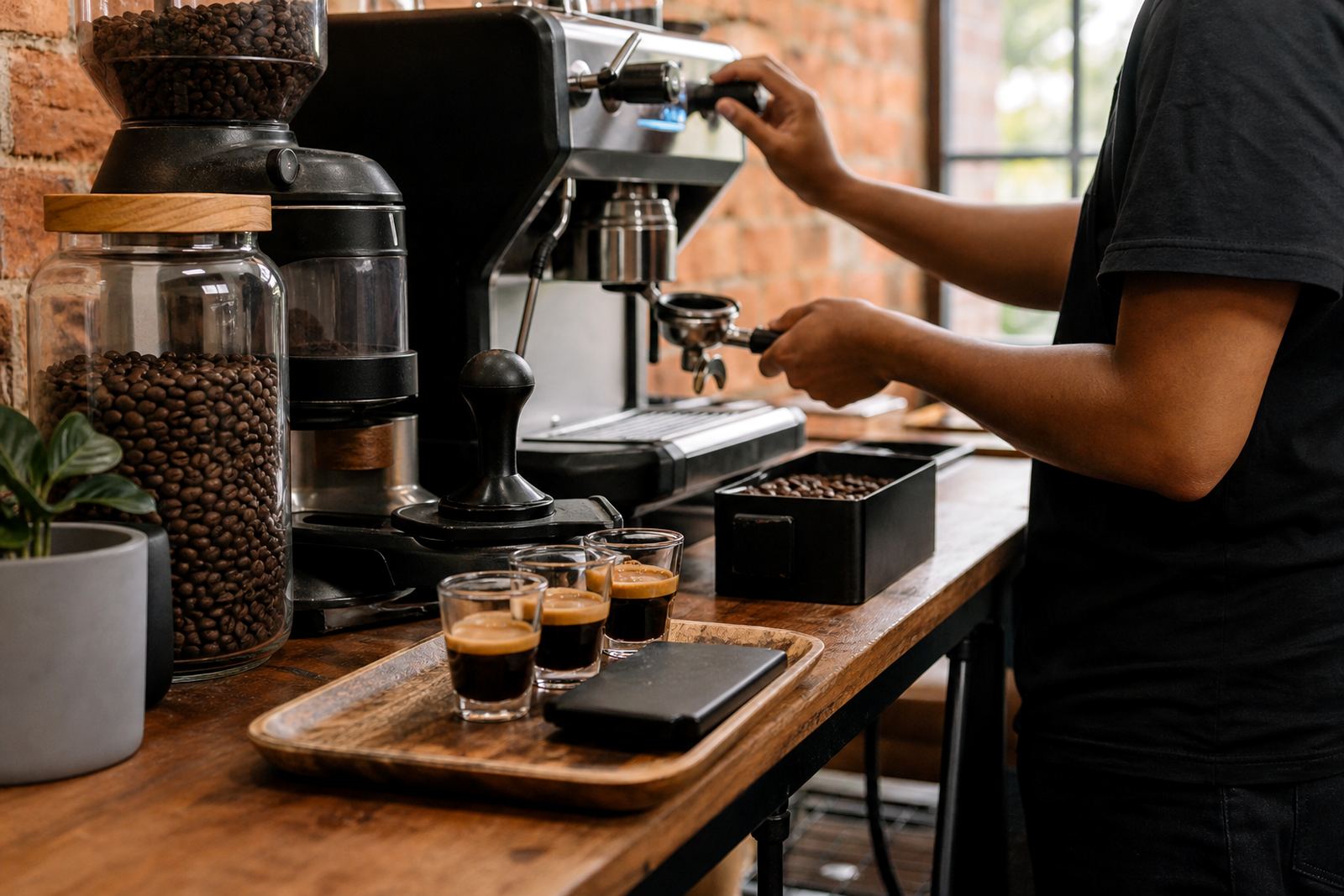
Espresso is a different game. Instead of one simple pour over style ratio, you work with a brew ratio, often around 1:2. For example, 18 g of coffee might give you about 36 g of espresso in the cup. That is why espresso tastes more concentrated. It is not just about strength, it is about pressure, time and extraction.
- French press: 1:15 to 1:16
- Pour over: 1:16 to 1:17
- Aeropress: 1:12 to 1:17
- Espresso: around 1:2
Why Water Quality Changes The Result
Two people can use the same ratio and still end up with different cups. Water quality is often the reason. In Cape Town, Johannesburg or Durban, mineral content can vary quite a bit, and that affects extraction. If the water is too hard, the cup can taste flat or muddy. If it is too soft, the brew may taste thin or sharp.
Temperature matters too. Aim for water just off the boil for filter methods, usually around 92 to 96 degrees Celsius. If the water is too hot, the coffee can become bitter. If it is too cool, the brew can taste weak and under-extracted. In summer, especially in humid coastal areas like Gqeberha or Durban, freshly ground coffee can also clump a bit more so a clean, dry grinder helps.
- Use fresh, clean water
- Keep your grinder dry and free of old oils
- Adjust water temperature slightly if the cup tastes bitter or sour
A Local Example From Woodstock
Let us say a small design studio in Woodstock wants a reliable morning brew for eight people before the team starts the day. A simple filter setup can use 40 g of coffee to 640 g of water at 1:16. That should give around four standard mugs, or enough for two rounds if people drink smaller cups. If the team prefers a stronger cup, the same setup can be changed to 40 g to 600 g of water at 1:15.
That kind of consistency helps with office coffee planning. Once the team finds a ratio they like, the same recipe can be repeated every day. It also helps when stock is being planned for the month. If you know how many grams go into each batch, forecasting becomes a lot easier and there is less waste.
When Taste Tells You To Adjust
Ratios are a starting point, not a rule written in stone. If a cup tastes sour, the coffee may be under-extracted, which can happen when the grind is too coarse, the water is too cool or the ratio is too light. If a cup tastes bitter and dry, the brew may be over-extracted, often because the grind is too fine, the water sat too long or the ratio is too strong.
The quickest way to fix a brew is to change one thing at a time. Keep the same beans and water, then adjust only the grind or the ratio. That makes it much easier to understand what actually changed. A small adjustment of 2 g more coffee or 20 g more water can make the cup noticeably smoother.
- Sour cup: finer grind, hotter water or slightly more coffee
- Bitter cup: coarser grind, slightly cooler water or a bit more water
- Weak cup: use more coffee or a slightly finer grind
Simple Ratios For Homes And Offices
For households, a kitchen scale and a timer can make daily coffee easier and more affordable. For offices, the same method helps with consistency across different people and different brew times. A meeting room coffee station needs a clear recipe so staff do not have to guess before every round. The same applies to wellness rooms, hospitality counters and event coffee bars where speed matters.
If you are brewing for a group, write the recipe down in grams rather than scoops. Scoops vary too much. A written ratio also helps when the roast changes with the season. Lighter roasted coffee often needs a slightly finer grind or a bit more contact time. Medium roasts can be more forgiving and suit a wide range of tastes.
- Use grams, not spoonfuls
- Write the recipe where everyone can see it
- Review the ratio when you change beans or brew methods
Build A Routine You Can Repeat
The best brew ratio is the one you can repeat without stress. Start at 1:16 for most filter methods, taste the cup and then move up or down depending on what you want. Keep notes on the coffee, grind setting, water amount and brew time. After a week or two, you will see patterns and your cup will become more consistent.
At A Cup Of, we find that simple recipes work best for homes, offices and hospitality spaces alike. Once people understand the ratio, they feel more confident changing the grind, the dose and the brew time. That is where better coffee starts, one measured brew at a time.