

What tasting notes are really telling you
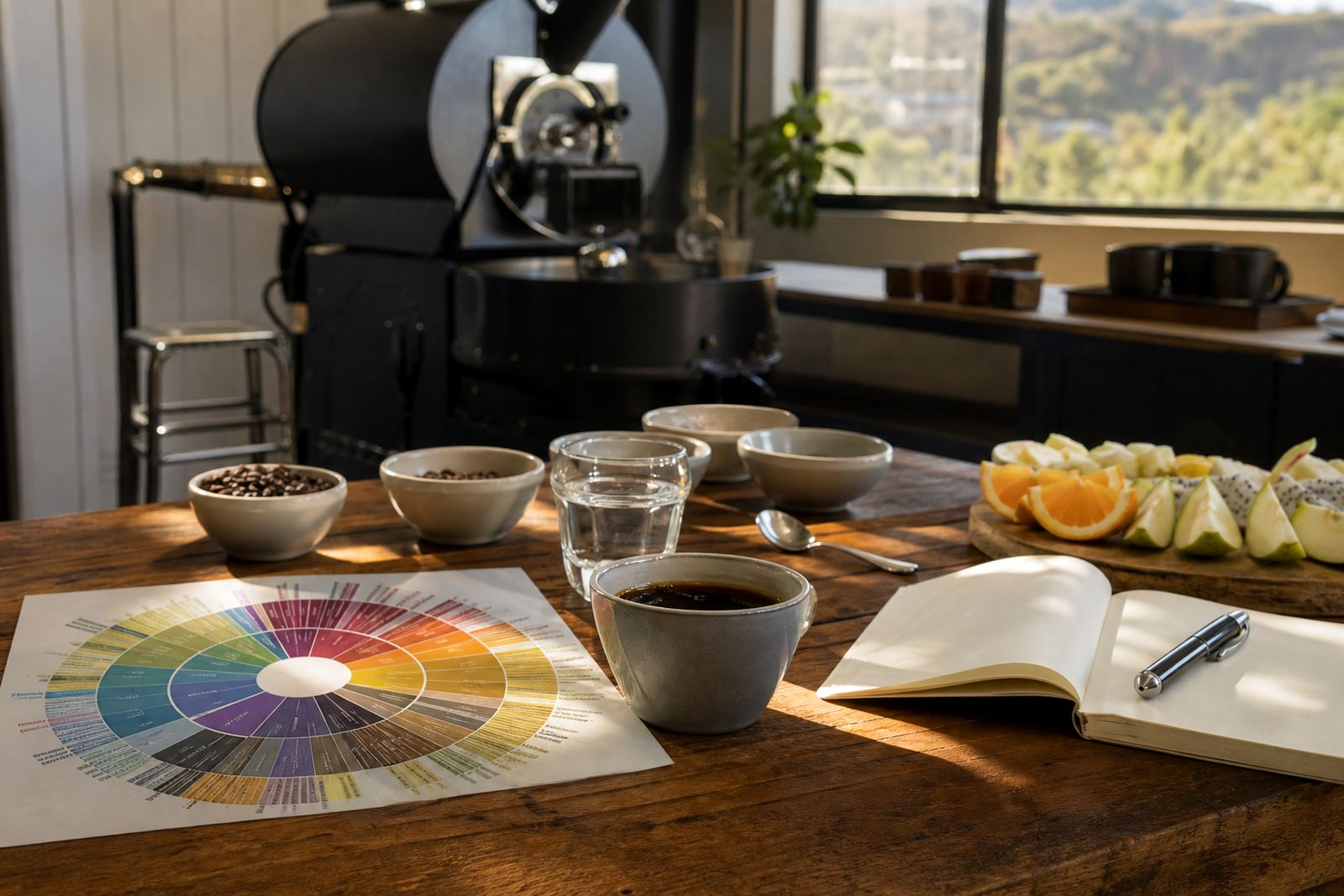
Tasting notes are not added to make coffee sound fancy. They are a practical guide to what the roaster picked up during cupping, which is a controlled tasting method used to compare beans side by side. When you see notes like berry, caramel, citrus or cocoa, think of them as flavour clues, not ingredients.
That distinction matters. A coffee that lists blackcurrant and plum will not taste like fruit juice, and a note of biscuit does not mean there is a biscuit crumb in the bag. It usually means the coffee has a certain sweetness, acidity or finish that reminds people of those foods. In South Africa, where many people drink coffee with milk before work or between meetings, those notes can help you choose a coffee that suits your routine.
The main thing to remember is this: tasting notes describe direction, not certainty. Two people can taste the same cup and disagree a bit. That is normal, and it does not mean somebody is wrong.
Start with the big flavour family, not the detail
If you feel overwhelmed by a long flavour list, look for the bigger picture first. Is the coffee described as bright and fruity, sweet and chocolatey, or nutty and mellow? That is usually more useful than getting stuck on a single note like apricot or almond.
Here is a simple way to read a label without overthinking it:
- Fruity and floral usually means higher acidity, lighter body and a more lively cup.
- Chocolate, caramel and nut notes usually mean sweetness, balance and an easy drinking profile.
- Spice or herbal notes can point to more complexity, especially in filter brews.
- Dark cocoa or toasted notes often feel fuller and steadier in milk based drinks.
If you drink espresso with milk every morning, a coffee with chocolate, nut and caramel notes may serve you better than a very floral one. If you drink black coffee in the afternoon, you might enjoy the brighter cup more. Matching the note profile to how you brew is half the battle.
Acidity is not sourness, and body is not strength
Two words that cause the most confusion are acidity and body. Acidity sounds negative, but in coffee it usually means sparkle, freshness and a clean finish. It can feel like citrus, apple, berry or stone fruit. A coffee with good acidity can taste lively without being sour.
Body is the weight of the coffee in your mouth. A light-bodied cup feels thinner and more tea-like, while a heavier cup feels richer and more coating. Body is not the same as strength. A strong-tasting coffee can still have a light body, especially if it is lightly roasted and brewed with care.
For example, a single-origin Ethiopian coffee might show jasmine, peach and lemon with a light body. A Brazilian coffee might show cocoa, peanut and brown sugar with a heavier mouthfeel. Both can be excellent, but they suit different cups and different moods. On a windy Cape Town morning in Woodstock, that lighter coffee might feel sharp and bright, while the fuller one can feel more comforting after a long shift or a queue at the office kitchen.
Use the label to guide your brewing choices
Once you understand the notes, you can use them to adjust how you brew. A coffee that promises sweet citrus and florals often benefits from a slightly gentler brew, so the delicate flavours stay clear. A coffee with cocoa and nuts can usually take a stronger extraction without losing balance.
These are handy starting points:
- For filter brews, use water around 92 to 96 degrees and grind a little finer if the coffee tastes flat.
- For espresso, a fruit forward coffee often works best with careful grind calibration and close attention to shot time.
- For milk drinks, choose coffees with enough sweetness and body so they do not disappear under the milk.
- If the cup tastes sharp or thin, try a slightly coarser grind or a shorter extraction next time.
In a busy office in Johannesburg or Pretoria, the same bag may be used on different machines through the week. A quick grind check and a fresh brew ratio can make a much bigger difference than chasing every tasting note on the label.
A local example from a Cape Town brew counter
Take two coffees on the same shelf. One has notes of orange, honey and floral tea. The other has notes of milk chocolate, hazelnut and dried fig. If you are setting up coffee for a meeting room in Cape Town, the first one may be lovely as a black filter for a quieter team. The second may suit a shared espresso station better, especially where people top up with milk and sugar.
That does not mean one is better than the other. It means the context matters. Coastal humidity can change how beans behave in storage and grinding, and load-shedding can affect brew consistency if equipment is switched off and on through the day. In real life, the most useful coffee is the one that still tastes good when the office is busy, the kettle is in use and nobody has time to fuss. That is why tasting notes should help you make a choice, not make the choice for you.
A good habit is to taste the same coffee across a few brews before judging it. You may notice the berry note is clearer in filter, while the caramel comes through more in espresso. Coffee changes with method, and that is part of the fun.
How to buy coffee without getting caught in the jargon
If you are shopping for coffee and the tasting notes feel a bit much, focus on three questions: How do I brew it, how do I drink it, and what do I want it to taste like on an ordinary Tuesday? That simple filter cuts out a lot of noise.
Look for these clues on the bag or product notes:
- Origin and process, since these often hint at flavour style.
- Roast level, because it changes sweetness, acidity and body.
- Recommended brew method, which usually shows how the roaster expects the coffee to behave.
- Freshness or roast date, because stale coffee loses detail and tastes dull.
If you are still unsure, start with a balanced coffee that leans sweet and nutty. It is usually the safest choice for home, office and hospitality use. Once you know what you like, then you can explore brighter or more unusual cups with confidence. The goal is not to identify every note correctly. The goal is to find the coffees you genuinely enjoy drinking again and again.
Taste notes are a map, not a rulebook
Reading tasting notes gets easier when you stop treating them like a scorecard. Think of them as a map of the coffee’s character. They help you decide whether a coffee is likely to suit your palate, your brew method and your daily routine.
If a coffee sounds bright and fruity but you usually want a heavier cup with milk, choose something else. If a label says cocoa and roasted almond and you enjoy an easy morning brew, that is probably a good match. Once you trust that process, you spend less time decoding labels and more time enjoying the cup in front of you.
That is the real value of tasting notes. They should make coffee easier to choose, not harder.