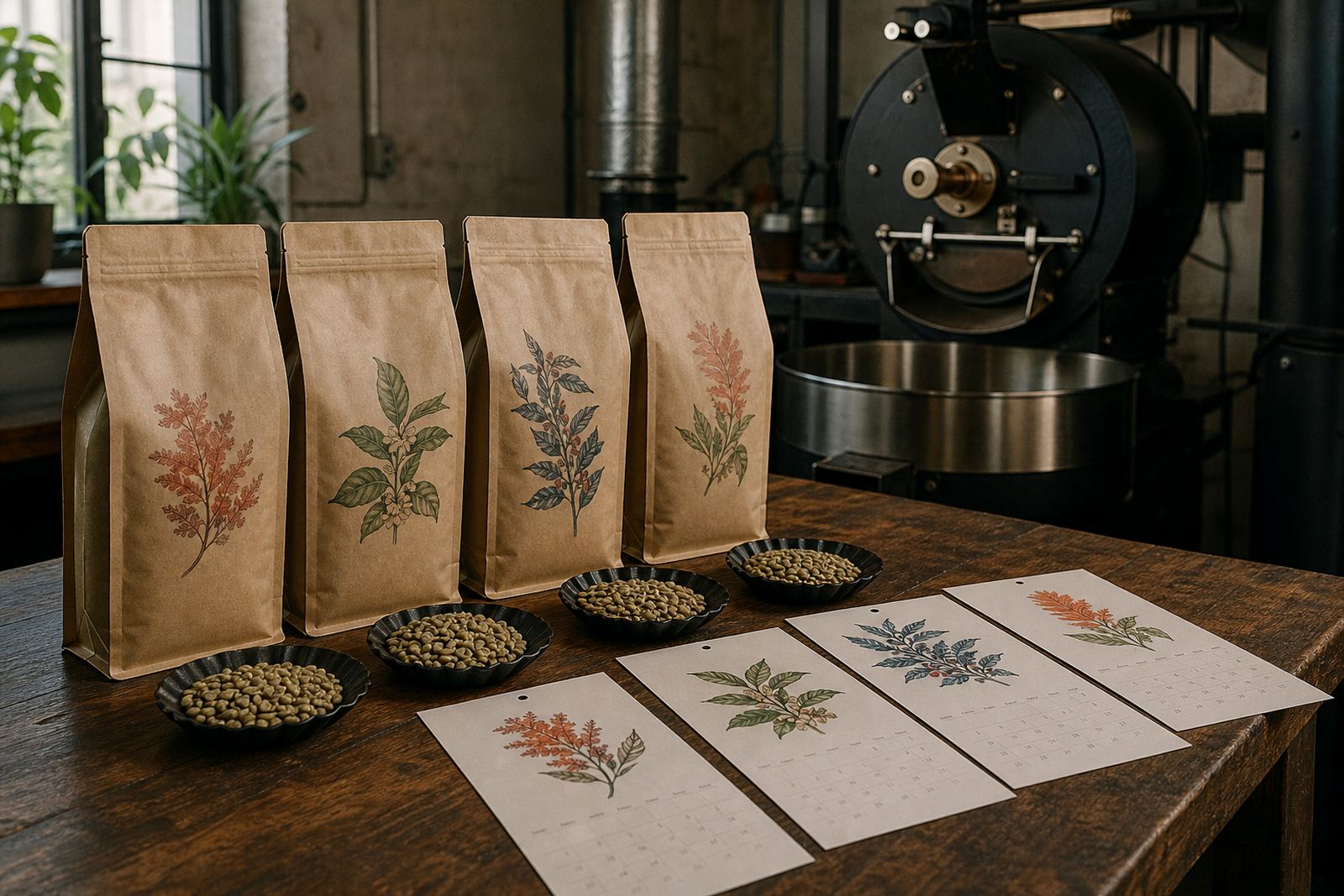


Why origin matters before the roast ever starts
Good roasting cannot rescue poor green coffee. That is why we begin by looking at the origin, the farm or co-op, and the handling behind each lot before we think about the roast profile. In our Woodstock roastery, we want coffees that already carry clean flavour, stable moisture and a clear seasonal character.
For us, origin is not a marketing label. It tells us what a coffee is likely to taste like, how it may behave in roasting, and where it will fit in a subscription box, a hospitality programme or a daily office brew. A bright Ethiopian lot might work beautifully as a filter coffee, while a heavier-bodied coffee from another region may suit milk drinks better.
- Clean cup and low defects
- Traceable farm, mill or producer group
- Stable moisture and density for roasting control
- Flavour that makes sense for our customers in SA
What we check in samples from producing regions
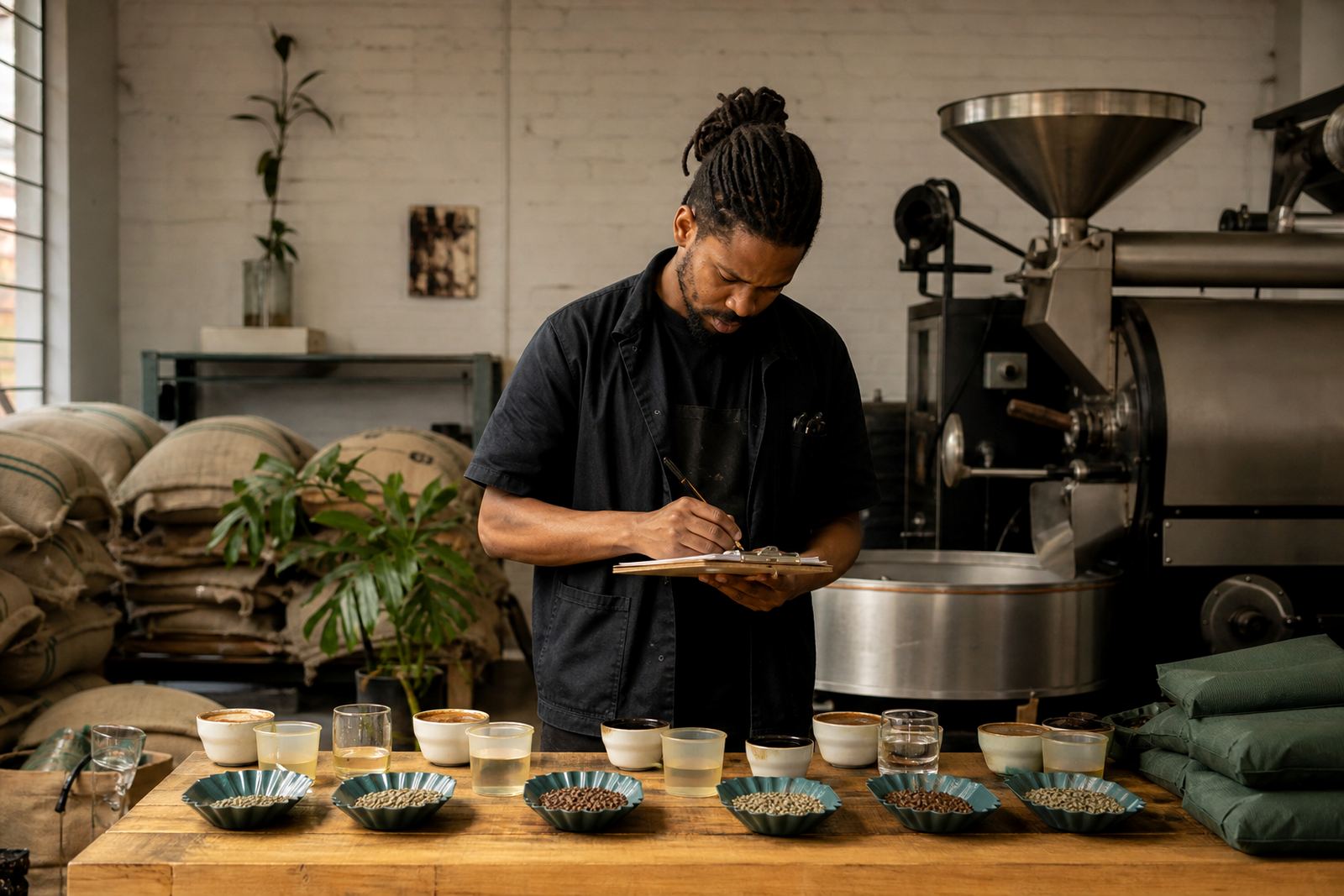
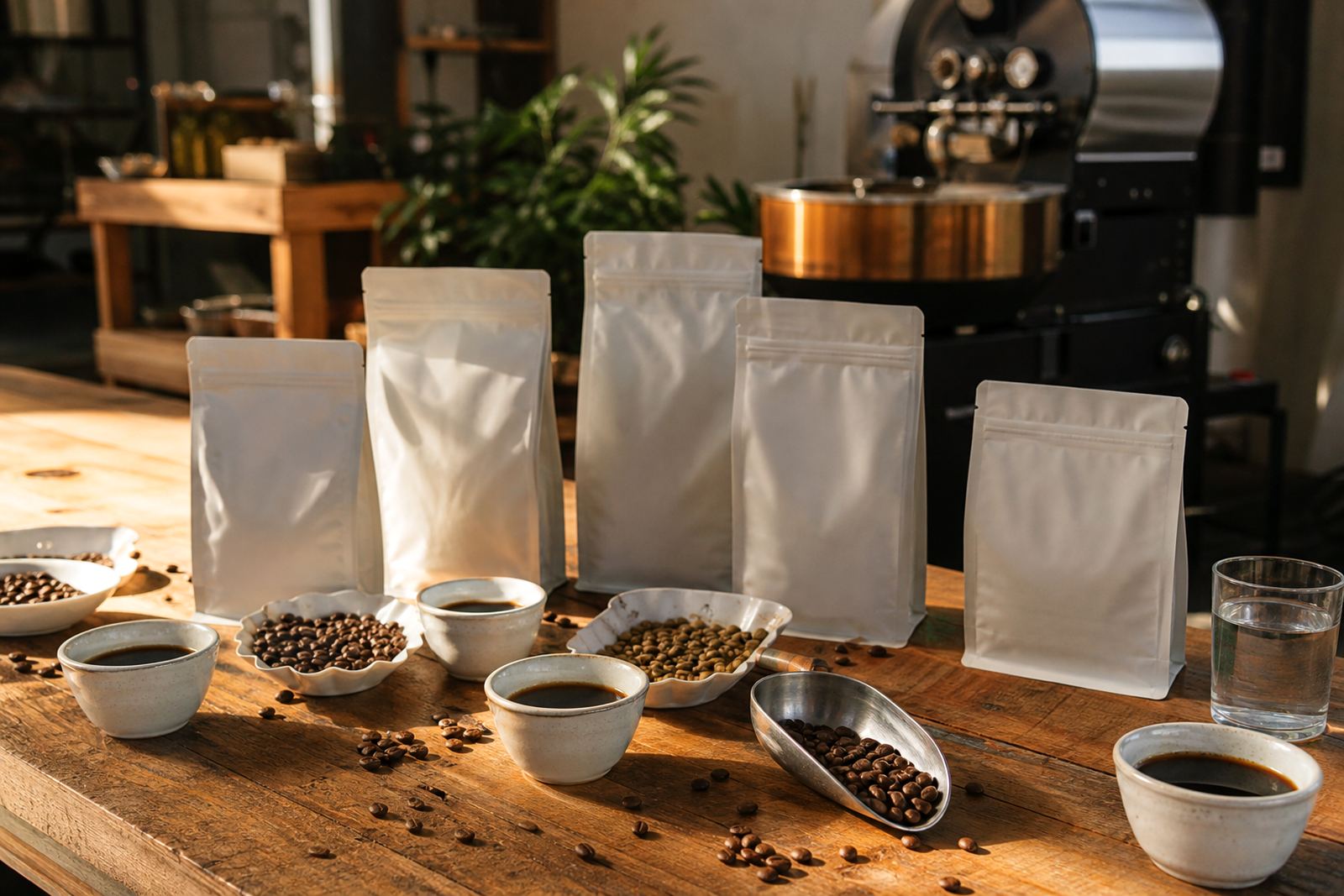
Every sample is judged against practical standards. We are not looking for a coffee that sounds interesting on paper, we are looking for one that tastes good in the cup and behaves predictably in production. When a green sample lands on the table, we evaluate aroma, bean size, colour, density and how even the screen size is. Then we cup it, often more than once, because one tasting is never enough.
We also look at the season. A coffee that tastes great in one harvest may shift next year if rainfall, picking conditions or processing changes. That is normal, but it means we have to stay alert. If a lot arrives with a little more ferment character than expected, we test it in smaller roasts first and decide whether it belongs in espresso, filter or a seasonal blend.
- Aroma in the dry grounds and the wet cup
- Sweetness, acidity and aftertaste balance
- Defects, including quakers and broken beans
- How the sample performs across several brew methods
How seasonal change shapes our buying decisions
Coffee is an agricultural product, so we buy with the season in mind. Rain, altitude, drying time and harvesting method all affect the final cup. We prefer origins that show us a clear pattern from crop to crop, because consistency matters to a home user in Cape Town and to a busy office in Johannesburg just as much as it matters to a cafe in Durban.
In practice, this means we plan ahead for seasonal rotation. If a Central American lot is moving out and a bright East African coffee is coming in, we make sure the handover is explained clearly to subscribers and wholesale clients. The change should feel intentional, not random. For customers this makes the monthly box feel fresh without losing the familiar standard they expect.
One practical benefit is freshness. We can align sourcing with roasting and dispatch so that bags do not sit too long in storage. In our climate controlled packing area this helps, but timing still matters, especially with humidity on the coast and heat spikes inland.
Traceability, ethics and paying for proper work
We want to know where a coffee comes from and who handled it. Traceability tells us more than geography, it gives context about the people behind the crop and the processes used at origin. When a producer group is transparent about picking dates, drying methods and lot separation, we can understand the coffee better and serve it more honestly.
Ethical sourcing is also practical sourcing. If a farm or exporter is organised, the coffee usually arrives with better documentation and fewer surprises. That makes it easier for us to plan roast volumes, stock forecasts and subscription packs. It also means we can tell clients what to expect, whether they are ordering for homes, meeting rooms or seasonal events.
- Clear lot notes and harvest timing
- Payment structures that support quality selection
- Separation of microlots and larger commercial lots
- Records that help us repeat a coffee when the season allows
How we match origin to South African brewing habits
South African customers brew in many ways. Some use plunger pots, others use stovetop brewers, home espresso machines or batch brewers in offices. That is why we do not source only for one method. We look for origins that can translate across different routines, with enough structure for milk drinks and enough clarity for black coffee. It is a practical filter, not a romantic one.
For example, a coffee with peach, citrus and floral notes may work best as a filter option in a Southern Suburbs home, where a customer can notice the detail in the cup. A fuller, chocolate-forward origin might be better for an Atlantic Seaboard cafe or a Pretoria boardroom where milk drinks are part of the day. The same origin can have different uses depending on grind, ratio and brew method, which is why we also offer grind calibration and brew training.
When a client asks for a subscription setup, we often plan around how much variation they want. Some people want a steady profile each month, while others prefer a seasonal rotation. Both can work, but the sourcing has to support the promise.
A Woodstock example: from sample table to monthly box
Take a recent sourcing cycle in Woodstock. We cupped several samples and one lot stood out for its clean sweetness and bright but not sharp acidity. It was not the loudest cup on the table, but it was the most balanced. That matters because balance travels well from a small roastery to kitchens and coffee stations across South Africa.
Before we approved it, we checked how it behaved in a lighter roast for filter and a slightly deeper roast for espresso. We also looked at how it might perform in office environments where equipment is used by different people and consistency has to be simple. The lot passed because it held its flavour without becoming harsh or flat. That means our customers get a coffee that is easy to brew and pleasant to drink, whether they are in Cape Town or Gqeberha.
That is the real point of sourcing well: the cup should make sense after the bag leaves our hands. If a coffee can stand up to a Monday morning office rush, a quiet weekend plunger, or a hospitality service for visitors, then it has earned its place.