


Start with a clean cup and a quiet moment
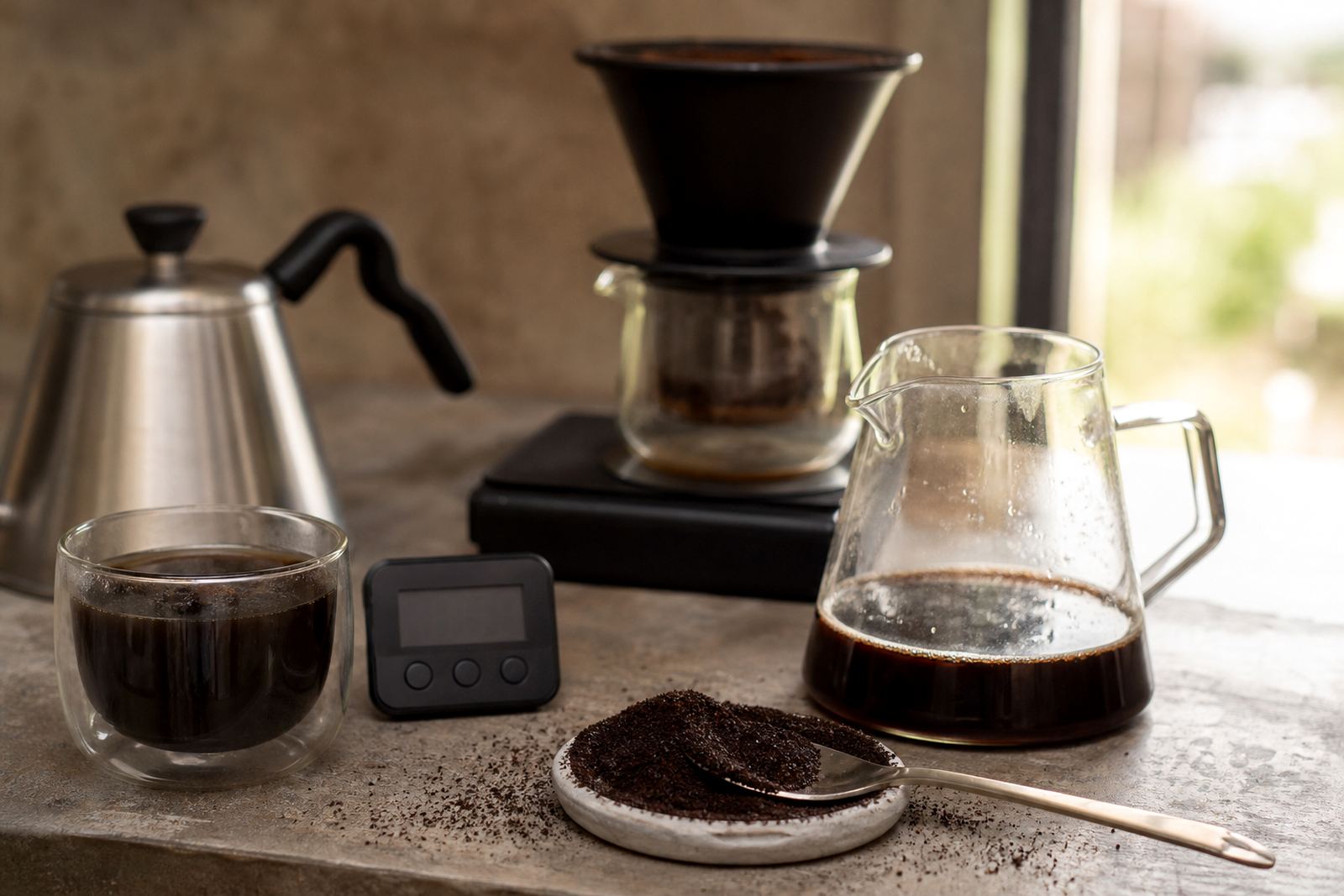
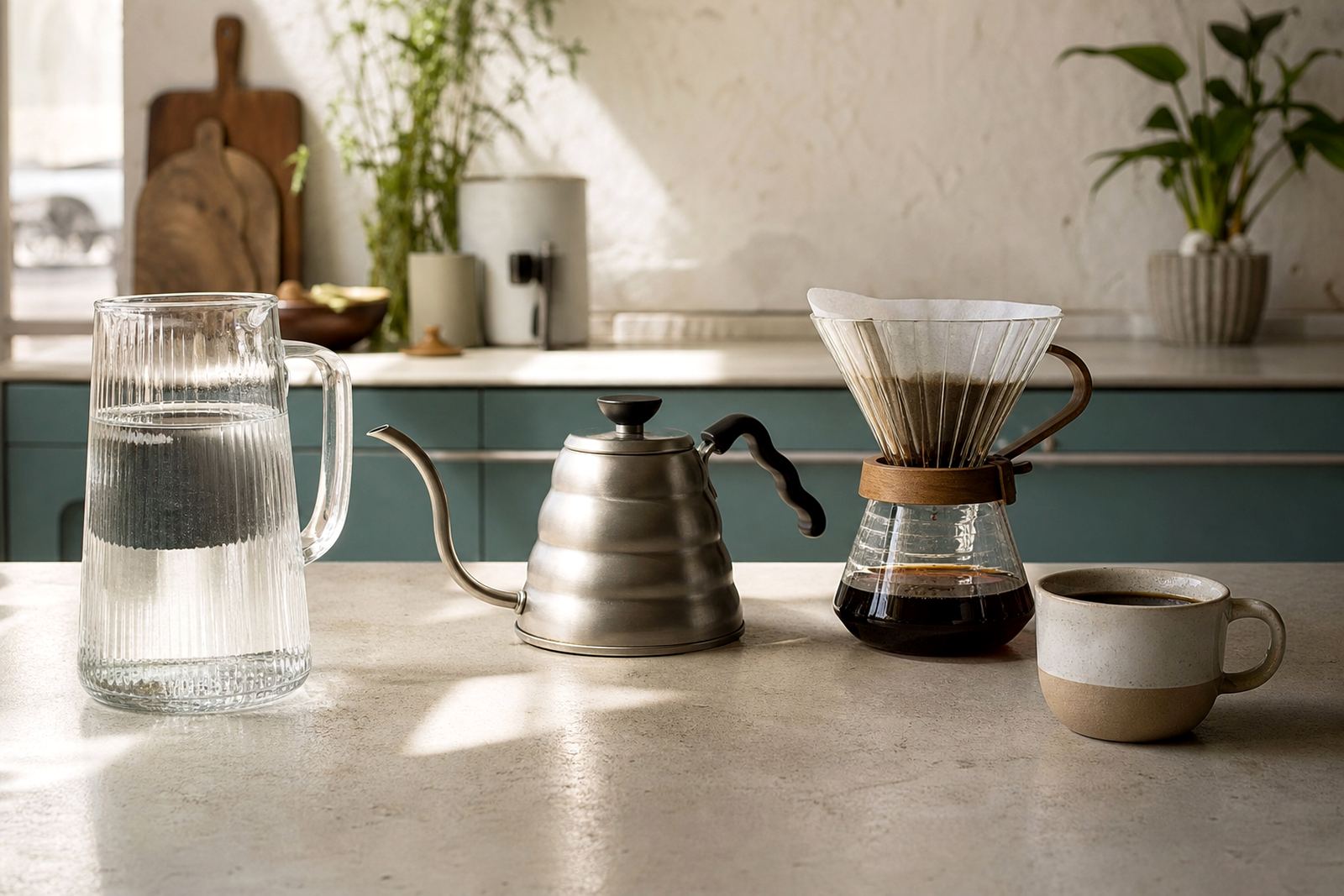
Good tasting begins before the first sip. Use a clean mug or tasting cup, fresh coffee and water that tastes neutral. If your cup still smells like soap or yesterday’s tea, the coffee will be harder to read. Brew the coffee as you normally would at home, then give it a minute or two to cool slightly, because very hot coffee hides a lot of detail.
Try to taste when you are not rushed. You do not need a special kit. A notebook, your phone notes or even the back of a receipt will do. The point is to slow down enough to notice what the coffee is actually doing in the cup, not just whether it wakes you up.
Use your nose before your tongue
Smell tells you a great deal. Before sipping, take two short sniffs and notice what comes to mind. You may think of citrus, cocoa, toasted nuts, berries, spice or something more floral. There is no perfect answer. You are training your memory to connect aromas with flavour, and that gets easier the more often you do it.
If the coffee is brewed fresh and still warm, the aroma usually changes as it cools. That change is useful. A coffee that smells bright and fruity at first may become sweeter and rounder after five minutes. That is normal, and it is part of the fun of tasting it properly.
- Smell the coffee in the cup before stirring.
- Smell again after a gentle stir.
- Notice how the aroma changes as the cup cools.
- Write down the first two things that come to mind, even if they sound simple.
Taste for sweetness, acidity and body
Take a small sip and let the coffee move across your whole tongue. Do not gulp it. Ask three simple questions: Is it sweet, is it bright, and does it feel light or heavy in the mouth? Sweetness might remind you of sugarcane, honey, or dried fruit. Acidity is not sourness, it is the lively, mouth-watering lift you get in good coffee. Body is the texture, whether it feels silky, thin, juicy or creamy.
Many people worry they are tasting coffee wrong because they cannot name every note. You do not need a full flavour dictionary. Start with broad ideas first. A coffee can be sweet and clean, or bold and chewy, or bright with a crisp finish. Once you can name those basics, finer details become easier to spot.
- Sweetness: rounded, pleasant and often the easiest sign of good extraction.
- Acidity: fresh, lively and usually strongest in lighter roasted coffees.
- Body: the weight and texture in the mouth.
- Balance: how well the parts fit together, rather than any one taste shouting over the rest.
Listen for balance and finish, not just flavour notes
A coffee can taste interesting at first and still be unbalanced. If it is too sharp, too flat, or bitter in a way that lingers unpleasantly, that tells you something about the roast or brew. The finish matters too. After you swallow, ask whether the flavour fades cleanly or hangs around with a dry, burnt or muddy aftertaste.
Balance is one of the most useful things to notice because it helps you decide whether a coffee feels ready for another cup. A balanced coffee usually has enough sweetness to support the brighter notes, and enough body to carry them. If one element overpowers everything else, the cup can feel tiring rather than enjoyable.
Use a simple scorecard for your own notes
You do not need a formal tasting sheet to improve. A plain structure is often better. Give each cup a few short notes and, if you like, a score out of ten. The more often you repeat the same method, the easier it becomes to compare coffees and spot patterns in what you enjoy.
Keep the notes short and practical. For example: “sweet, orange peel, medium body, clean finish” or “bold, cocoa, heavy mouthfeel, slightly dry aftertaste”. That is enough to guide your next purchase, your brew adjustment, or your choice of filter, plunger or espresso. It also makes it easier to explain your preference to a roaster or barista later on, which saves time.
- Use the same brew method when you compare coffees.
- Note grind size, water temperature and brew time if you know them.
- Write one thing you liked and one thing you would change.
- Keep tasting notes for at least three cups before deciding.
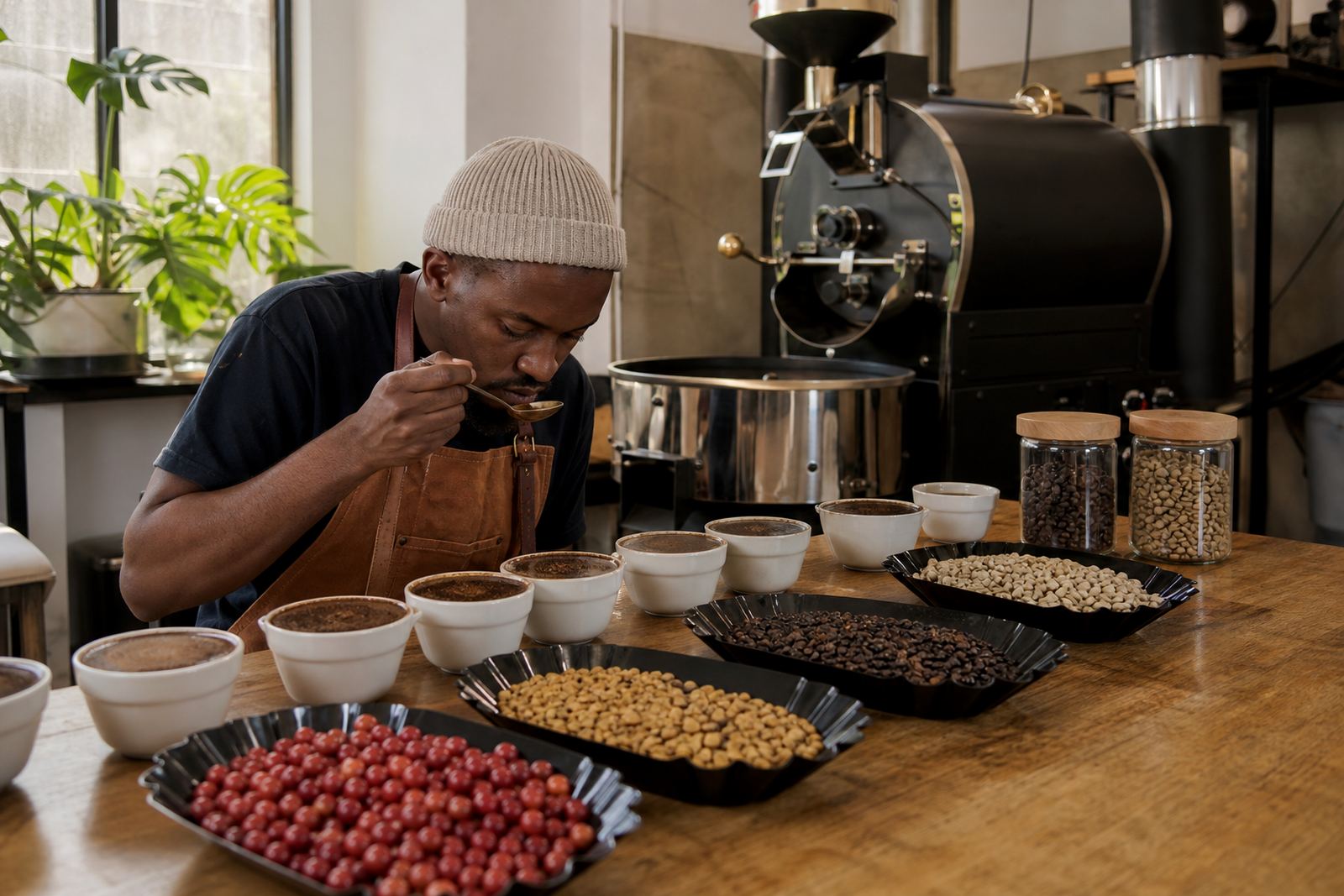
A Cape Town example: tasting a single-origin at home
Say you are in Woodstock on a cool morning with a cup brewed at home. The coffee smells like citrus and toasted almond before you sip. On the tongue it feels bright at first, then sweeter as it cools, with a clean finish and a little cocoa left at the end. That gives you a useful picture: lively, balanced and easy to enjoy black. If you add milk, you may notice the citrus softens and the sweetness becomes more like caramel.
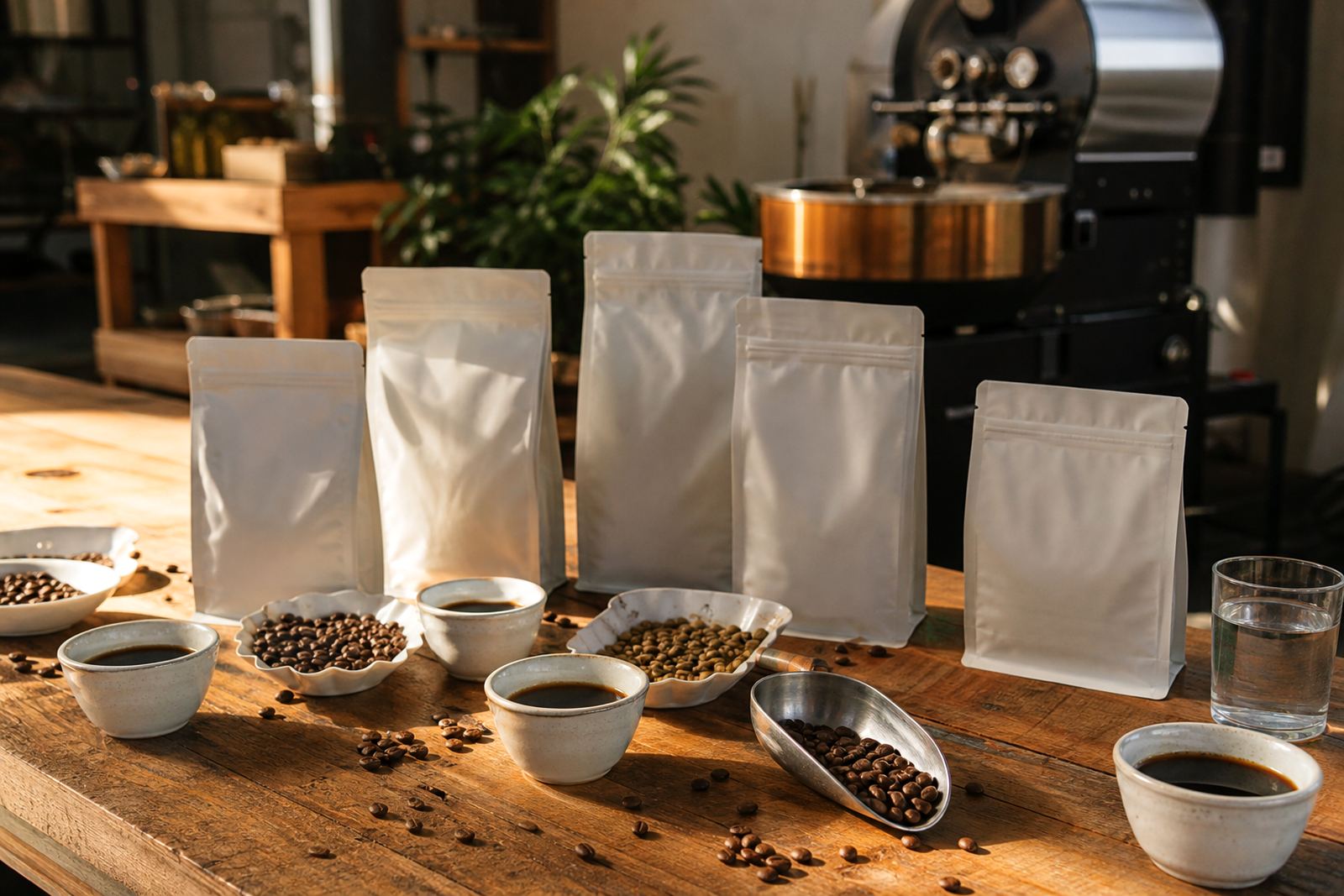
Now compare that with a darker, more developed cup from the same week. It may taste heavier, with less acidity and more roast character. Neither is automatically better. The right cup depends on how you like to drink coffee and when you are drinking it. A morning cup before work in Cape Town may call for brightness, while a meeting room service order might do better with a fuller style that holds up in milk.
Once you start tasting this way, you will notice that the same coffee can change from one brew to the next. That is useful, not a problem. It means you are paying attention. And the more you taste, the more confidence you build, even if you only know a few simple words at first.
Tasting coffee gets easier with repetition
The best way to improve is to taste often and keep the method steady. Start with one coffee, one brew method and one notebook. As your palate gets sharper, you will notice sweetness earlier, bitterness more clearly, and differences between origins that once seemed tiny. That is where confidence comes from.
If you are buying coffee for home, office or a small team, tasting also helps you choose better. It becomes easier to decide whether you want a brighter cup for the morning, a fuller profile for milk drinks, or a seasonal change that keeps things interesting through the year. Even a simple routine, done well, can turn everyday coffee into something you understand properly.