
Why water changes the taste of coffee
Coffee is mostly water, so every mineral, smell and bit of treatment in that water ends up in the cup. If the water is too hard, the brew can taste dull or chalky. If it is too soft, the coffee can taste sharp, thin or oddly sour. The goal is not perfect water in a lab sense, but water that helps the coffee show its natural flavour.
At our roastery in Woodstock, we see the same bean taste different from one area to another because the water changes the extraction. A house in Cape Town with filtered tap water may get a clean, bright cup, while an office in Durban with a stronger mineral profile may need a small adjustment to grind size or brew time. That is why the best water for coffee is usually the water that is balanced enough to support the brew, not fight it.
What good coffee water should contain
Good brewing water needs a bit of mineral content, especially calcium and magnesium, because they help pull flavour from the grounds. You want enough minerals to give structure and sweetness, but not so much that they mask delicate notes. Water with a strong chlorine smell or a heavy metallic taste will usually make the cup worse before the coffee even starts brewing.
- Taste: clean, neutral, no chlorine smell or odd aftertaste
- Minerals: some hardness is useful, but not excessive
- Balance: not overly soft, not heavily scaled
- Consistency: the same water profile every day, especially for subscriptions and office brews
For filter coffee, water that is too mineral heavy can flatten the brighter notes. For espresso, hard water can build scale in the machine and change pressure and flow. If you are brewing daily at home or in a small workplace, consistency matters just as much as taste.
Tap water, filtered water or bottled water?
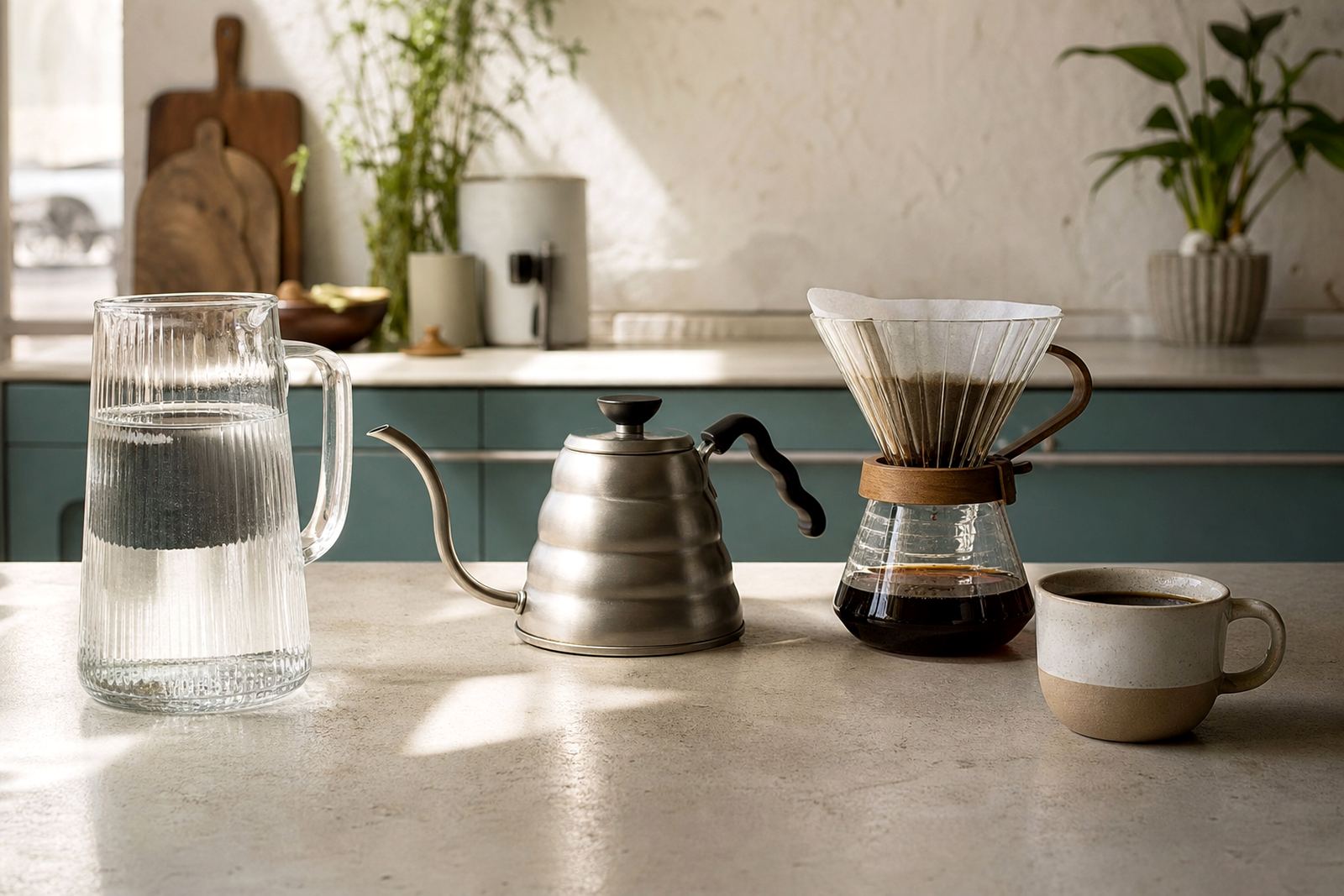
In many South African homes and offices, tap water is safe enough to drink but still not ideal for brewing coffee straight from the tap. Municipal water can carry chlorine, pipe taste, or changing levels of hardness depending on the area and season. A simple carbon filter often improves the cup straight away by reducing smell and taste problems.
Bottled water can work well, but not every bottle is suitable. Some have very low mineral content and can make coffee taste thin. Others are mineral-heavy and create scale in kettles and espresso machines. If you use bottled water, choose one that tastes neutral and gives a balanced cup rather than one that just seems pure.
- Use tap water only if it tastes clean and has no strong odour
- Use a basic filter if the water smells of chlorine or tastes flat
- Avoid very soft water that leaves coffee tasting hollow
- Avoid very hard water if you use an espresso machine or boiler daily
A practical water profile for home and office brewing
You do not need to become a water chemist to brew better coffee. A practical target is water that tastes clean, has moderate mineral content and behaves the same each day. That gives you better clarity in single-origin coffee, especially when you want to taste fruit, cocoa, florals or nuts without the brew turning muddy.
For a home setup, start with filtered tap water and see how the coffee tastes. If the cup is bright but thin, there may be too little mineral content. If it is heavy, dry or tastes muted, the water may be too hard. At offices in Johannesburg or Pretoria, where people brew larger volumes through the day, a stable filtration setup often helps more than changing the coffee itself.
A good rule is to test water before changing recipes. Many people keep adjusting dose and grind when the real issue is the water. One small change can save a lot of wasted coffee and a fair amount of frustration too.
How to spot water problems in the cup
If coffee tastes inconsistent, water is often part of the problem. You may notice that the same beans taste great one day and flat the next, especially when the kettle, machine or municipal supply changes. In coastal places like Gqeberha or Durban, humidity can also affect storage and equipment, but water remains one of the first things to check.
Look for these signs in the cup:
- Bitterness that appears even when the roast and grind are familiar
- Weak sweetness and a short finish
- Cloudy flavour with little clarity between tasting notes
- Scale in kettles, boilers or steam wands
- Inconsistent espresso shots from the same setup
If your brew tastes sour and thin, the water may be too soft or the extraction too low. If it tastes heavy and muted, the water may be too hard or too alkaline. In both cases, the fix may be as simple as changing the filtration or using a different water source.
How we approach water for coffee at A Cup Of
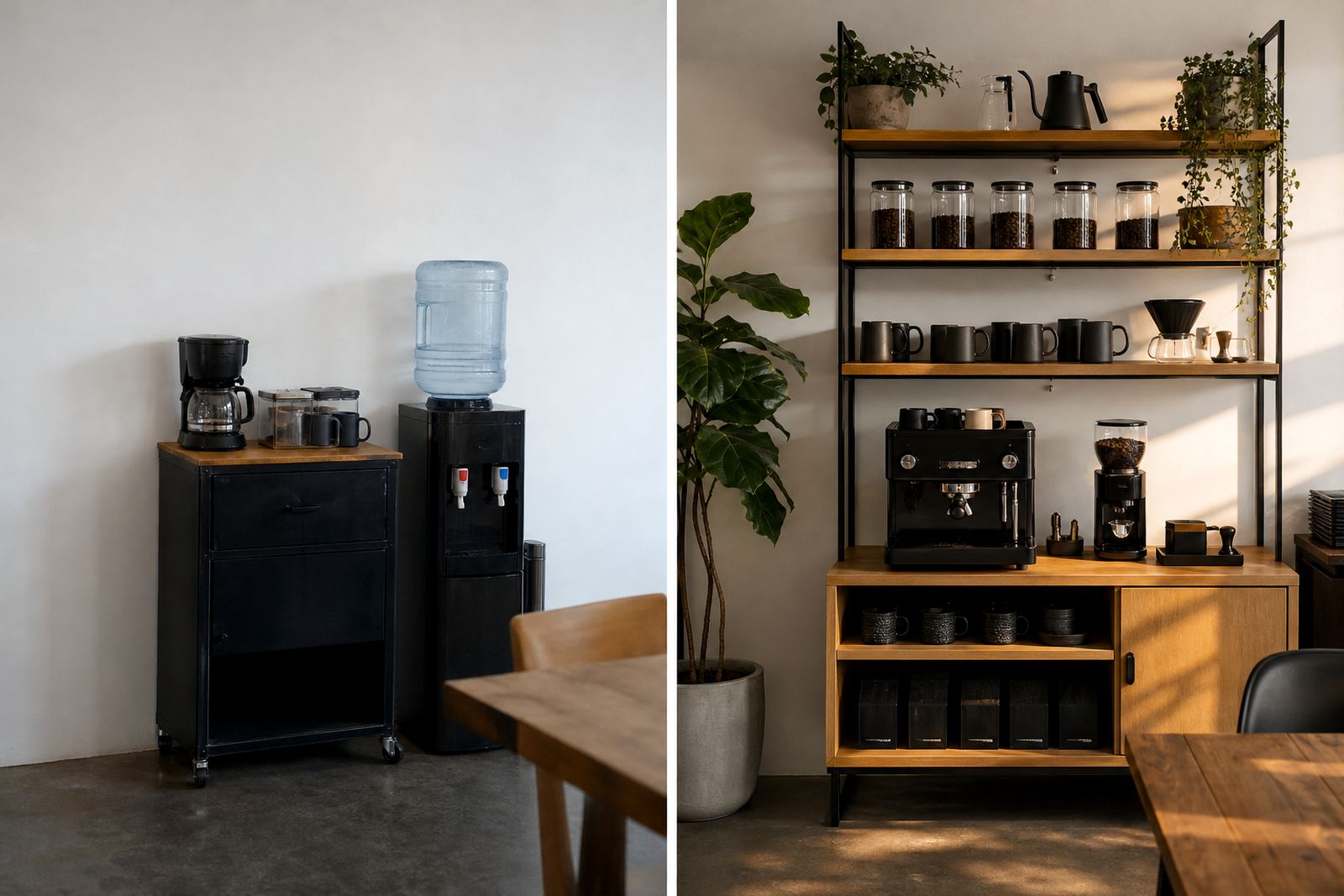
When we help with brew training, coffee menu planning or brew station setup, we always ask about the water first. It affects grind calibration, extraction time and even how often equipment needs cleaning. For a small café in Woodstock, a shared office in the Southern Suburbs, or a meeting room setup in the Atlantic Seaboard, the right water makes service steadier and the coffee easier to repeat.
We often advise clients to treat water as part of the recipe, not just the machine. If the goal is a sweeter cup with clearer flavour, water needs attention alongside the bean, grind and brew method. That is especially true for seasonal coffee rotation and subscription coffee, where the beans change and the water should remain a reliable base.
In practical terms, the best water for coffee is clean, balanced and consistent. Keep it simple, test it in your own setup and make one change at a time. That way you will know whether the difference came from the bean or the water, not guesswork.