
When freezing coffee makes sense in a South African home
Freezing is useful when you have a full bag of beans and you know it will not be finished before the best drinking window closes. In South Africa that often happens when people buy a 1 kg bag for home, then also use a separate grinder at the office or share coffee with family on weekends. If your kitchen is warm, or the bag sits near a stove, window, or the microwave during load-shedding, the beans age faster than many people expect.
It can also make sense if you have found a coffee you enjoy and want to keep it tasting close to the day it was roasted. Single-origin coffee often changes in the cup as it rests, then slowly drops off. Freezing helps slow that decline, so the flavour stays clearer for longer. It is most useful when you freeze beans while they are still fresh, not after they have been open for weeks and already gone flat.
For homes in Cape Town near the coast, humidity is one more reason to think ahead. Moist air and frequent opening of a bag can affect the bean surface and aroma. Freezing is not for every bag, but it is a practical option when the supply is larger than your weekly brew rate.
What freezing does to flavour, and what it does not do
Freezing does not improve weak coffee or bring back flavour that has already faded. What it does is slow the natural staling process. The oils and aromatic compounds in coffee are delicate, and heat, oxygen and moisture all work against them. A freezer gives the beans a colder, steadier environment, so the decline happens more slowly.
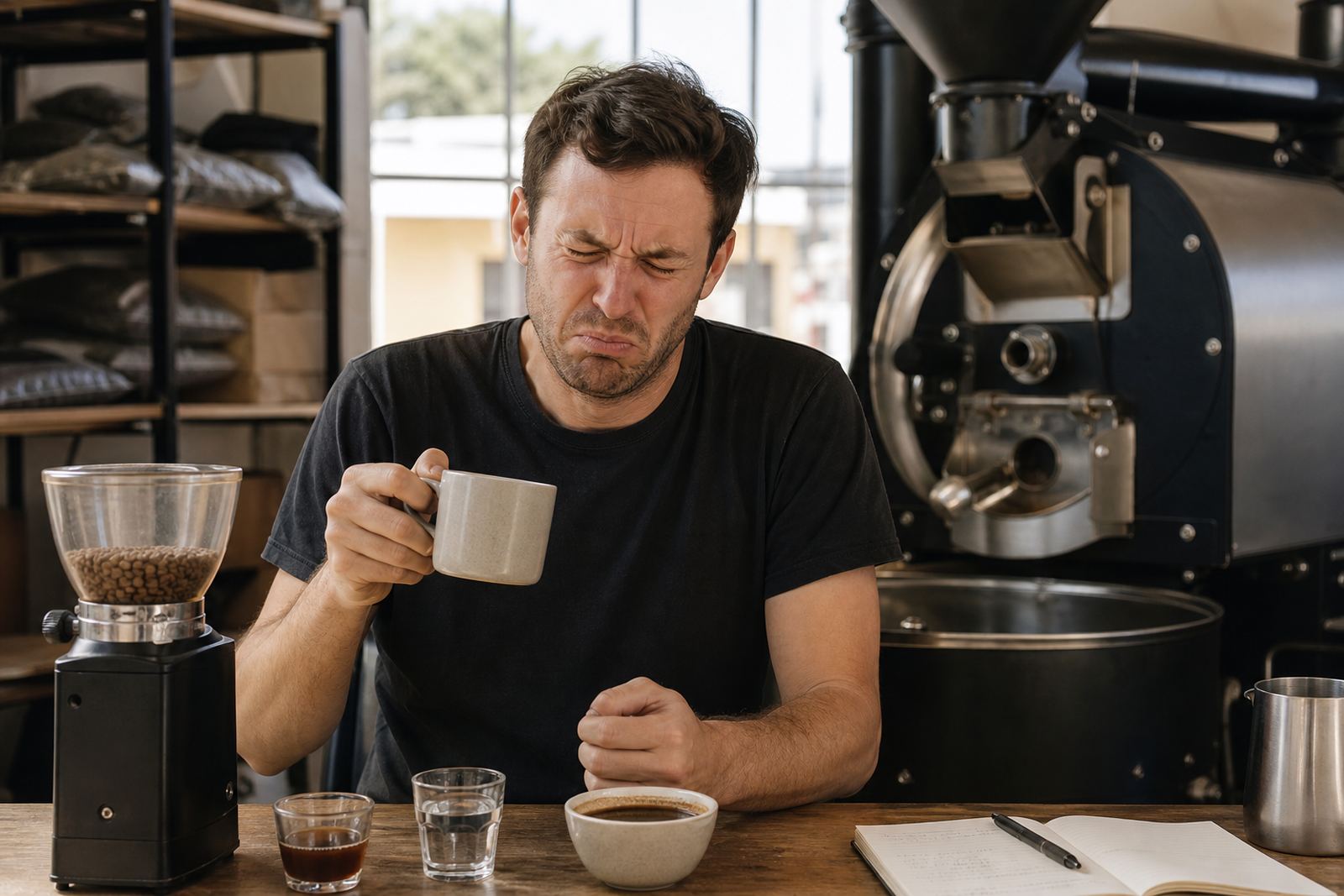
It is worth being honest about the trade-off. If the beans are packed badly, they can pick up smells from onions, fish, or last night’s leftovers. They can also absorb moisture when you take them out and let them sweat on the counter. That is how you end up with coffee that tastes uneven, where the first cup is lively and the next is dull or a bit musty.
If you freeze coffee, treat it as a storage method, not a rescue plan. The best results come from beans that are fresh, dry and sealed tightly before they go into the freezer.
How to pack beans so they do not pick up freezer smells
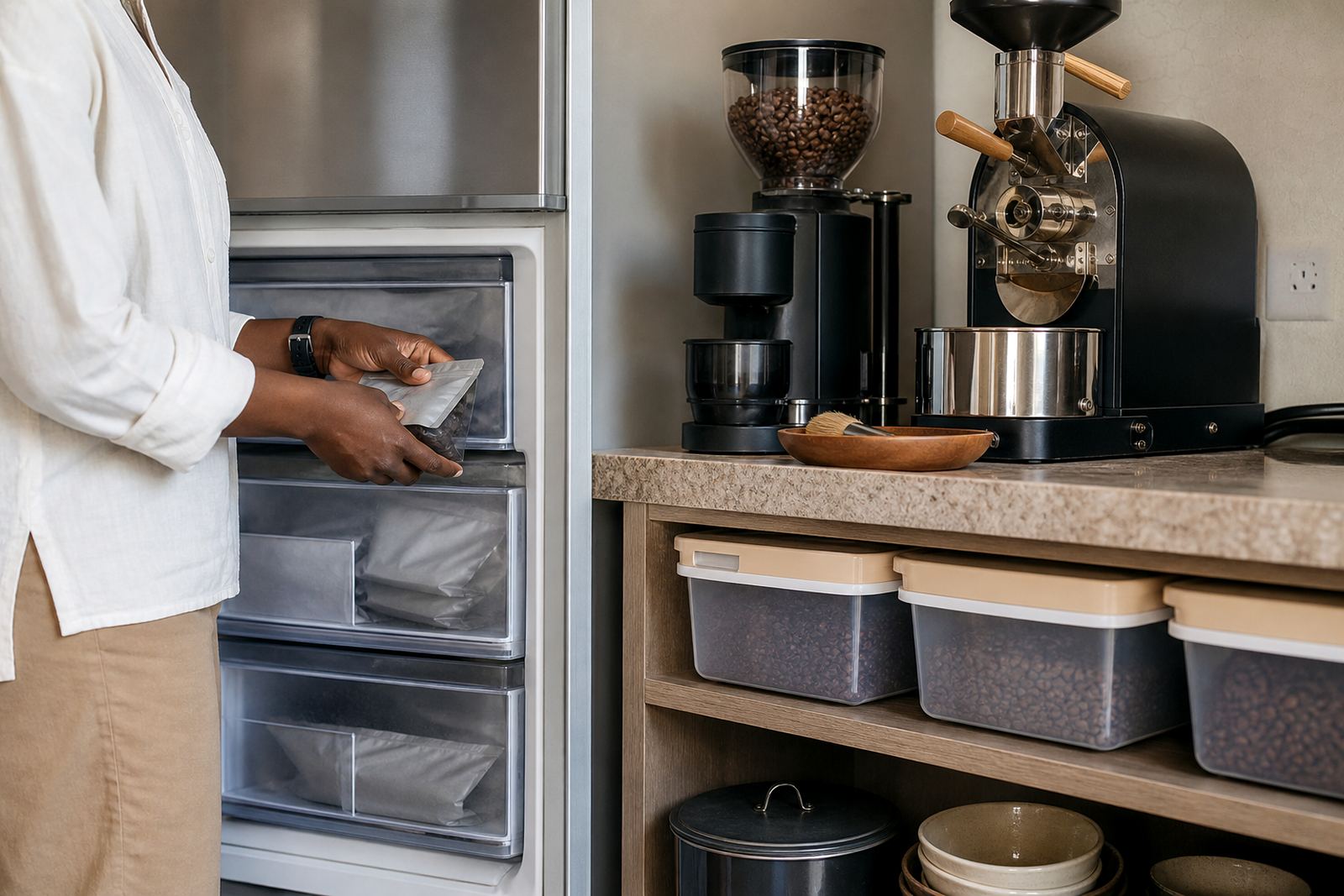
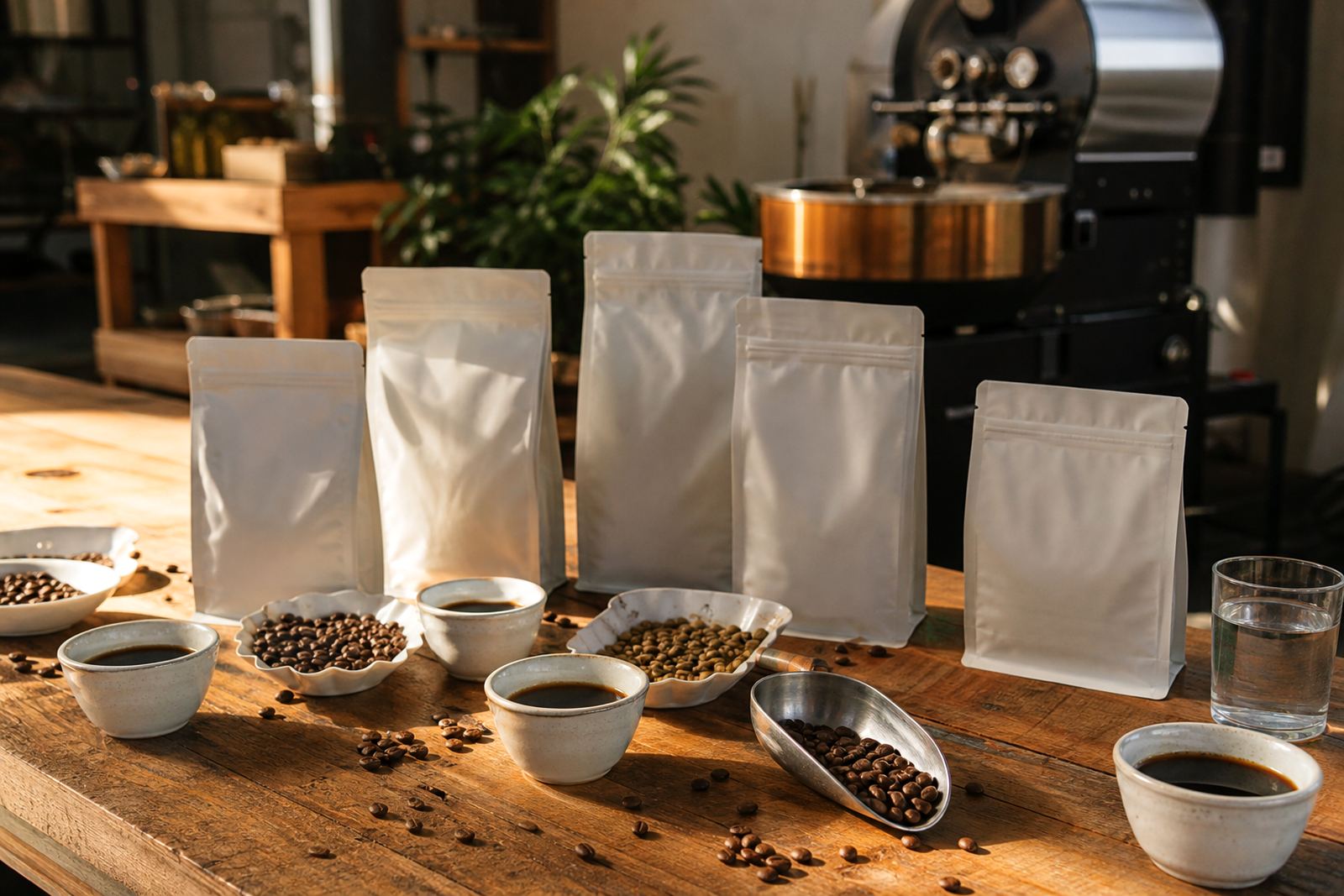
Packaging matters more than most people realise. A bag with a half-open seal is not enough, and a thin supermarket packet will not keep out moisture for long. Use a clean, airtight container or a good quality bag that can be sealed properly. Keep the portion small enough that you only take out what you need for a few brews at a time.
- Divide beans into single-use or few-use portions before freezing.
- Push out as much air as possible before sealing.
- Label each pack with the roast date and the freeze date.
- Keep the packs away from strong-smelling food.
- Do not keep opening the same pack over and over again.
If you buy for a home and an office at the same time, this kind of portioning is useful. It helps when one location uses beans quicker than the other, and it keeps the flavour more consistent across the week. It also avoids the common mistake of freezing one large bag and then thawing and refreezing it. That should be avoided every time.
The best way to thaw beans before brewing
The simple rule is this: take out only the amount you need, and let it come back to room temperature before opening the pack. If you open cold beans straight away, condensation can form on the surface. That moisture is the enemy of even extraction. A slow, closed thaw is far better than a quick one on the counter in an open bowl.
For filter coffee, espresso, or a home brewer with a burr grinder, consistency matters. Beans that thaw unevenly can grind unevenly too, which affects flow rate and taste. If you brew several cups in the morning before school runs or before traffic builds on the N2, give the beans a little time. It is a small step that helps keep the cup balanced.
- Move the sealed portion from freezer to counter.
- Let it sit unopened until it reaches room temperature.
- Open only when the outside feels dry and the pack is no longer cold.
- Grind as normal, then brew soon after.
Do not leave thawed beans in the freezer or fridge for later reuse. Once they are out, use them. That keeps the flavour cleaner and the routine simpler.
How much coffee should you freeze at once
The right amount depends on how quickly you drink coffee. A household using one or two cups a day may only need to freeze a few small packs. A busy office, guest house, or hospitality counter may want a larger rotation, but even then portion control helps. In practice, small sealed packs are better than one large bag because they reduce oxygen exposure each time you open a pack.
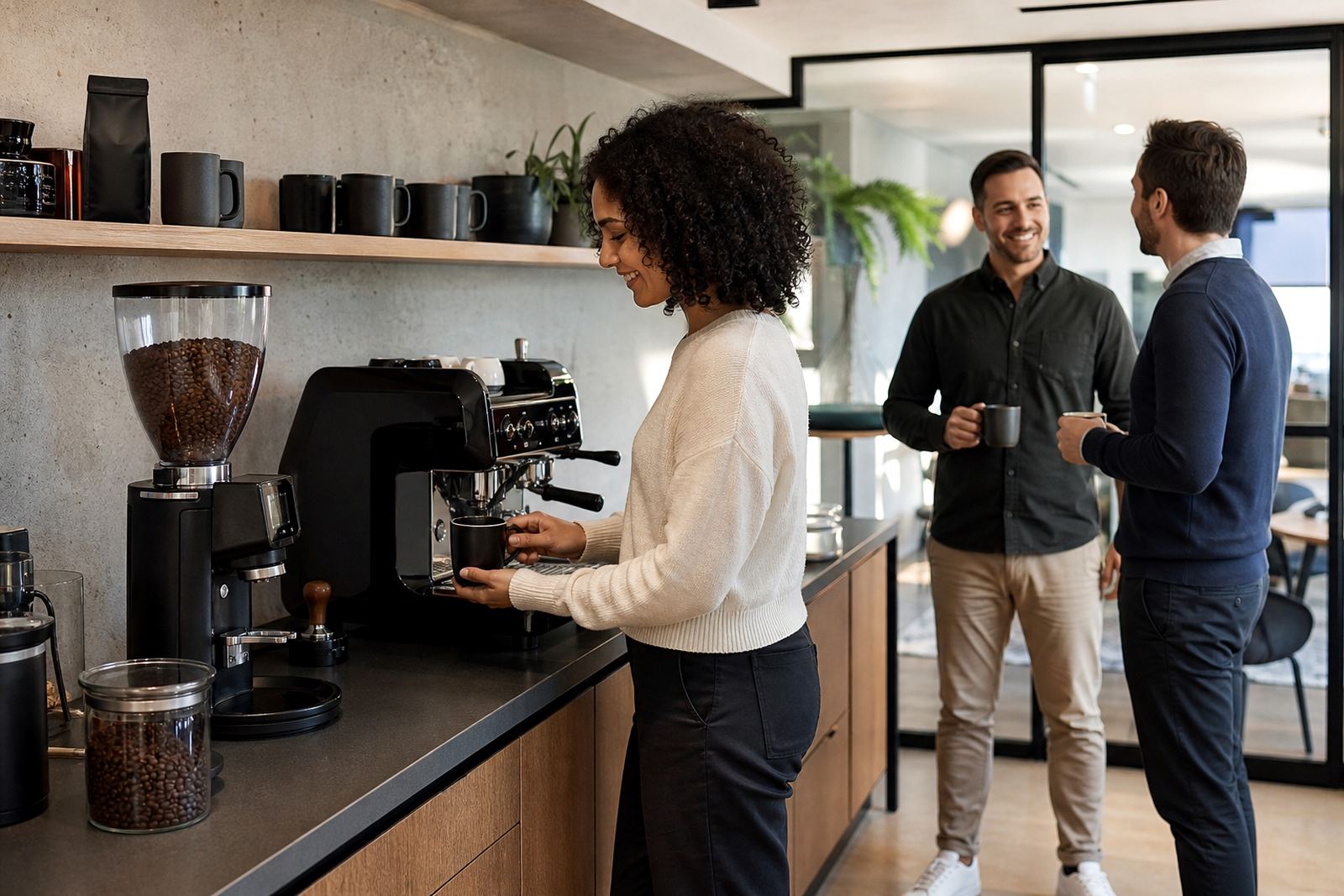
For many South African customers, the most sensible approach is to keep one working bag in the kitchen and freeze the rest in measured portions. That works well in apartment blocks in the Southern Suburbs, in small offices in Woodstock, and in shared spaces where different people brew at different times. The fewer times you expose the coffee to air, the better the result.
As a general guide, freeze only what you are unlikely to finish within a few weeks. If a bag is moving fast, keep it in a cool cupboard away from direct sunlight. If it is moving slowly, freeze it before the flavour starts to drop off.
A local example from a Cape Town household and office
Consider a family in Sea Point that drinks filter coffee at home and also keeps a small bean supply at a nearby office. In summer, the kitchen is warm, the office aircon is switched off after hours, and the beans are opened and closed all week. Without a plan, the flavour shifts quickly. A simple freezing routine solves most of that problem.
They buy fresh beans, divide them into two or three airtight portions, and keep only one portion in use at a time. The rest stay frozen until needed. The morning cup stays bright, and the office brew does not taste like it has been sitting around for ages. It is not complicated, just steady and tidy.
That is usually what works best with coffee: not fancy tricks, but good storage and enough care to protect the roast. If your beans are handled well from the start, freezing can help them last longer without losing their character too quickly.
A practical final rule for better cups
Freeze coffee beans when you need to slow things down, not when you want to fix something that is already old. Use airtight packs, small portions, and a slow thaw. Keep them away from strong freezer smells and do not open the same pack repeatedly. If you do that, freezing can be a very useful part of home brewing and small office coffee routines.
For anyone managing coffee across a home, meeting room, or shared workspace, the aim is simple: keep flavour steady and waste low. That is better for the cup and better for the budget. A little planning goes a long way, even when the power goes off and the kitchen gets warmer than it should.