

Start with strength, acidity and sweetness
Good pairing starts with balance. A bright, lighter-roasted coffee usually has more citrus, floral or berry notes, so it works well with foods that are buttery, creamy or mildly sweet. A fuller-bodied coffee with chocolate, nut or caramel notes can stand up to richer breakfast plates and denser cakes without tasting flat.
Think about what the coffee is doing in the cup. High acidity can cut through cream cheese, yoghurt or custard, while deeper roast flavours can support toasted bread, oats and baked eggs. Sweet foods can soften bitterness, but too much sugar can hide the flavour of the coffee itself, so it is worth keeping the portion modest and letting the cup still lead the table.
At home or in a café, the aim is not to match every note exactly. It is to make the coffee taste cleaner and the food feel more complete. That is why a small pastry and a well brewed cup often work better than a heavy plate and a strong coffee that fight each other.
Pair bright coffees with pastries that need lift
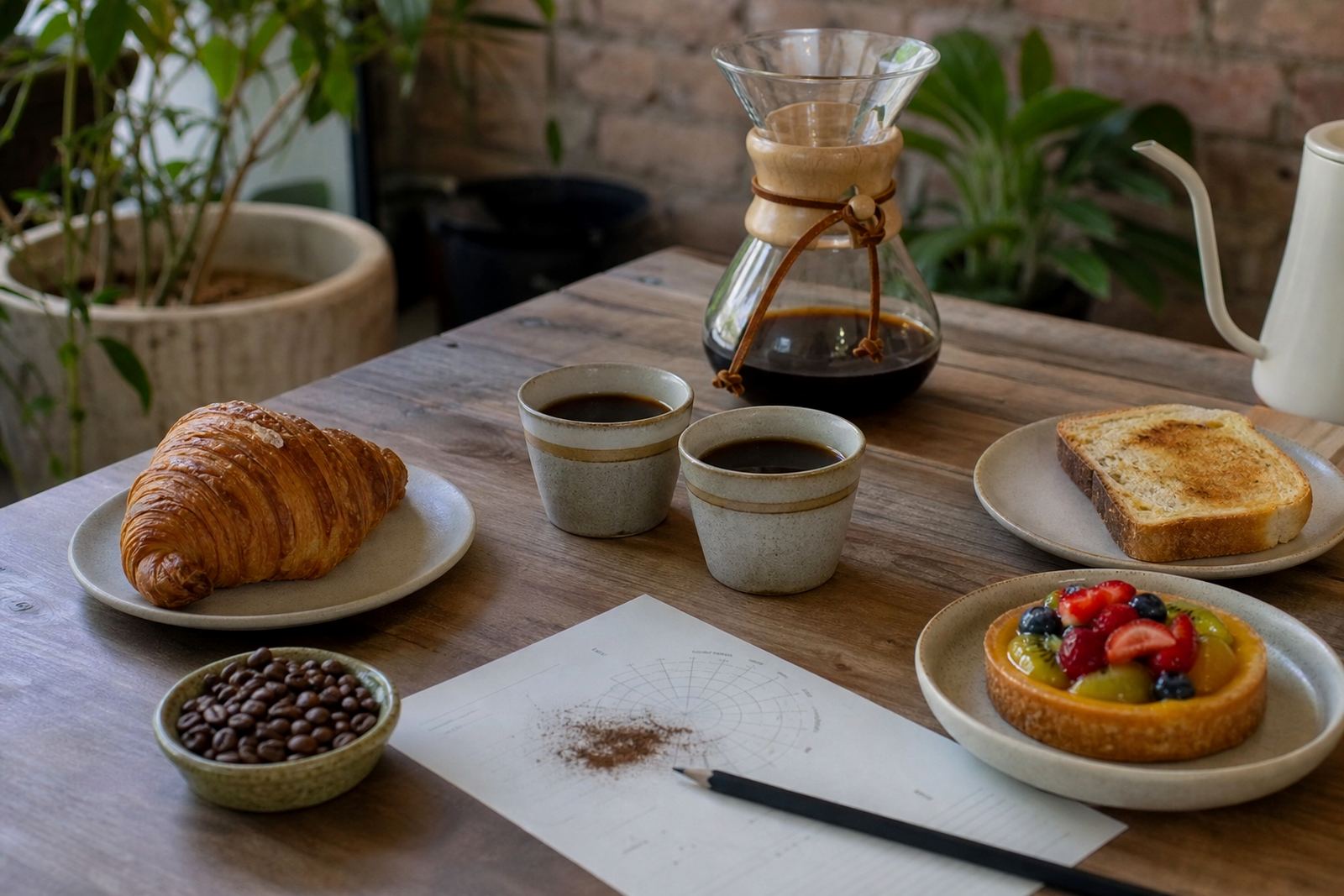
Light single-origin coffees are a natural fit for pastries and baked items with butter, fruit or a little glaze. The coffee gives the palate a reset between bites, while the pastry smooths out sharp acidity. This is a useful match for morning service, especially when customers want something quick before work or between meetings.
- Butter croissant with a washed coffee that has citrus or stone fruit notes
- Blueberry muffin with a light filter brew
- Lemon loaf with a coffee that has a clean, tea-like finish
- Almond slice or biscotti with a floral coffee
If the pastry is very sweet, choose a coffee with a crisp finish rather than a heavy roast. That keeps the cup from tasting dull. For an afternoon order, a filter coffee with plum, peach or orange notes can work well with a scone and jam, especially when the jam is not overly sweet.
Breakfast plates need a coffee with enough body
Breakfast is where many pairings go wrong. A strong meal with eggs, bacon, mushrooms or baked beans needs a coffee that can hold its own. A medium or medium-dark roast with chocolate, nut or caramel tones is usually a better match than a very bright cup. It gives the meal a steadier finish and does not disappear once the plate arrives.
For porridge, muesli or toast, the pairings can be softer. A balanced coffee with low bitterness works well because it does not overpower milk, oats or yoghurt. If the breakfast leans savoury, such as toast with avo or a breakfast bun, the coffee should be clean and not too acidic. In a busy office kitchen or a small guesthouse breakfast service, that makes service simpler because one coffee style can suit a few dishes.
- Eggs and toast with a medium roast and caramel notes
- Oats and fruit with a clean filter coffee
- Breakfast buns with a nutty espresso-based drink
- Yoghurt bowls with a coffee that has mild acidity
Simple sweet treats and the right cup after lunch
After lunch, people often want something sweet but not heavy. This is where cake slices, biscuits and small tarts can pair well with coffee if the sweetness is not overdone. A flat white, cappuccino or filter coffee each brings something different. Milk softens the cup, while filter gives more room for the coffee’s own flavour.
Chocolate cake and brownies usually need a coffee with enough depth, or the cocoa can make the coffee seem thin. Carrot cake works well with nutty, spiced or gently fruity notes. Shortbread and plain biscuits are more forgiving, which makes them useful in meetings, reception areas and service counters where people choose quickly. A lot depends on portion size too. A small slice and a smaller cup often taste better than a very large serving that leaves the mouth tired.
At our Woodstock roastery, we often see this with office drop offs in Cape Town. A tray of plain biscuits beside a bright brew keeps the coffee lively, while a brownie tray needs a fuller cup or the pastry takes over. In practice, the better pairing is the one that still tastes good on the last sip and the last bite, not only the first.
Use milk drinks when the food is richer or more savoury
Milk changes the job of the coffee. It softens acidity, adds sweetness and makes the cup more forgiving with richer food. That is helpful for pastries with custard, savoury pies, toasted sandwiches or breakfast items that have cheese or creamy fillings. In these cases, espresso-based drinks often work better than filter because they have a tighter, fuller profile.
- Cappuccino with custard slice or vanilla tart
- Flat white with toasted banana bread
- Latte with a savoury breakfast muffin
- Espresso with a dark chocolate biscuit
In a coastal town, humidity can affect how baked items hold up across the morning, especially on open counters or in transport. A milk drink can help softer pastries still feel pleasant if they have picked up a little moisture. The drink should not be so sweet that it wipes out the food though. A properly made milk coffee should still taste like coffee first.
A local example from Cape Town service counters
On a weekday morning in Cape Town, a small bakery counter might serve croissants, banana bread and a few egg rolls before 10am. A bright filter coffee suits the croissants and banana bread. The egg rolls need a fuller cup, especially if there is cheese or bacon in the filling. If the same counter is serving a late breakfast crowd, a milk drink or a medium roast espresso can cover more items without changing the grinder all day.
For businesses in the Southern Suburbs or Atlantic Seaboard, the pattern is often about pace. Early customers want something light and quick, while later customers want a more filling snack. In Johannesburg or Pretoria, the same idea applies in office kitchens and meeting spaces, where one coffee station may need to handle pastries, breakfast muffins and sweet treats through the day. A seasonal rotation can help too, because some coffees read better with fruit pastries in summer and others suit spiced cakes in winter.
The simplest test is practical: taste the coffee with the food, then taste it again after a few bites. If the cup feels sharper, flatter or overly bitter after the food, the pairing needs adjusting. That is usually easier to fix with roast style, milk level or brew strength than by changing the food itself.
A quick pairing rule for homes, cafés and offices
If you want a simple rule, start with this: lighter coffee for lighter food, fuller coffee for richer food, and milk when the plate needs softening. That gives you a useful base for home breakfasts, café counter service and office coffee setups. It also helps when planning a menu for meetings or events, where the food may change but the service needs to stay consistent.
- Bright coffee with buttery, fruity or creamy items
- Full-bodied coffee with eggs, chocolate or toasted foods
- Milk drinks with custard, cheese or savoury bites
- Filter coffee with smaller sweet treats and biscuits
The best pairings are usually the ones that feel easy. You do not need a complicated menu to make coffee and food work well together. You just need to notice what makes the cup taste cleaner and what makes the food feel more complete. Once that is in place, the pairing starts to do real work for the table.