

Choose the right beans, grind and water
Stovetop coffee works best with fresh beans and a medium-fine grind, a little coarser than espresso and finer than filter. If the grind is too fine, the brew can turn bitter and clog the basket; too coarse and it comes out weak. For a strong but balanced cup, start with 18 to 22 g of coffee for a small stovetop pot and adjust from there.
Use clean water with no strong chlorine taste. In coastal areas like Cape Town and Gqeberha, damp air can affect stored beans, so keep them in a sealed container away from heat and sunlight. If load-shedding hits before your morning brew, pre-grind only what you need for the next day, not the week.
- Use freshly roasted beans if possible
- Grind just before brewing for best aroma
- Measure water and coffee the same way each time
- Store beans in a cool, dry cupboard
Set up the stovetop pot properly
Fill the bottom chamber with water up to, but not above, the safety valve. That valve matters, because overfilling can push water into the coffee basket too fast and give you a harsh cup. Place the filter basket in firmly, add the grounds, then level them gently without tamping.
Wipe the rim clean before closing the pot. A clean seal helps pressure build evenly and keeps stray grounds out of the threads. On gas, electric or induction, the aim is a steady brew, not a fast boil. A slow rise gives you better control and less bitterness.
- Check the rubber seal for wear or cracks
- Make sure the basket sits flat
- Do not pack the coffee down hard
- Use the correct size pot for the number of cups
Control heat like a pro
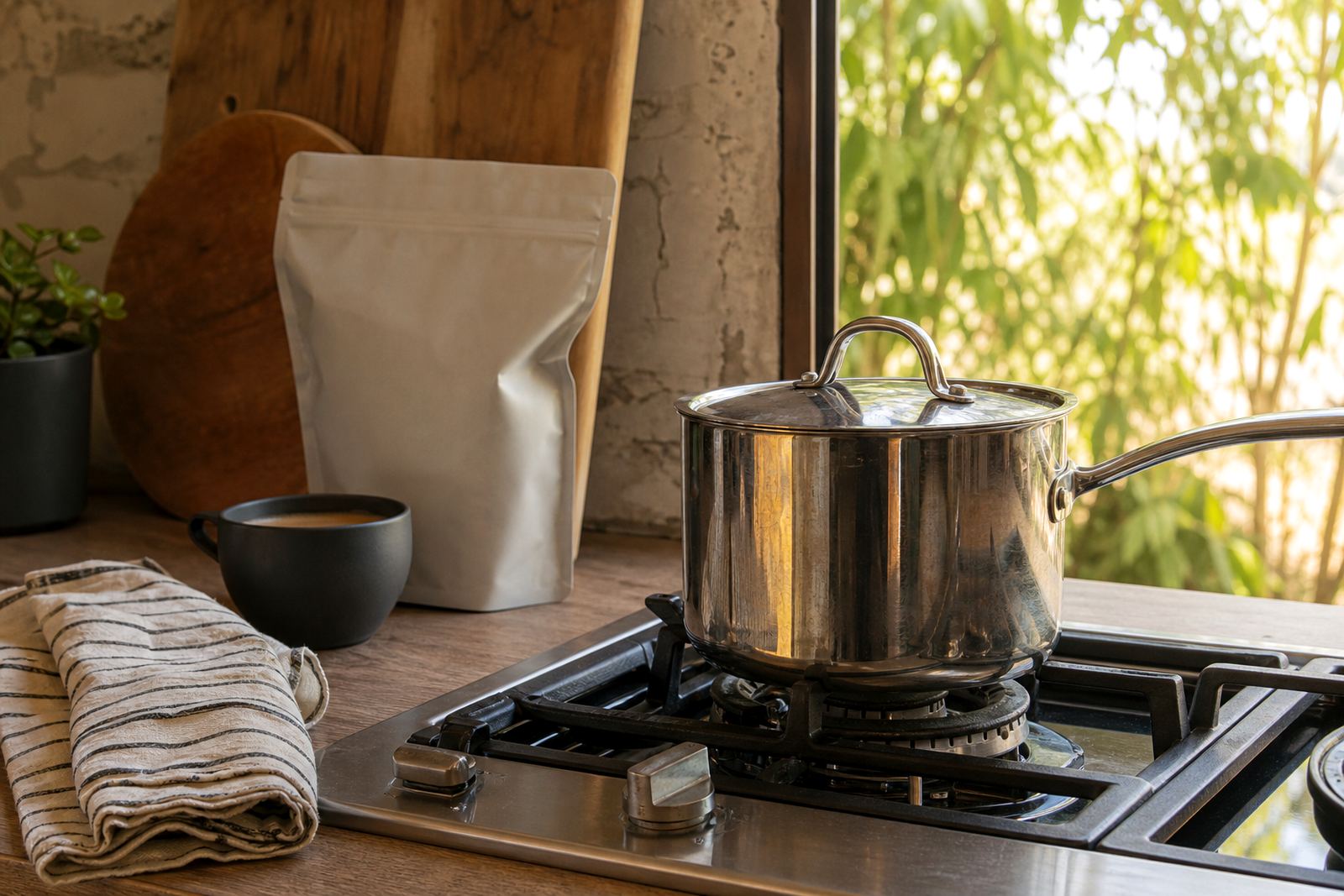
Heat is where most stovetop brews go wrong. Put the pot on medium heat and leave the lid open at first so you can watch the coffee flow. As soon as the stream starts, lower the heat a touch. If it blasts out too hard, the brew can taste burnt and flat.
Once the flow turns pale and begins to spit, take the pot off the heat immediately. A towel or cloth can help protect your hands, especially in busy kitchens or hospitality settings where the stove is shared. Let the coffee finish flowing from residual pressure, then serve straight away.
Sweetness comes from stopping the brew before the last, harsh part runs through the basket. That final bit often carries the bitter edge people blame on the beans.
Taste, adjust and keep notes
Your first cup is only the starting point. If it tastes sour, use a slightly finer grind or a little more coffee. If it tastes bitter, use a coarser grind, lower the heat, or stop the brew earlier. Small changes make a big difference, and a clear notebook saves time when you find a mix you like.
For homes and offices across Johannesburg, Pretoria or Durban, a simple brew log helps keep everyone on the same page. Write down the bean name, dose, water level, grind setting and brew time. That way you can repeat a good cup instead of guessing each morning.
- Sour taste: grind finer or increase dose slightly
- Bitter taste: grind coarser or reduce heat
- Thin cup: use more coffee or less water
- Heavy cup: shorten brew time a little
Keep the pot clean between brews
Stovetop coffee leaves fine oils behind, and those oils can go stale quickly. Rinse the pot after each use with warm water and dry it fully before reassembling. Avoid strong soap on the basket and seal unless they need a proper clean, because soap residue can affect flavour. That one small step makes a bigger difference than most people expect.
In humid weather, especially near the coast, make sure every part is dry before storing. If water sits in the base, metal parts can stain and the seal may wear faster. A clean pot brews cleaner coffee and lasts longer, which matters in homes, meeting rooms and small hospitality counters alike.
When to serve and what to pair it with
Serve stovetop coffee as soon as it finishes brewing. If it sits too long, the cup can turn sharp and lose its sweet finish. Warm cups help too, especially on cooler Cape Town mornings or in air-conditioned offices where coffee cools fast.
This style of coffee suits milk, but it also stands well on its own if the brew is balanced. For a breakfast counter, keep the pairings simple: rusks, toast, fruit, or a small pastry. The aim is not to hide the coffee, but to let the sweetness and body come through.
If you are setting up a coffee routine for a team, subscription delivery or a client space, a consistent grind and brew method will save time and cut waste. It also makes ordering easier when everyone agrees on the flavour profile they want.