
Start with the basic coffee to water ratio
The easiest way to build a recipe is to begin with a simple ratio, usually written as coffee to water. A common starting point for filter coffee is 1:16, which means 1 gram of coffee for every 16 grams of water. For a stronger cup, move closer to 1:15. For a lighter cup, go toward 1:17 or 1:18. If you work in millilitres instead of grams, remember that water is close enough to 1 gram per 1 millilitre for home brewing.
For example, 20 g of coffee at 1:16 needs 320 g of water. That gives you a clean, balanced cup and is a good place to begin if you are brewing single-origin coffee. From there, make small changes rather than big jumps. A tiny shift can change sweetness, body, and acidity more than you expect.
- 1:15 for a fuller, stronger cup
- 1:16 for a balanced everyday brew
- 1:17 to 1:18 for a lighter result
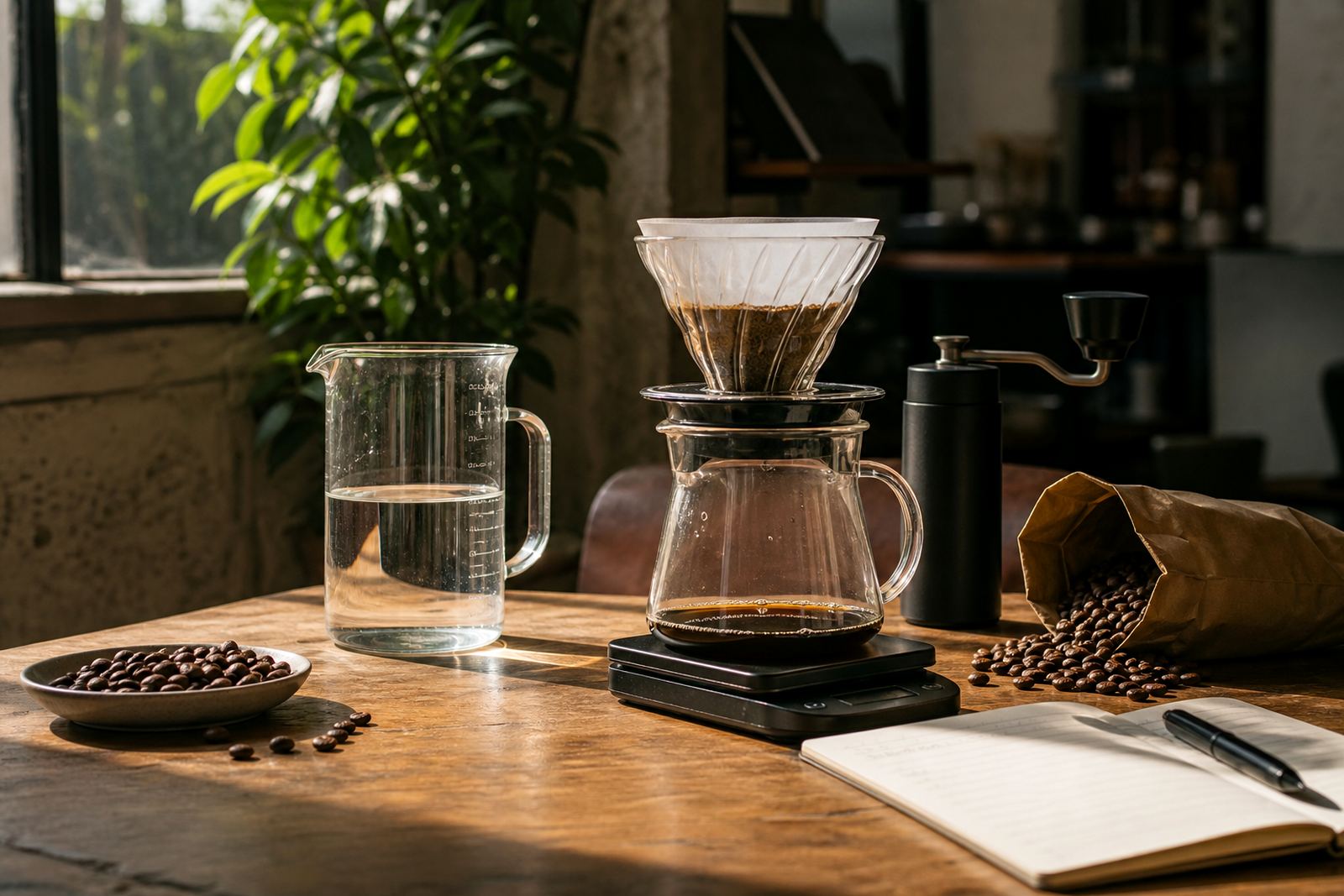
- Use a scale for both coffee and water
Scale the recipe without changing the flavour too much
Once you have a ratio you like, you can scale it up or down while keeping the same flavour profile. If you brew 15 g to 240 g water, the same recipe at double size is 30 g to 480 g water. The ratio stays the same, so the cup should taste similar if your grind, water temperature, and brew time remain consistent.
This matters in homes and offices across Cape Town, Johannesburg, Pretoria, Durban and Gqeberha where some days you brew for one person and other days for a meeting room or lunch rush. A simple ratio makes it easier to keep things steady when the numbers change. It also helps when you are roasting or buying different single-origin coffees through the season.
- Keep the ratio fixed
- Double or halve both coffee and water together
- Adjust grind only if the cup tastes too fast or too slow
- Record your final recipe for next time
Choose a ratio for different brew methods
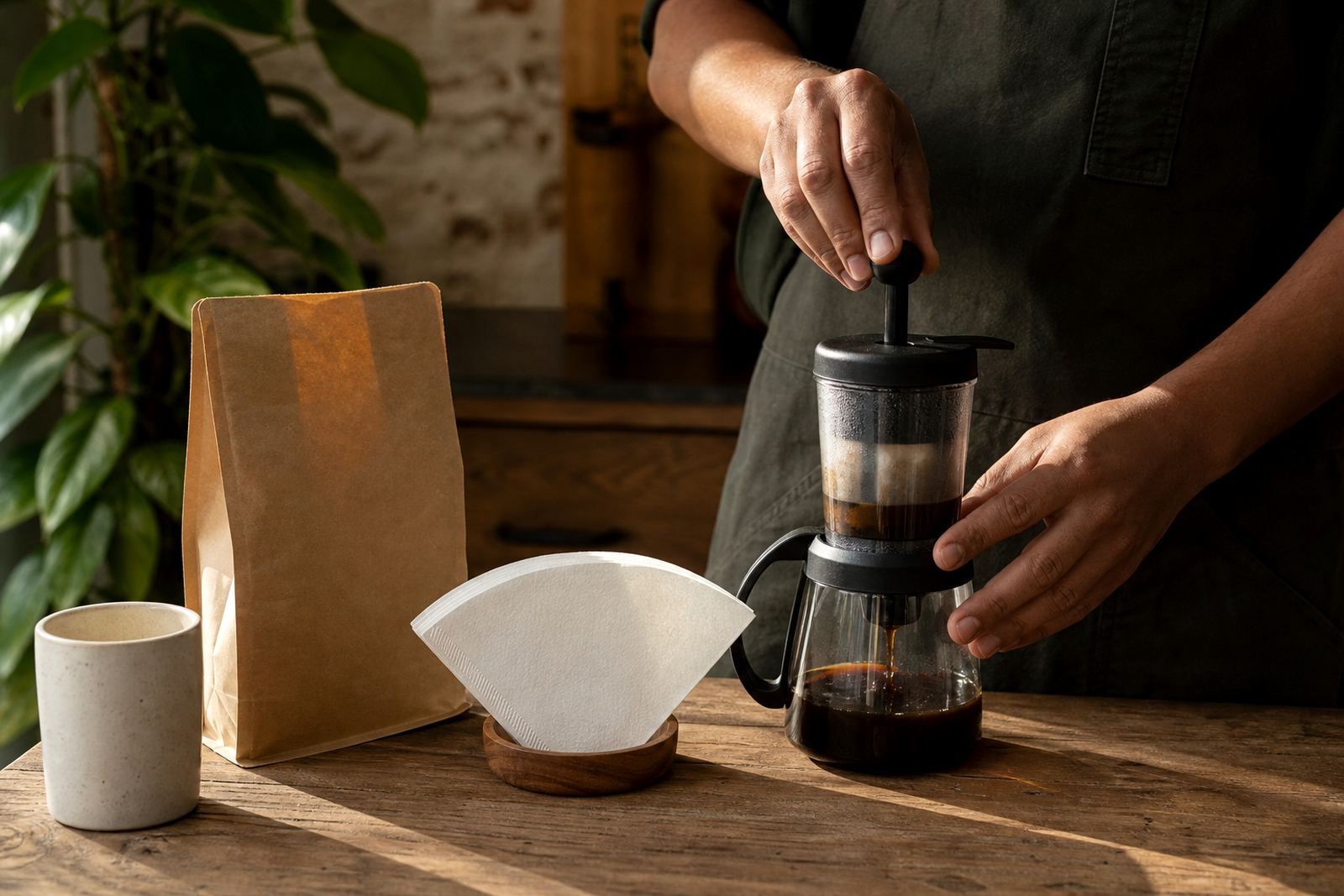
Different brew methods need slightly different starting points because they extract coffee in different ways. A pour over usually works well around 1:15 to 1:17. A French press often sits closer to 1:14 to 1:16 because the immersion style gives more body. For a batch brewer in an office, 1:16 is a safe starting point, then fine tune for the group using it.
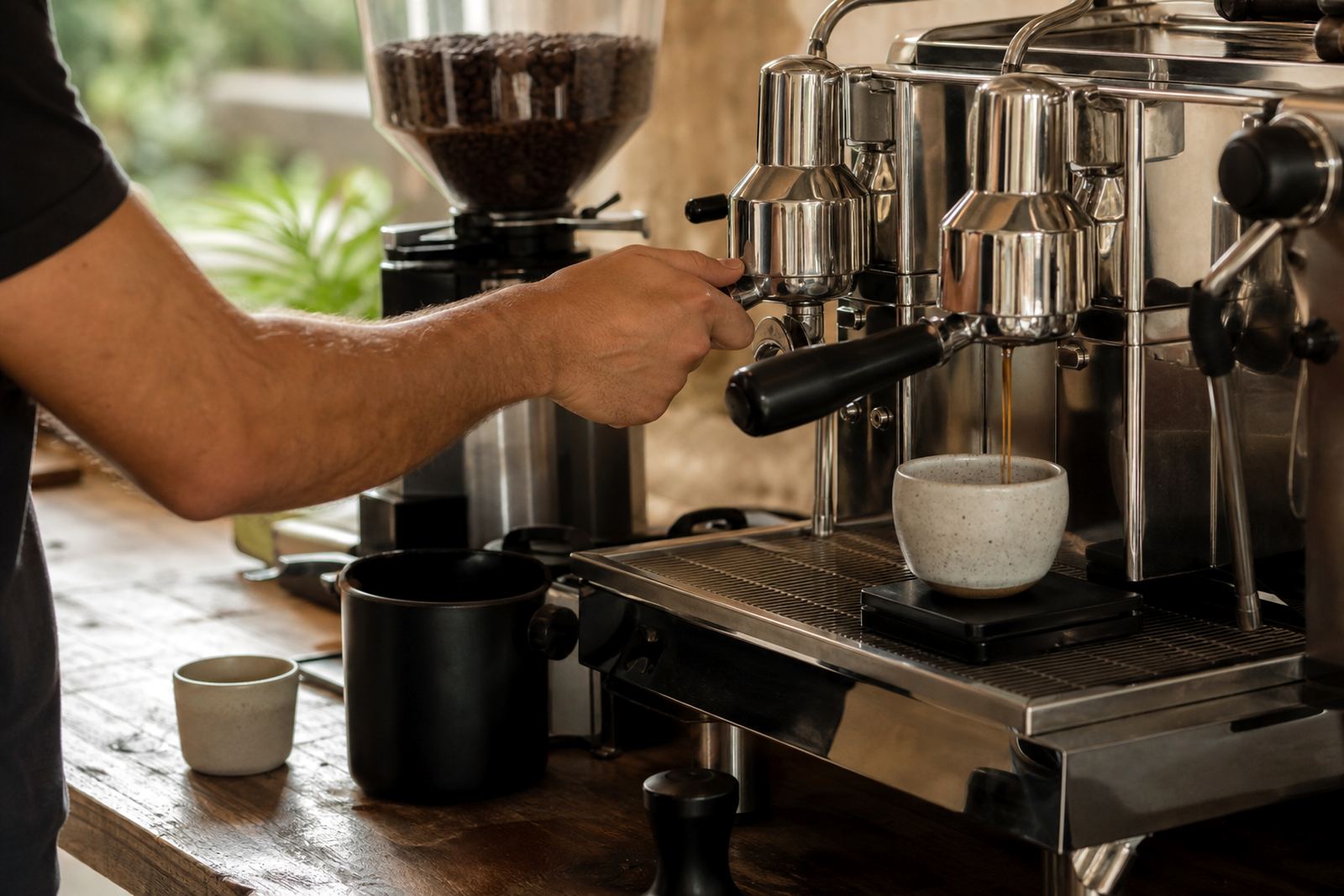
Espresso is different because the ratio is tighter and the water passes through under pressure. A common starting point is 1:2 to 1:2.5, which means 18 g of coffee may yield 36 g to 45 g of espresso. If the shot tastes sharp, thin, or too quick, the ratio and grind may both need attention. In coastal areas like the Atlantic Seaboard, where humidity can change through the day, the grind can shift faster than expected so keep an eye on it.
- Pour over: 1:15 to 1:17
- French press: 1:14 to 1:16
- Batch brew: 1:15 to 1:16
- Espresso: 1:2 to 1:2.5
Use the ratio to fix common brew problems
If your coffee tastes off, the ratio is one of the first things to check. Too much water can leave the cup thin and watery. Too little water can make it heavy or bitter. But ratio is only part of the picture. Grind size, brew time, water quality, and freshness all play a role too.
When a cup tastes sour, the grind may be too coarse or the brew too fast. When it tastes bitter and dry, the grind may be too fine or the contact time too long. In South Africa, water varies from town to town, and local water can change the final taste more than people expect. If you use filtered water at home or in a workplace kitchen, keep that consistent as well.
- Thin cup: try a smaller ratio like 1:15
- Bitter cup: try a larger ratio like 1:16.5 or 1:17
- Sour cup: check grind and brew time first
- Muddy cup: use a slightly coarser grind
Make brew ratios practical for offices and hospitality
When you are brewing for staff, clients, or guests, simple scaling saves time. For a meeting room of 10 people, you can build a batch recipe from your standard cup size and multiply it. If one mug needs 18 g coffee and 300 g water at 1:16.7, then five mugs need 90 g coffee and 1 500 g water. That is easier to manage than guessing by eye, and it reduces waste.
For hospitality counters, wellness rooms, and event coffee service, it helps to keep one written recipe near the grinder and kettle. Use the same brew ratio, the same scoop or scale, and the same service cup size. If the coffee is served over a longer period, make smaller batches more often so the flavour stays fresh instead of sitting hot on a plate for too long.
- Write one standard recipe for each brew method
- Measure coffee in grams, not scoops
- Scale the batch to the number of cups needed
- Fresh smaller batches taste better than one big holdover batch
A simple checklist before you brew
A good ratio works best when the rest of the process is steady. Before you start, check your scale, water, grinder, and brew gear. If you are using a manual method at home, heat the water fully before you weigh out the coffee so you are not rushing halfway through. In a busy office or restaurant, a short prep routine keeps service moving even during load-shedding or a power cut, when backup equipment and pre-planned steps matter.
Keep this checklist close and repeat it each time. It will save coffee, time, and frustration. Once the habit is in place, you can change ratios with confidence and train others to do the same without guesswork.
- Confirm the brew method and cup size
- Choose your starting ratio
- Weigh coffee and water accurately
- Note grind size, time, and taste
- Adjust one thing at a time on the next brew