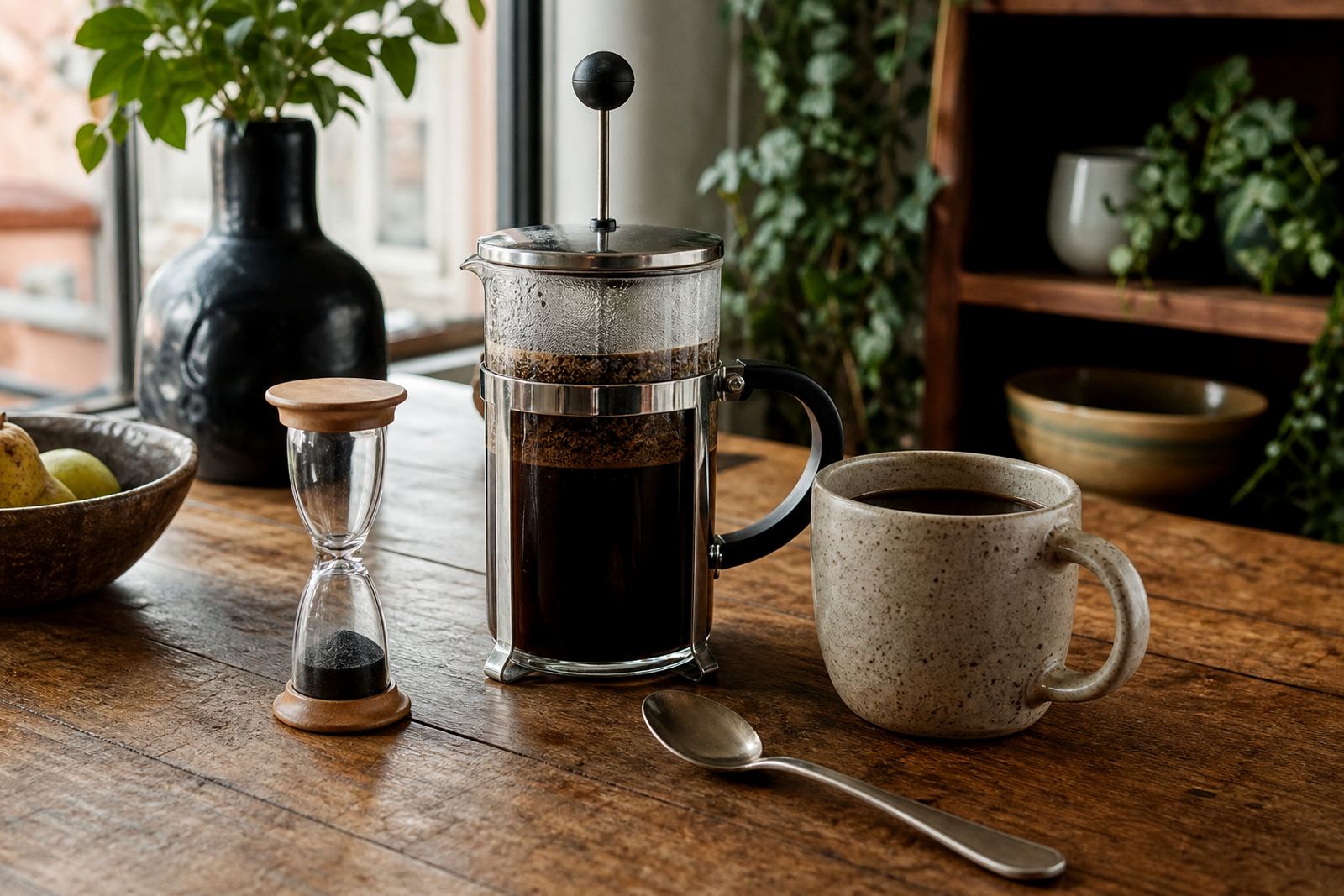


Start With Fresh Coffee, Water and a Clean Brewer
Good batch brew starts before the water is on. Use freshly roasted beans, stored in an airtight container away from heat and moisture. For best flavour, let the coffee rest a few days after roasting so the aromatics settle and the brew tastes more balanced.
Water matters just as much. In many South African homes and offices, tap water can be heavily treated or taste flat, especially after load-shedding or when municipal supply changes. If your water tastes metallic, stale or strongly chlorinated, filter it first. Aim for clean water at about 92 to 96 degrees celsius, not boiling water straight from the kettle.
Before you start, rinse the brewer, filter basket and server with hot water. This warms the equipment and removes paper taste. A clean brewer gives you a clearer cup and a more consistent result, whether you are making coffee for two people or twenty.
Use a Simple Brew Ratio That You Can Repeat
A practical starting point is 60 grams of coffee per litre of water. If you want a slightly stronger cup, move up to 65 grams per litre. If you want something lighter for an office setting, drop to 55 grams per litre. The key is to keep the ratio steady so you can repeat the same cup next time.
For smaller batches, these amounts work well:
- 500 ml water: 27 to 32 g coffee
- 1 litre water: 55 to 65 g coffee
- 2 litres water: 110 to 130 g coffee
Weigh your coffee and water if you can. Scoops are handy but they vary depending on grind size and bean density. A scale saves time in the long run and helps you avoid weak or bitter brews.
Choose the Right Grind for Batch Brew
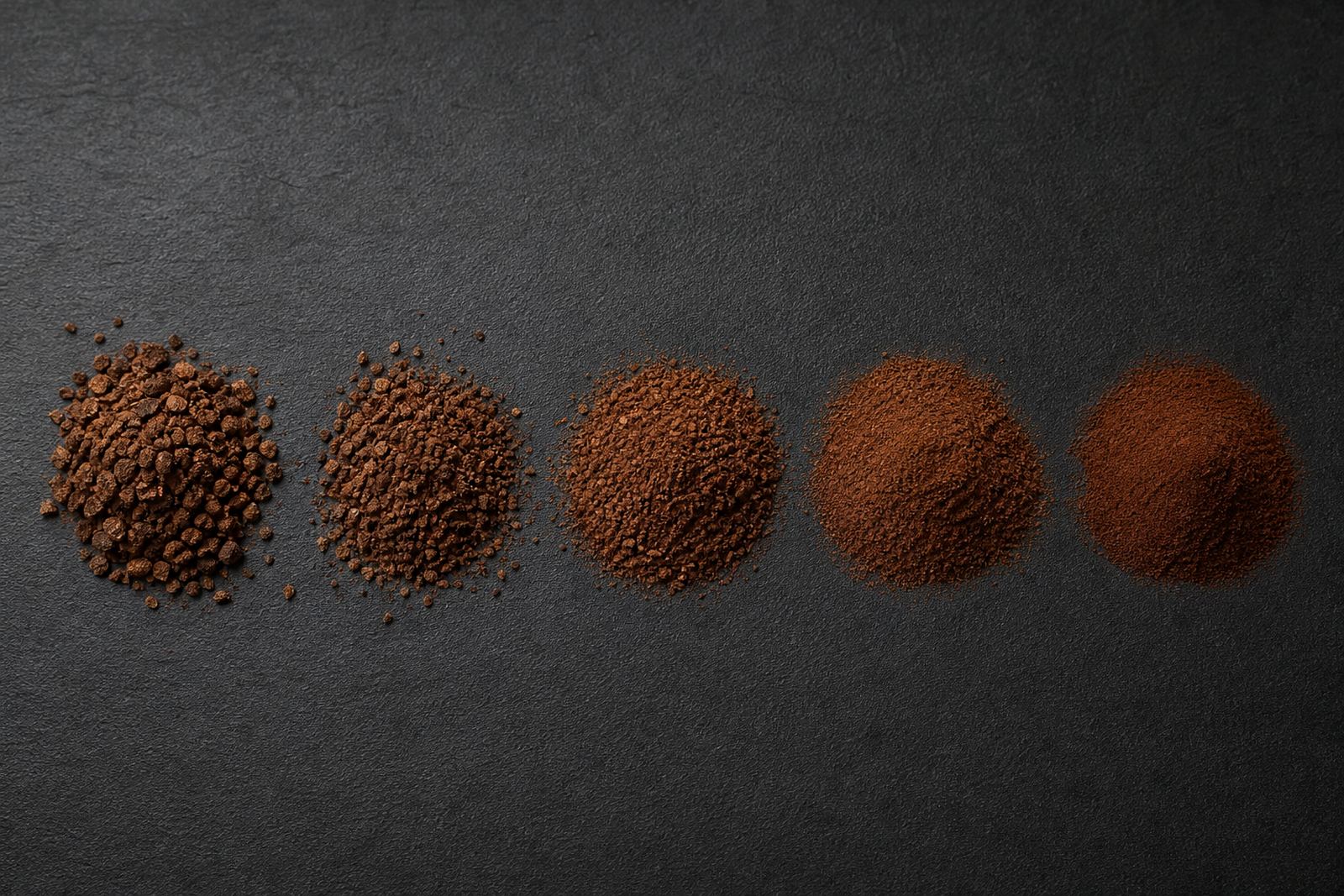
Batch brew usually needs a medium grind, similar to coarse table salt. If the grind is too fine, the water slows down and the brew can taste harsh or over-extracted. If it is too coarse, the coffee may taste thin, sour or underdeveloped.
When brewing in a machine or dripper, check the drawdown time. A typical 1 litre batch should often finish in around 4 to 6 minutes, depending on the brewer and filter type. If the brew runs much faster than that, go finer. If it stalls or puddles, go coarser.
Humidity can affect grind behaviour too, especially in coastal areas like Cape Town or Durban. On damp days the grounds may clump more and flow differently, so make small adjustments instead of changing the setting too far at once.
Follow a Steady Brewing Method Step by Step
A calm, even pour gives you better extraction than pouring all the water at once. For most home and office batch brew setups, this simple process works well:
- Rinse the filter and warm the brewer
- Add the measured ground coffee
- Start with a small bloom if your brewer allows it
- Pour the remaining water in steady, even circles
- Allow the brew to drip through fully before serving
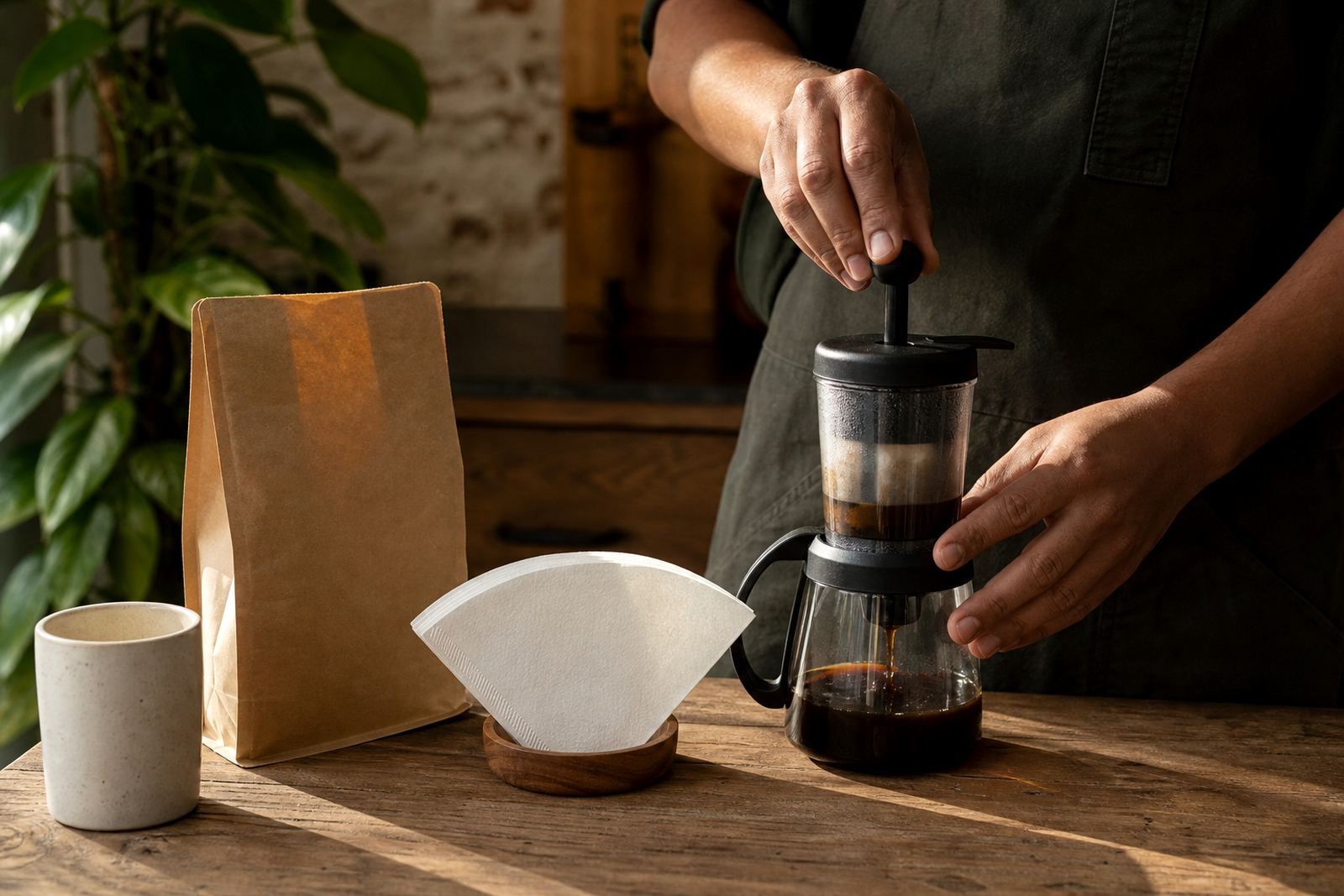
If your brewer does not support a bloom, that is fine. Just make sure the grounds are evenly wetted in the first pour. Uneven wetting leaves dry pockets and uneven flavour. Keep the pour rate steady, not rushed, and avoid splashing the filter walls.
Once brewed, swirl the server gently before pouring. That helps mix the stronger early liquid with the lighter later liquid, so each cup tastes the same.
Taste, Adjust and Keep Notes for the Next Batch
Batch brew should not be guesswork. Taste the first cup while it is hot, then again after it cools slightly. Hot coffee can hide sourness or bitterness, so give it a minute. If the brew tastes sour or sharp, use a finer grind or a little more coffee next time. If it tastes dry, bitter or heavy, use a coarser grind or slightly less coffee.
Keep a simple note of the bean, grind setting, water amount and brew time. This is especially useful in offices where more than one person might make coffee. A clear note avoids repeated mistakes and makes it easier to train staff or reception teams.
- Record the roast date and bean name
- Note the dose, water volume and grind setting
- Write down brew time and taste notes
- Adjust one variable at a time only
Small changes work better than big ones. If you change the grind and the ratio at the same time, you will not know what fixed the cup.
Serving Coffee in Homes, Offices and Shared Spaces
Batch brew is ideal for kitchens, meeting rooms, wellness rooms and hospitality counters where people want coffee without waiting. In offices, brew a fresh batch close to serving time and avoid leaving it on heat for too long. Coffee held too long on a hot plate can taste burnt and flat, even if the first cups were good.
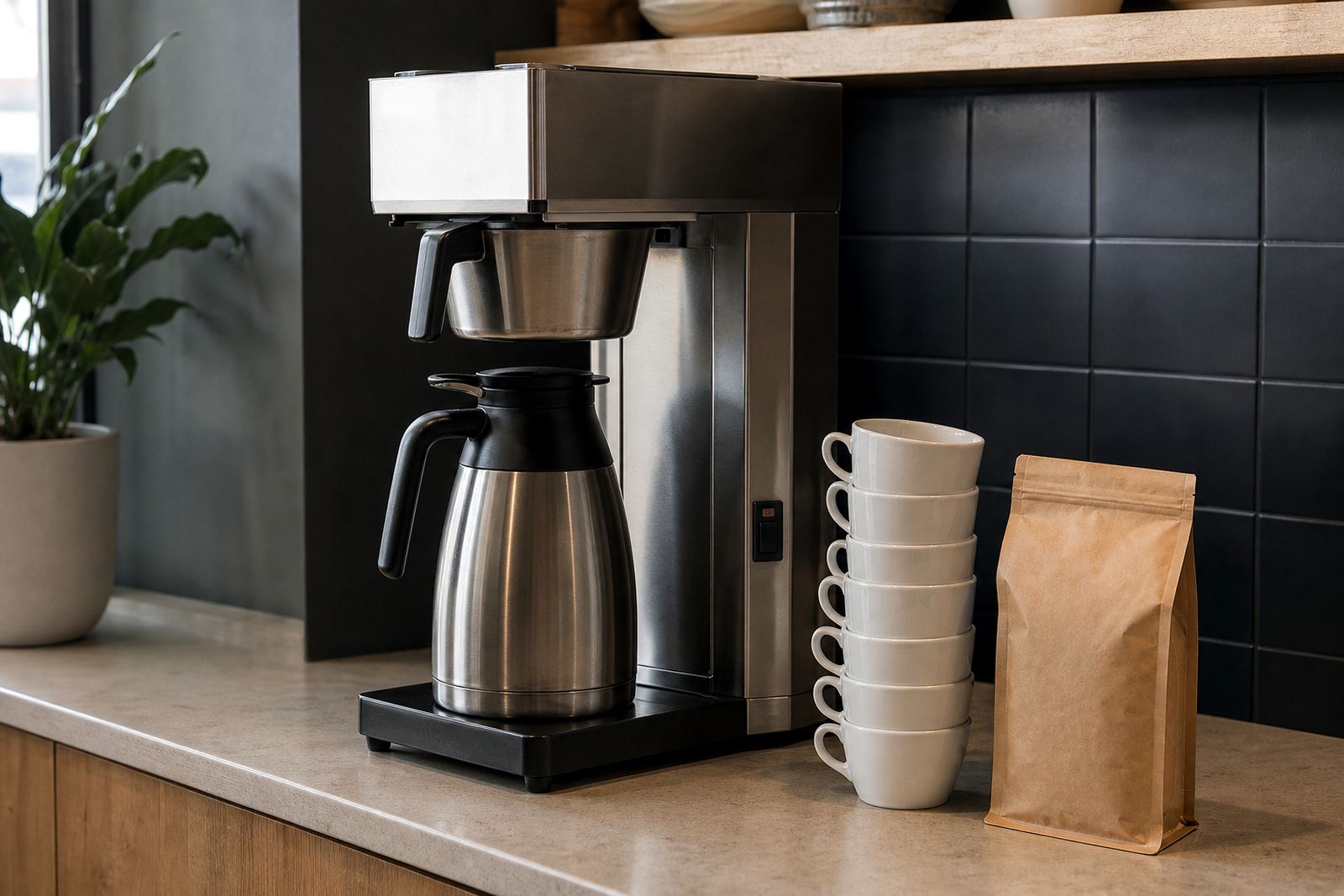
For homes, a thermal server is often better than a warming plate. It holds heat without cooking the coffee further. In offices across Johannesburg, Pretoria, Durban and Gqeberha, a thermal setup also helps during power cuts because it keeps the brew usable for longer without extra electricity.
When planning for guests or a team, allow about 150 to 200 ml per person if coffee is the main beverage. If you are serving through the morning, brew in smaller fresh batches rather than one large pot that sits too long. That approach keeps flavour cleaner and reduces waste.
A Simple Batch Brew Checklist Before You Serve
Use this quick checklist before each brew so the result stays consistent:
- Beans are fresh and stored properly
- Water is clean and heated to the right range
- Brewer and server are rinsed and warmed
- Coffee dose is weighed accurately
- Grind is set for a medium batch brew texture
- Brew time is steady and not rushed
- Final cup is tasted and adjusted if needed
If you are setting up coffee for an office, a client lounge or a staff area, this checklist can be kept next to the brewer. It saves time, cuts mistakes and gives everyone a better cup. That is the real value of batch brew: one reliable process that works every morning, even when the day starts early.