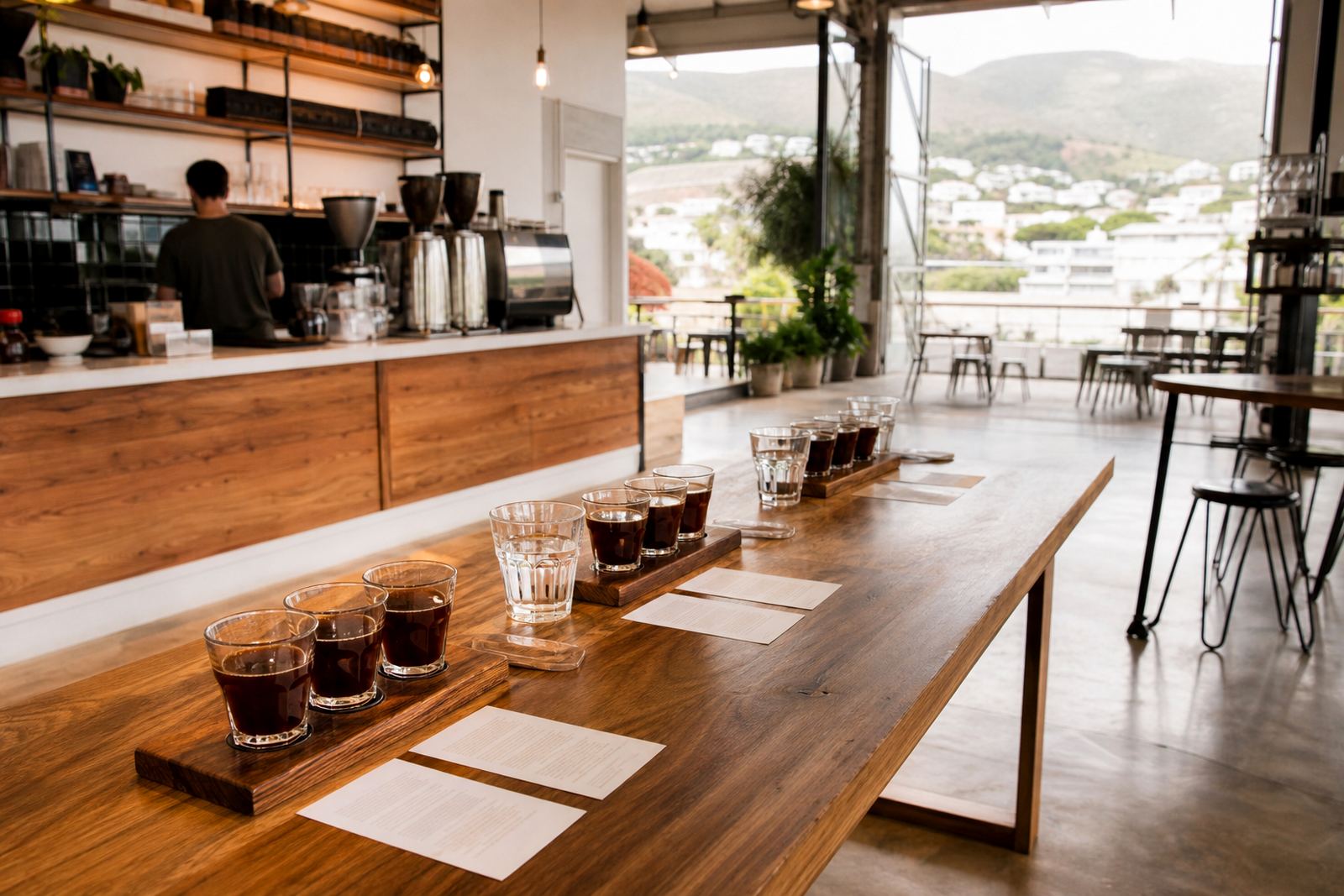




Bellville brief: better coffee for busy training days
The client was a vocational training centre in Bellville, Cape Town, with lecture rooms, a staff kitchen and regular short breaks between classes. Their old setup relied on mixed instant coffee and a single domestic machine, which could not keep up when several groups broke at the same time. They needed a dependable coffee solution that was easy to run, easy to restock, and suitable for both staff and visiting trainers.
The brief was practical: improve taste, reduce queues and keep the service simple for non-barista staff. They also asked for a supply plan that would work through exam weeks, month-end training blocks and public holiday schedules, when attendance numbers shift quickly. We were asked to keep waste low and to avoid any system that would need constant tinkering.
Site limits and what had to be worked around
The building had a compact kitchen space, limited counter area and standard municipal water pressure that could vary during the day. Load-shedding was also a concern, so the centre wanted coffee options that would still work during outages and short power cuts. We also had to fit the service into a shared area used for tea, lunch prep and staff clean-up, so storage and foot traffic mattered.
Because the centre serves both staff and groups of learners, the coffee point had to stay quick to operate and simple to clean. There was no appetite for a complex menu or a full café counter. The focus stayed on batch brew, grinder calibration and a practical refill schedule, with only a few core products on site at any one time.
- Location: Bellville, Cape Town
- Service style: batch brew for break-time service
- Capacity target: steady output for morning and afternoon breaks
- Power concern: backup-friendly coffee service during load-shedding
- Space: compact kitchen with shared counter use
What we supplied for the training centre
We supplied a batch brew coffee programme built around single-origin beans, weekly top-ups and fixed portion guidance for the team on site. The roast profile was chosen to give a clean cup with enough body for milk drinks, but still be pleasant black. We also set the grind size for the equipment in use and labelled the brew ratios so staff could repeat the result without guesswork.
The supply included coffee stock in sealed bags, brew guidance, cleaning steps and a simple reorder rhythm tied to class calendars. We set up seasonal rotation options too, so the centre could keep the coffee interesting without changing the service format. The delivery plan was arranged for Cape Town runs, with enough buffer stock for peak weeks and supplier delays.
- Single-origin coffee for batch brew
- Grind calibration for the on-site grinder
- Brew ratios and serving guide for staff
- Stock forecasting based on class schedules
- Delivery plan with buffer stock for busy periods
Training the team to keep service moving
Our coffee educator ran short on-site training for kitchen and admin staff. The session covered dose, brew time, water volume, holding times and how to keep the coffee tasting fresh between rounds. We kept it practical, since the team needed something they could remember on a normal weekday and not only on the day of training.
We also showed them how to adjust grind if the cup ran too fast or too slow, and how to note small changes after a weather shift or water fluctuation. Bellville mornings can be cool, then warm up fast and the coffee service had to stay steady through that swing. The team left with a one-page brew sheet and a clean handover for anyone covering leave.
- Training length: one focused site session
- Topics: brew method, cleaning, grind checks, holding time
- Handover: one-page operating guide for cover staff
- Support: follow-up on coffee strength and stock use
Timeline from first call to steady supply
The project ran over three weeks from brief to settled supply. Week one was the site review and coffee use estimate. Week two covered sample tasting, calibration and delivery scheduling. Week three was the staff training session and the first regular supply drop. The centre was able to start service without shutting down the kitchen or changing their break timetable.
After the first few deliveries, we checked usage against the forecast and made a small adjustment to the order sizes. That kept surplus stock down and reduced the chance of running short during exam periods. The process was straightforward, which was exactly what the client wanted.
- Week 1: needs review and stock estimate
- Week 2: tasting, calibration and ordering plan
- Week 3: training, first delivery and handover
- Follow-up: adjust quantities after usage data came in
Results at break time and what changed for staff
Once the batch brew programme was running, the centre had shorter queues at breaks and far less friction in the kitchen. Staff could make coffee quickly, learners had a better cup between sessions, and the admin team no longer had to patch together emergency coffee runs. The quality stayed more consistent, which mattered on days with back-to-back classes.
The centre also used the coffee point more confidently for visitors and tutors. Because the brewing method was simple and the stock plan was already in place, there was less waste and fewer last-minute purchases. The service became part of the daily routine instead of a chore, which is usually where these setups work best.
- Shorter queues during morning and afternoon breaks
- More consistent taste from cup to cup
- Less waste from overbrewing and overbuying
- Easier service for staff covering kitchen duties
What we would repeat on the next Bellville setup
We would use the same approach again for a training centre or office with predictable break times. Start with the actual cup count, match the brew method to the available space, then set stock levels against the academic or shift calendar. That keeps the service simple and avoids buying equipment that looks good on paper but slows the room down in practice.
For a Bellville site like this, we would again recommend batch brew, a short staff handover and a delivery rhythm that tracks busy weeks. If the centre expands its intake or adds weekend classes, we would adjust the forecast before the pressure shows up at the counter. Small changes early save a lot of cleaning and a lot of grumbling later.
Key facts
| Project type | Training centre coffee upgrade |
|---|---|
| Town | Bellville, Cape Town |
| Timeline | 3 weeks from brief to steady supply |
| Coffee format | Batch brew with single-origin beans |
| Core services | Coffee Supply, Grind Calibration, Brew Training, Stock Forecasting |
| Result | Faster breaks, steadier taste, simpler daily service |