

A salon waiting room that needed cleaner coffee service
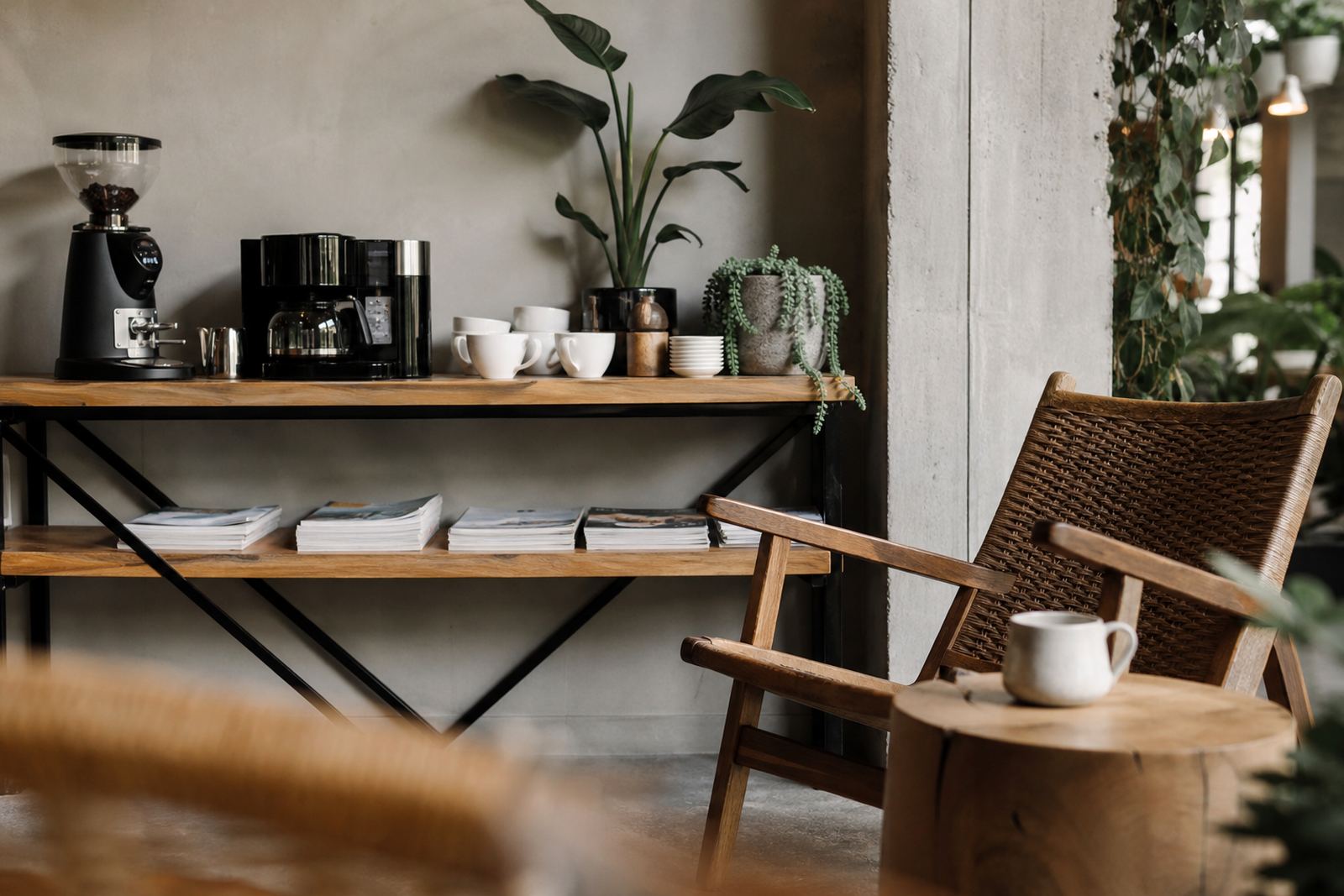
The client was a busy salon in Durban North serving walk-in and booked guests all day, with the waiting area doing double duty as a coffee point. The brief was plain enough: better coffee than instant sachets, less fuss than a pod machine, and no wet counter, coffee grounds or clutter around the reception area. They wanted something that fit a grooming space, not a cafeteria.
The main constraints were heat, humidity and staff turnover. The salon sits near the coast, so anything left open tends to pick up moisture fast. They also needed a setup that could be used by reception or treatment staff without a steep learning curve. Load-shedding was another factor, so the brewing method had to work without relying on a powered grinder at serving time.
- Town: Durban North, KwaZulu-Natal
- Client type: hair and beauty salon
- Goal: better guest coffee with low mess and short serving time
- Constraint: limited counter space near reception
What we recommended for the counter
We proposed a manual brew station built around single-origin filter coffee, portioned for quick service and consistent taste. The idea was to keep the drinks list tight and the workflow simple. Guests would get a clean cup with a clear flavour profile, while the team could keep the service area tidy between appointments.
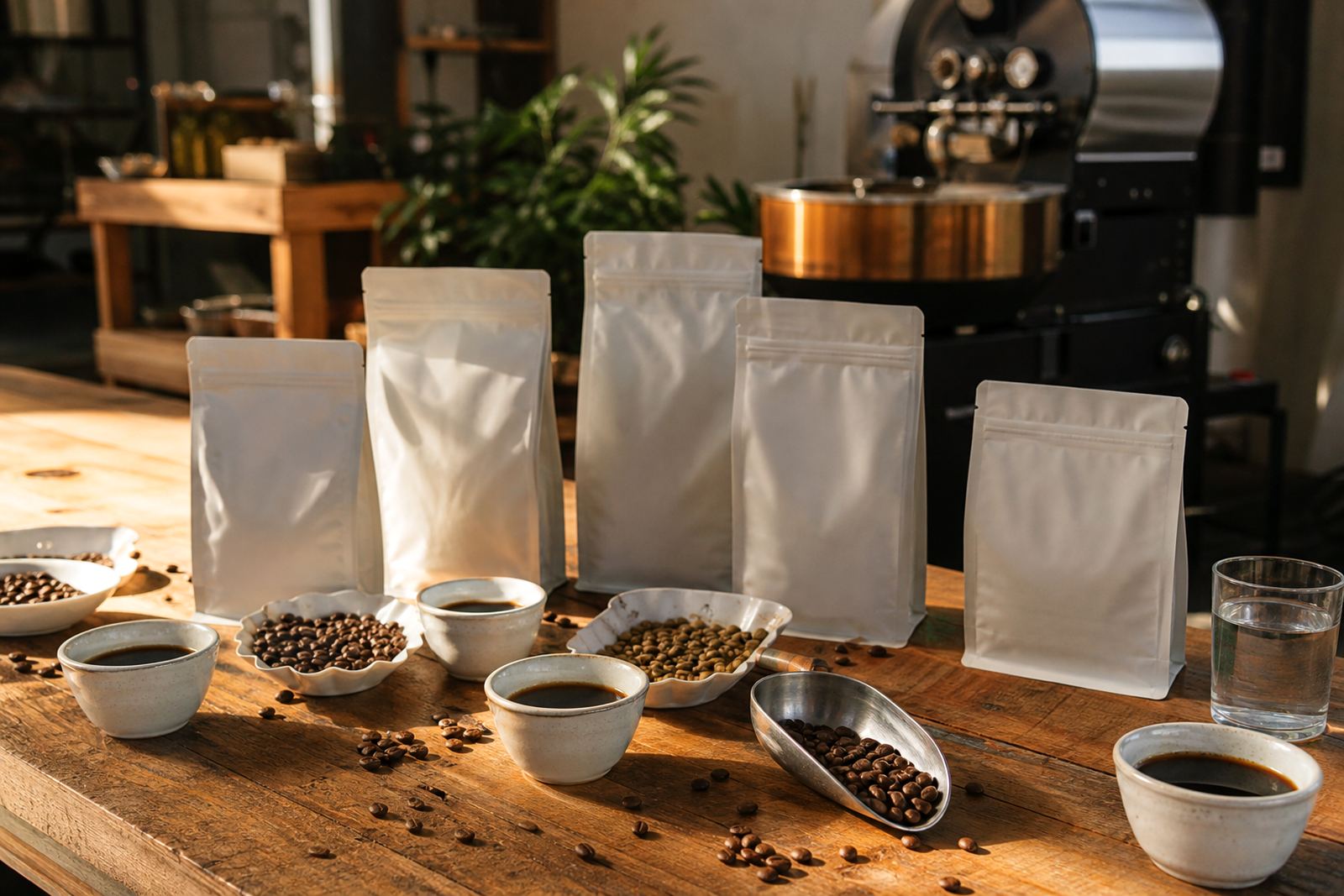
To make that work, we supplied coffee in pre-weighed packs, a grinder calibration plan, a compact brewing kit and airtight storage for the beans. We also matched the grind to the chosen brew method so the team could pour a cup in a few minutes without over-extracting. The coffee itself was rotated seasonally, which gave the salon a small talking point for regulars and repeat visitors.
- Single-origin whole beans, roasted for filter brewing
- Pre-weighed coffee packs for repeatable servings
- Airtight storage containers for coastal conditions
- Compact manual brew kit for counter-top use
How we kept the service low-mess and easy to run
The biggest win was reducing the number of steps between guest request and cup served. We trained the team to use a simple brew ratio, a short steep time and a clean pour, with a rinse routine after each batch. That kept the station presentable even when the salon was full. We also set out a reset process for slow periods so the space looked organised rather than half-used.
Because the salon wanted something suitable for treatment rooms and the reception area, we kept the aroma balanced rather than heavy. The coffee needed to be fresh, but not so intense that it competed with hair colour, sprays or salon products. Small detail, but it mattered. We also tested the setup during a load-shedding window to make sure the process still ran smoothly when power was out.
- Brew method chosen for low splash risk and easy cleaning
- Station reset routine for end-of-day tidy up
- Manual workflow that still works during power cuts
- Clear dosing guide for staff on shift changes
The project timeline and rollout
From first conversation to handover, the project ran over three weeks. Week one covered the brief, the tasting session and the final brew choice. Week two focused on supply planning, container sizes and staff training notes. Week three was installation, calibration and a short trial run with the salon team before they went live.
We kept the rollout light so it would not interrupt appointments. The station was set up before opening hours, and the team had a printed guide for dose, water volume and cleaning steps. That meant the salon could start serving coffee straight away without a long learning period. There was no need for extra plumbing or permanent changes to the counter, which suited the lease arrangement.
- Week 1: brief, tasting and brew method selection
- Week 2: supply planning and staff guide
- Week 3: setup, calibration and live trial
- No permanent building work required
What changed after the new coffee station
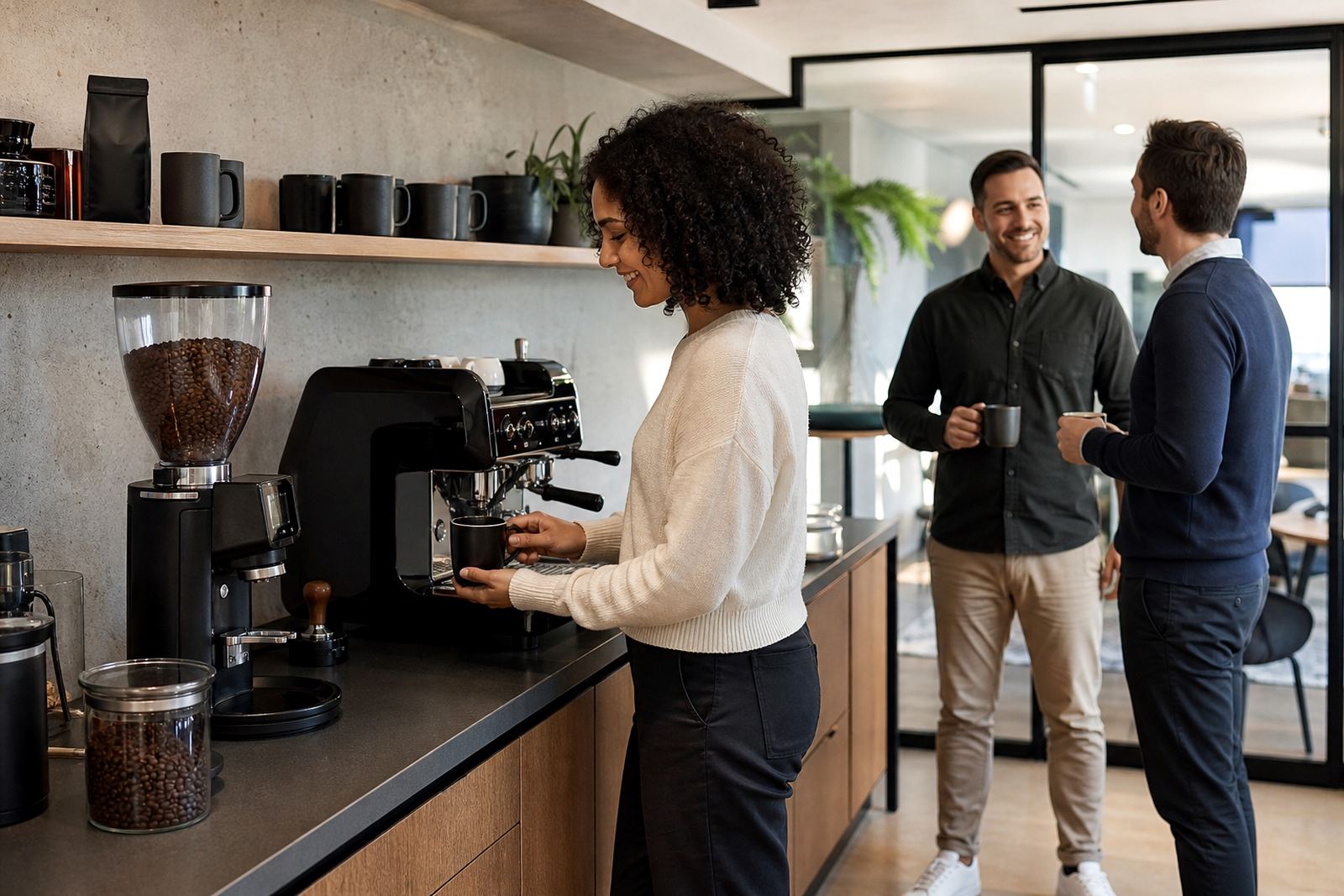
After the change, the salon had a more polished guest experience and less pressure on the reception team. Coffee service became part of the welcome instead of an extra chore. Guests noticed the improvement quickly, especially the cleaner taste and the fact that the counter no longer carried drips, grounds or loose supplies.
The team also found stock easier to manage. Because the beans were supplied in planned quantities and the brew ratio was fixed, they could forecast usage by week rather than guessing. That helped them avoid running short on busy Friday afternoons and reduced waste from opened packs going stale in the humid weather. It also made it easier to keep a sensible top-up schedule, which in turn kept the salon looking ordered.
- Cleaner counter area with less spill cleanup
- Shorter serving time for guests between treatments
- More consistent coffee flavour from cup to cup
- Better stock control through planned ordering
What we would repeat for another salon
We would use the same approach again for another salon in a coastal town: keep the brew method simple, store the coffee properly and avoid anything that depends on a complicated routine. Salons are busy, and the coffee point has to fit around appointments, colour processing and walk-ins. A small station with clear steps works better than a flashy setup that is awkward to maintain.
If we were doing this again, we would still start with the same questions: how many cups per day, who is serving, where is the station, and how much counter space is available. From there, the right grind, portion size and storage plan follow naturally. It is usually not about adding more equipment. It is about getting the basics right and making sure the team can keep it tidy with very little effort, even on a hectic day.
- Best for reception areas with limited counter space
- Works well where staff need a quick repeatable process
- Good fit for coastal areas with humidity and salt air
- Useful when power cuts and busy periods are part of daily life
Key facts
| Project area | Durban North, KwaZulu-Natal |
|---|---|
| Client type | Salon waiting area |
| Brew style | Manual filter coffee station |
| Coffee format | Single-origin whole beans with pre-weighed portions |
| Timeline | 3 weeks from brief to rollout |
| Key focus | Low-mess service, stock control and staff ease of use |