


What a proper brew station needs
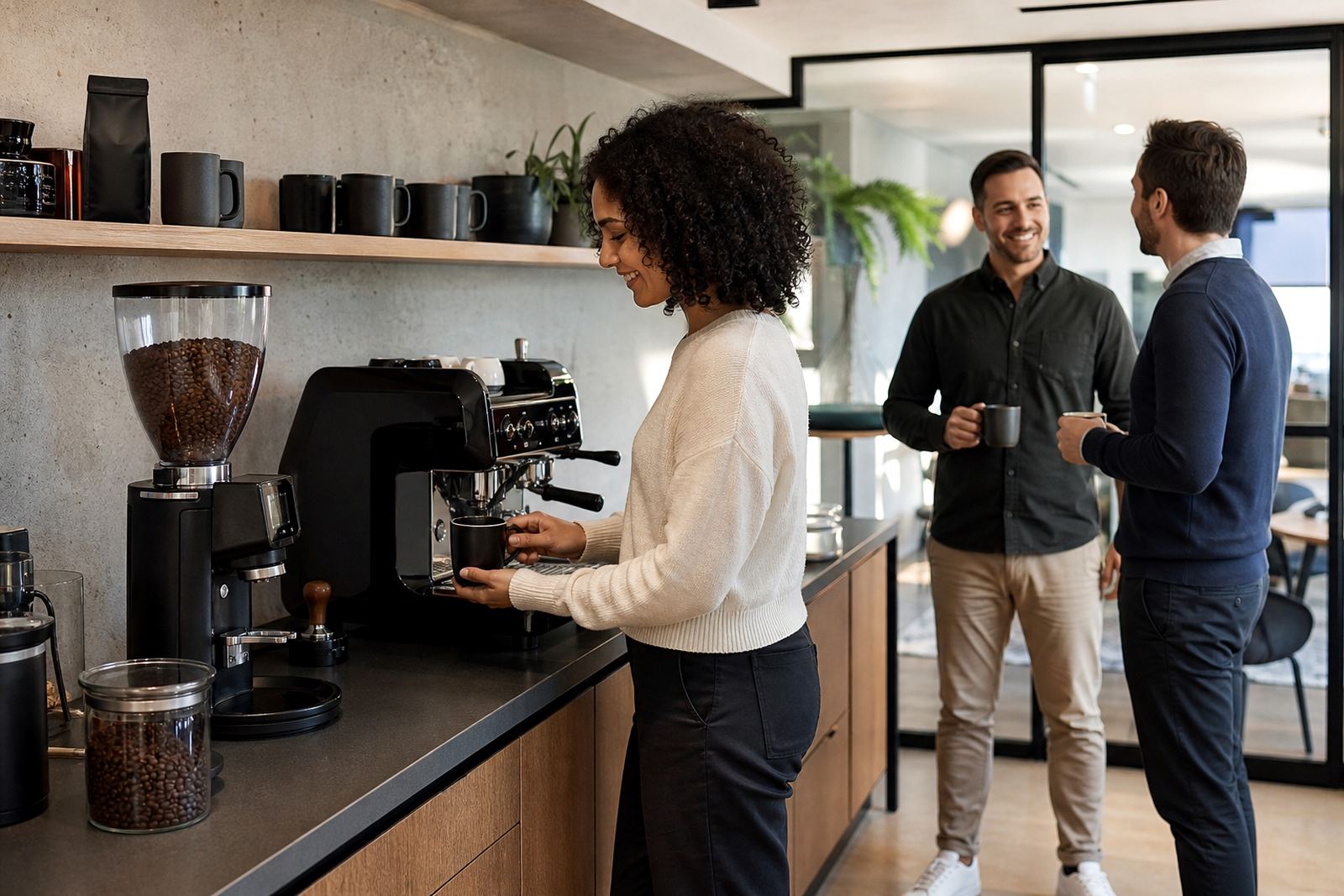
A good brew station is more than a kettle and a bag of coffee. It needs the right workflow, enough counter space, safe power access, water handling and equipment that matches how your team actually drinks coffee. In Woodstock offices we often work with compact counters, while larger teams in Johannesburg or Pretoria may need two brew points to avoid long queues. We look at the room, the number of cups per day and the type of coffee service you want, then we plan the station around that.
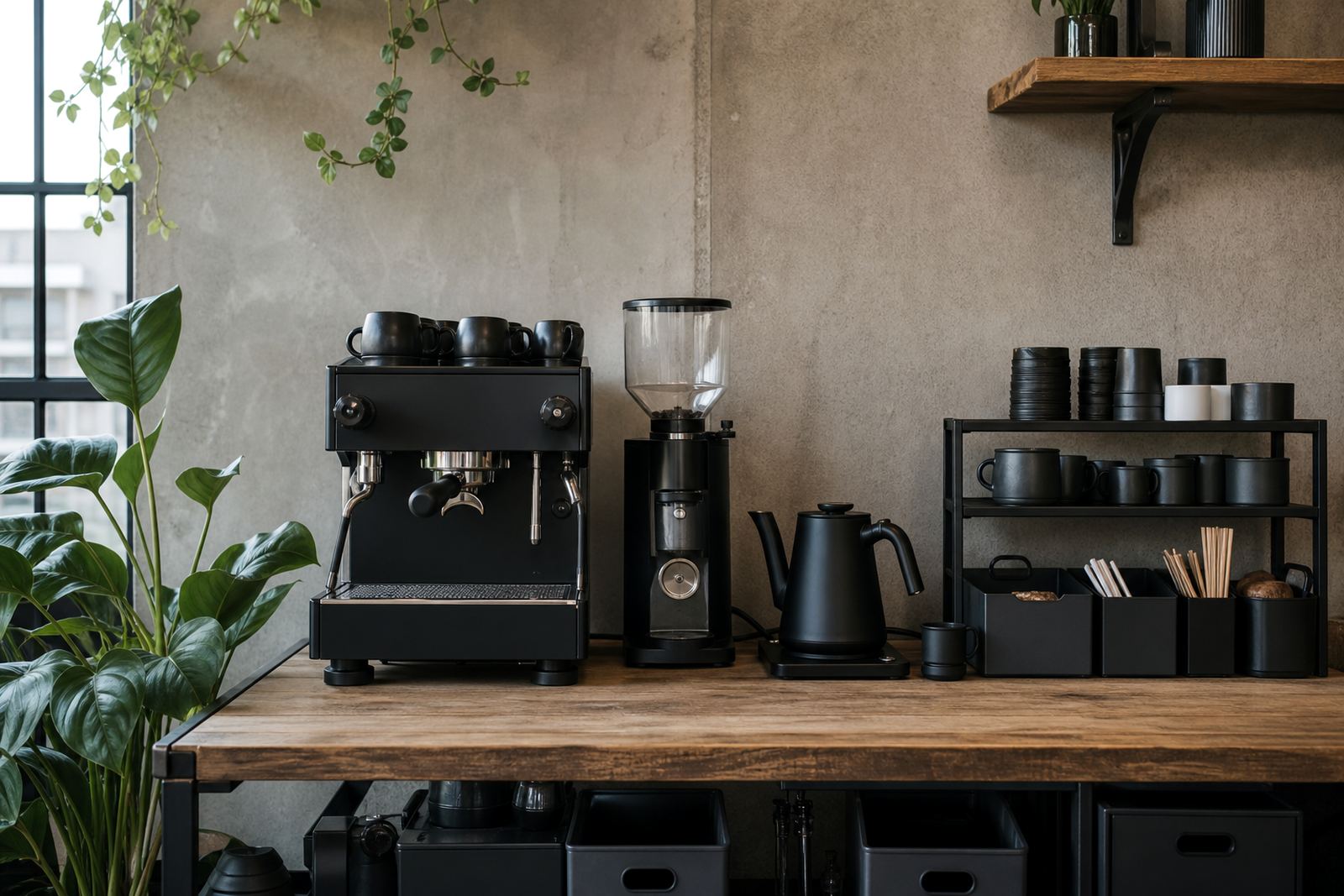
Typical setups include a filter coffee point, grinder, scales, water boiler, storage jars, milk handling, cups and waste space. If the area is near a window or the coast, we also consider heat, salt air and humidity because these affect beans, paper stock and equipment life. We also plan for load-shedding so the station still functions when power is off. It is the small details that keep service steady and the coffee tasting right.
- Station layout sized to team numbers and peak break times
- Counter depth and clear work zones for brewing and cleaning
- Equipment placement for safe cable runs and easy access
- Bean storage and day to day handling to protect freshness
- Power planning for boilers, grinders and backup use
What is included in the setup
We supply a practical setup plan and organise the working parts that make the station ready for use. The exact list depends on the service level, but most projects include site assessment, station design, equipment recommendations, bean selection, grind calibration and staff handover. If you need a coffee point for meetings, a wellness room or a hospitality counter, we tailor the station to that use rather than forcing one standard format.
For offices and guest areas, we can also add labelled storage, a cleaning routine and simple sign-off sheets so the station stays tidy through the week. Where foot traffic is high, we may specify a second grinder, extra brewing vessels or larger holding capacity. That way the station does not slow down when a full floor arrives at once.
- On-site or remote needs assessment
- Equipment list matched to volume and budget
- Bean and filter supply recommendations
- Grind setting guide and brewing ratios
- Staff walk-through for daily use and cleaning
- Optional menu planning for black coffee, milk drinks and decaf
How we set up the station
We follow a straightforward process so there is no guesswork. First we check the space, plug points, water access and storage. Then we map the workflow from bean storage to cup return, including where people queue and where cleaning happens. After that we recommend the equipment and supplies needed for your budget and usage pattern. Once the station is in place, we test the grind, brew times and output to make sure the result is consistent.
If your team is new to specialty coffee, we take extra time on the handover. That includes showing the correct dose, tamping where relevant, water temperature targets and how to recognise when the grind has drifted. A lot of office coffee problems start with good equipment but poor daily habits, so we make sure the team knows what to do from day one.
- Step 1: space check and usage brief
- Step 2: equipment and supply plan
- Step 3: installation and station layout
- Step 4: calibration and brew testing
- Step 5: team handover and use guide
Turnaround times and project timing
Turnaround depends on the scale of the station and whether equipment is already on site. For a small office setup in Cape Town or the Southern Suburbs, we can often complete the planning and initial setup within a few working days. Larger multi-floor offices, hospitality counters or shared workspaces may take longer because there are more points to check and more people using the station. If there is a launch date or event, we work backwards from that date so the station is ready in time.
We recommend booking early for year-end functions, seasonal office moves and busy trading periods. In coastal areas like the Atlantic Seaboard and Gqeberha, where humidity can affect beans and paper goods, we may build in extra checks before handover. For offices that run during load-shedding, we can adjust the setup so the station still works with gas or backup power where suitable.
Pricing approach that fits the space
We price brew station setup according to the size of the station, the equipment required, the number of users and the amount of training needed. Smaller setups are usually straightforward, while larger stations with multiple brew points, forecasting and staff training need more planning time. We keep the pricing clear by separating the core setup from optional extras like additional grinders, holding urns, supply rotation or on-going service visits.
If you are comparing options, it helps to look at the total cost of use, not just the first purchase. A station that is easy to maintain and calibrated properly often saves money on wasted coffee, breakages and inconsistent service. We will talk you through the likely monthly spend on coffee, filters, milk and cleaning items so you can budget properly.
- Core setup based on station size and usage
- Optional add-ons for training, service and supply
- Budget planning for monthly consumables
- Clear separation between once-off and recurring costs
Keeping the station in good order
A brew station works best when it is maintained on a schedule. We recommend daily cleaning, weekly checks and a monthly review of grind settings, water quality and stock use. In busy office environments, even a well set up station will drift if nobody checks the basics. Our maintenance intervals are designed to keep flavour steady and equipment safe to use.
For most teams, a daily wipe-down and rinse is enough, while deeper cleaning should happen weekly. Calibrations are usually checked every two to four weeks, or sooner if your coffee output changes. If the station serves customers, residents or guests, we suggest more frequent reviews because usage patterns can change quickly. This keeps the coffee tasting clean and helps the gear last longer, which matters when budgets are tight.
- Daily cleaning of surfaces, filters and waste areas
- Weekly deep clean of brewing parts and storage
- Grind calibration checks every 2 to 4 weeks
- Quarterly review of equipment condition and usage
- Seasonal adjustments for humidity and temperature changes
Key facts
| Ideal team size | 8 to 120+ users depending on station type |
|---|---|
| Counter space needed | From 900 mm wide for a compact point |
| Power requirement | Standard 220V supply, with backup options where needed |
| Water setup | Plumbed or manual fill depending on the site |
| Typical turnaround | 2 to 7 working days for smaller setups, longer for larger sites |
| Maintenance interval | Daily cleaning, weekly service checks, monthly calibration review |